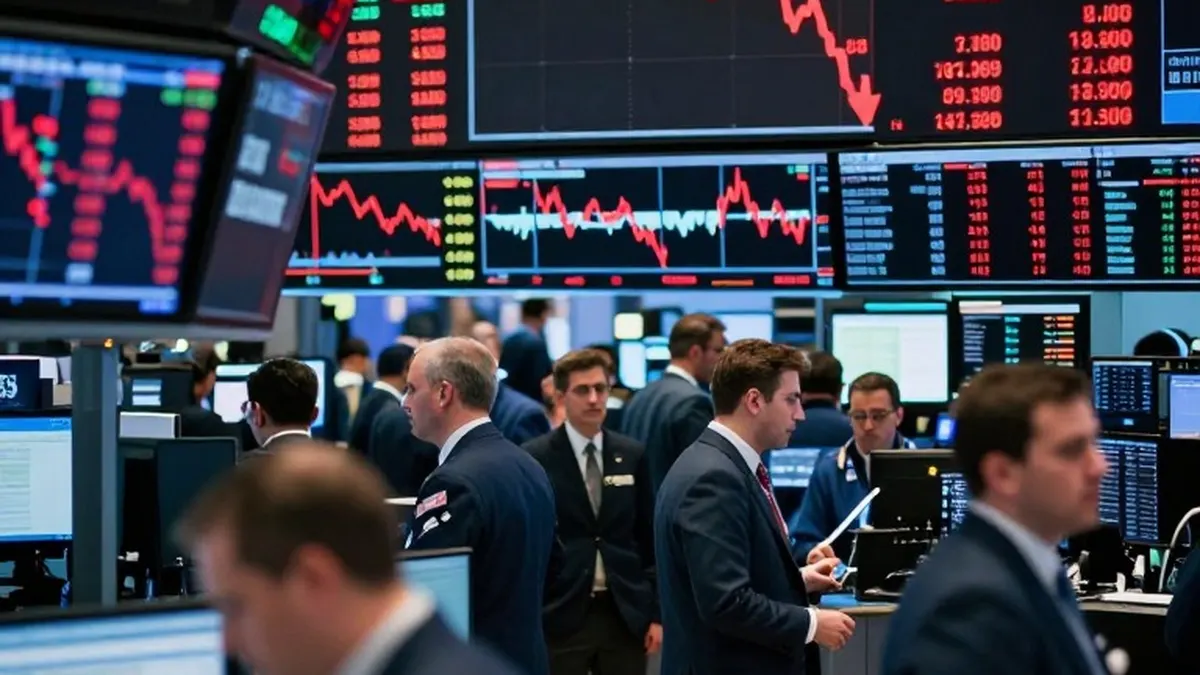
The technology-focused Nasdaq index in the United States is on pace for its most significant single-day decline in eighteen months. The benchmark slumped by as much as five percent on Thursday, a sharp drop that pushed the composite index into what traders define as correction territory. This status is reached when an asset class falls more than ten percent from its recent peak.
The steep decline marks the index's biggest one-day loss since April 2025. At that time, President Donald Trump announced his so-called liberation day tariffs, which imposed new duties on various US trading partners. The current sell-off has been driven by mounting anxiety regarding the future of the artificial intelligence sector and the potential for stricter oversight.
Investors are increasingly worried about the massive capital expenditures associated with AI development. These concerns have gripped the New York stock market and sent ripples through financial exchanges around the globe. A primary driver of the fear is the anticipation that plans for expanding datacenters will face tougher scrutiny from regulators and local officials.
Chip manufacturers bore the brunt of the selling. SanDisk, a key producer of memory components, saw its shares plummet by nineteen percent. Western Digital, a major maker of hard drives, also suffered a heavy loss, with its stock price dropping by sixteen and a half percent.
The surge in market volatility was highlighted by a forty percent jump in the VIX, which is widely known as Wall Street's fear index. The spike brought the measure to its highest level since the early weeks of the conflict with Iran, signaling a significant rise in investor unease.
Market analysts have pointed to the results of this week's midterm elections as a catalyst for the downturn. The Democratic party secured victories in a series of gubernatorial races, leading to expectations that new state leaders may impose stricter controls on the rollout of new datacenters. Additionally, voters in various local jurisdictions across the country rejected proposals to build datacenters in their communities.
Neil Wilson, an investor strategist at Saxo UK, described the action in tech stocks as a complete capitulation level event. He noted that the market is experiencing a total momentum unwind as Democrats seek to pace the technological frontier and potentially halt datacenter construction. Wilson suggested that while the reaction may appear overdone, the nature of the current market environment requires waiting for signs of stability before making further moves.
The damage was not limited to the Nasdaq. The Dow Jones industrial average, which tracks thirty large US companies, fell more than one thousand points during late morning trading. This represented a two percent decline, leaving the index at fifty-two thousand, two hundred and sixty-four points.
Nvidia, the chipmaker that has been central to the AI boom, was the top decliner on the Dow, dropping by six point seven percent. Goldman Sachs followed closely behind, with its shares falling by five point seven percent. This sharp reversal contrasts with the previous day's session, when Wall Street stocks posted their largest daily gain in months as investors had hoped that Democratic gains would restrain the White House.
Tech analyst Dan Ives warned that the midterm election results are a clear indication that the pace of datacenter construction will begin to slow. He stated that there is no way to sugarcoat the fact that Democratic control, particularly over the Senate, will create major hurdles for AI and technology legislation in Washington over the next two years. Meanwhile, an early rally in European markets faded by late trading, with Britain's FTSE 100 closing down forty-six points or zero point four percent.