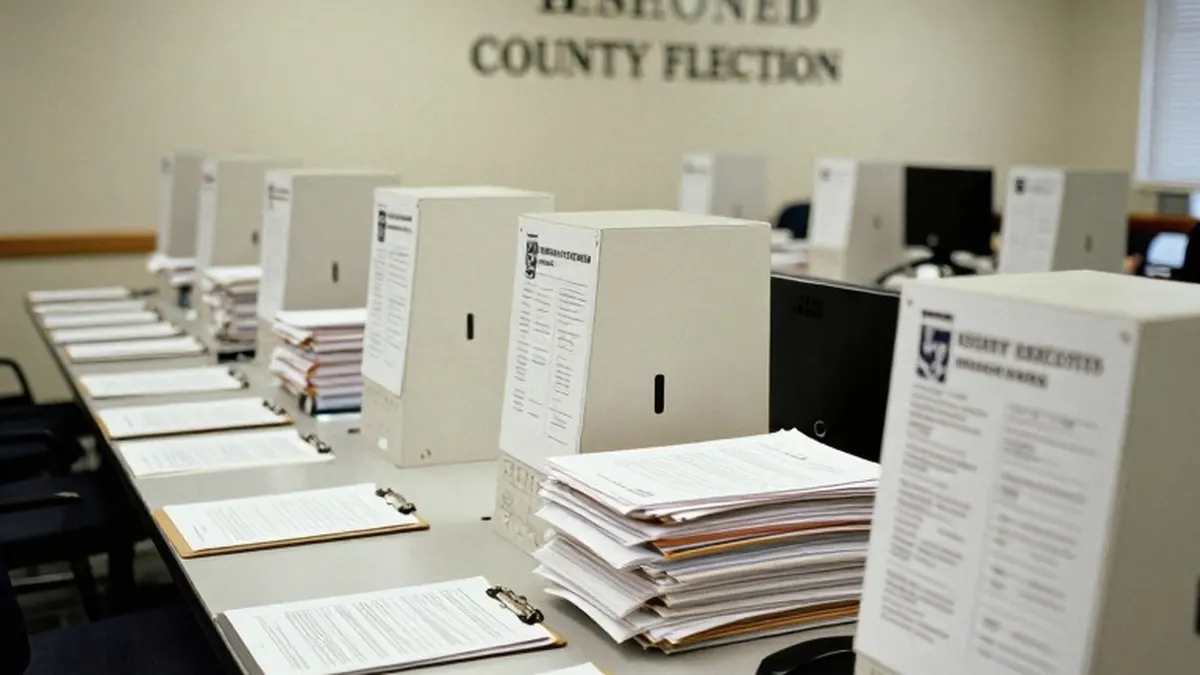
The outcome of the United States Senate race in Mississippi remains uncertain due to a remarkably narrow margin between the candidates and a lack of clear data regarding outstanding ballots. As of midday on Friday, fewer than two thousand votes separated incumbent Republican Senator Cindy Hyde Smith from her Democratic challenger, Scott Colom. This tight race has highlighted inefficiencies in a state that is known for having one of the slowest and most decentralized election administration systems in the country.
Experts note that the current situation reveals significant transparency issues. Michael Morse, a law professor at the University of Pennsylvania who studies voting, described Mississippi as not being a model of election administration. He expressed surprise at the limited information available for such a high-profile contest, stating that he is struggling to understand the unfolding process and cannot confirm basic details.
The exact number of remaining ballots is difficult to determine. The Colom campaign reported late Tuesday that it was aware of more than 15,000 provisional ballots that require verification before being counted. In contrast, the chair of the state Republican Party estimated on Thursday that there were 20,000 outstanding ballots, a figure that includes potential absentee votes legally receivable until November 10 if they were postmarked by Election Day.
Secretary of State Michael Watson, the state's top voting official, acknowledged that counties manage their own elections. He noted that even his office did not have a definitive count of remaining provisional ballots. Watson stated that nearly 7,000 of these ballots had been processed by Thursday, with approximately 80 percent being accepted. He advised that until certified results are available, individual counties would be the best source for up-to-date information. With 82 counties in the state, results are not required to be transmitted to the state level until next week.
Mississippi is experiencing a high rate of provisional ballots, which are referred to as affidavit ballots in the state. These are cast by voters whose eligibility is questioned, requiring officials to review their information case by case. If the Colom campaign's estimate is accurate, these ballots would represent roughly 1.5 percent of the total votes cast in the Senate race. This rate is significantly higher than in previous cycles, with only four states having a higher provisional rate in 2022.
A key factor in this high rate is the state's specific approach to voter registration. In most states, voters who do not cast ballots for several cycles or who show signs of moving are marked as inactive but can still vote normally for a period mandated by federal law. Mississippi, however, is one of the few states that requires these inactive voters to cast provisional ballots. This process involves filling out additional forms and undergoing post-vote review by local officials.
While the exact reason for the surge in questionable eligibility is unclear, local reports suggest the state's experimental use of credit data to clean voter lists may be a contributing factor. Morse noted that pairing this experiment with a departure from standard procedural protections could introduce unreliability. He explained that in many other states, inactive voters can cast regular ballots for at least two federal general elections before being removed.
Secretary of State Watson defended the registration process in a post on X, arguing that the extra time required to vote via affidavit ballot is worth the added election integrity of cleaner voter rolls. However, Kathy Boockvar, the former Democratic secretary of state of Pennsylvania, suggested that the process often creates a sense of suspicion among voters who believe they are eligible. She described the experience as feeling like one has to speak to a teacher in a back room.
Boockvar added that the difficulty in accessing information indicates that Mississippi has not previously received the scrutiny of traditional battleground states. She emphasized that transparency and good data are essential tools for combating suspicion and distrust in the electoral process, noting that all states must be prepared regardless of whether they are expected to be close races.