A local ceasefire in the Russian-occupied southern Ukrainian city of Oleshky appeared to be holding on Tuesday, with both sides halting drone attacks as preparations advanced for the evacuation of roughly 2,000 civilians trapped there.
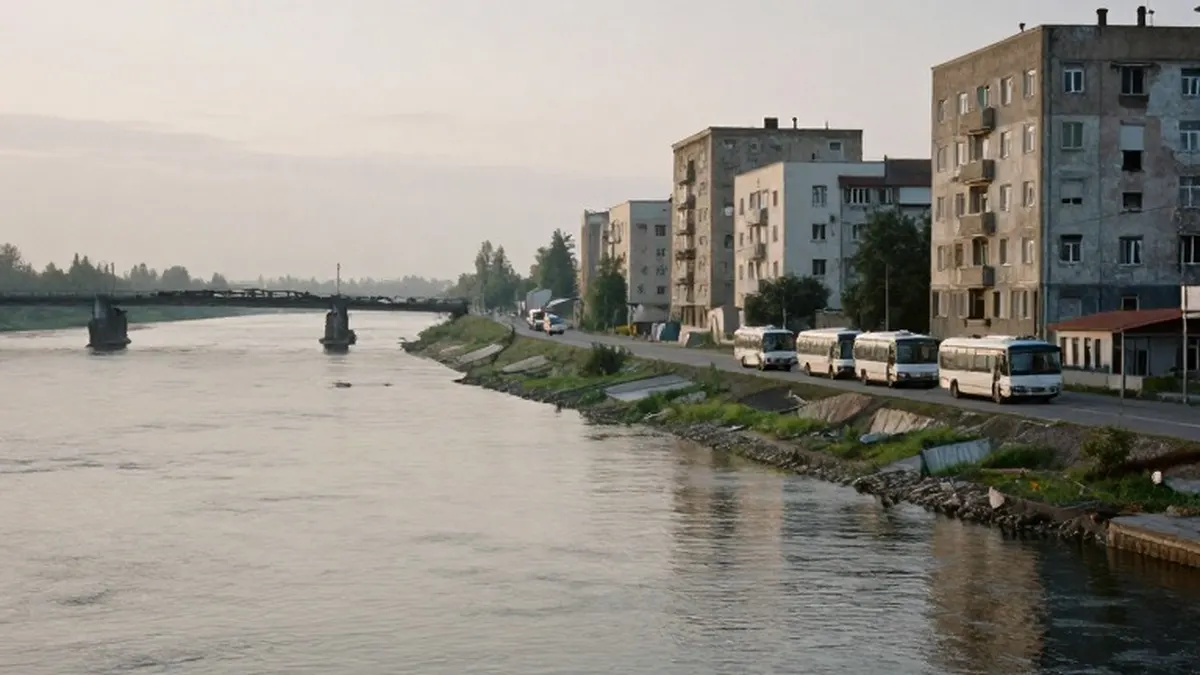
The temporary truce began at 3am. Oleshky lies on the Dnipro River, about 3 miles from Kherson on the opposite bank, which Ukrainian forces retook in autumn 2022. Witnesses said the frontline across the river was quiet for the first time in four years. Ukrainian officials said the pause is due to last until 11pm on Sunday, a limited but significant moment of de-escalation.
Between 1,500 and 2,000 people in Oleshky have been living under a total Russian blockade. The last food delivery to stores came in May, and many residents are now starving and eating weeds. Ukraine's military has dropped food by drone, but locals say Russian security forces detain anyone who picks it up. Russian soldiers have mined roads and use ruined buildings to coordinate round-the-clock strikes on Kherson. Some residents have escaped on foot or by bicycle, passing bodies in the street and the burnt-out shells of vehicles.
The White House has said First Lady Melania Trump requested the humanitarian mission, and an evacuation is expected to begin on Thursday or Friday. Pope Leo XIV, the United Nations, EU officials and the Council of Europe had also called for a ceasefire. The arrangement appears to be a Kremlin effort to win favour with Donald Trump ahead of planned talks among Russia, Ukraine and the US in Abu Dhabi next month and next week's US midterm elections. Ukrainian observers say Moscow plans a propaganda tour blaming Kyiv for the city's destruction, with pro-Trump US media channels invited to watch buses carry residents to occupied Crimea and Russia.
The truce does not cover the rest of the country. Overnight, Russia struck Kyiv with drones and ballistic missiles, killing at least one person and injuring 15. A university campus was hit, wounding students, along with a bridge over the Dnipro and metro infrastructure. Ten other regions also came under fire. The bridge remains closed to traffic, and some commuters are walking across it to reach work.
Separately, Finland's president, Alexander Stubb, and Norway's prime minister, Jonas Gahr Støre, held what they called a "frank and substantive" phone call with Vladimir Putin about ending the war. The call, a rare direct contact between Putin and western leaders, was linked to the upcoming Abu Dhabi talks. Støre said afterwards that big differences remained. The two stressed they spoke as national leaders, not on behalf of Europe as a whole.
Volodymyr Zelenskyy said Stubb and Støre had briefed him and had "clearly conveyed to the Russian leadership the need for genuine steps towards de-escalation, particularly when it comes to our energy sector and infrastructure." He said Russia "must stop dragging out this war" and welcomed European efforts to end it.
European governments remain divided over whether engaging directly with Putin is worthwhile, and there is little agreement on who should lead such talks. Some EU officials see Stubb as a possible candidate. Denmark's prime minister, Mette Frederiksen, criticised the initiative: "I am very sceptical about this independent initiative by Norway and Finland. It was not agreed with any of us." She added that she saw no signs Russia wants peace with Europe, citing its daily hybrid warfare and continuing strikes in Ukraine.
Earlier this month Putin said he would resume negotiations only on hardline Russian terms, including the handover of the entire eastern Donbas region and further territory in Kherson and Zaporizhzhia provinces. Last week Zelenskyy told ABC News Ukraine was ready to stop the war as soon as possible and open to freezing the conflict along current frontlines, though Ukraine would not recognise occupied land as Russian.