OpenAI Chief Financial Officer Sarah Friar stated on Friday that the company will maintain its investment strategy for artificial intelligence infrastructure, regardless of the recent midterm election outcomes. Voters in Tuesday's elections strongly opposed data center projects, leading Friar to emphasize the need to balance continued capital expenditure with evolving public sentiment. She explained that meeting customer demand requires sustained investment, a process that began with establishing relationships with major cloud providers and will continue through future capital raising efforts.
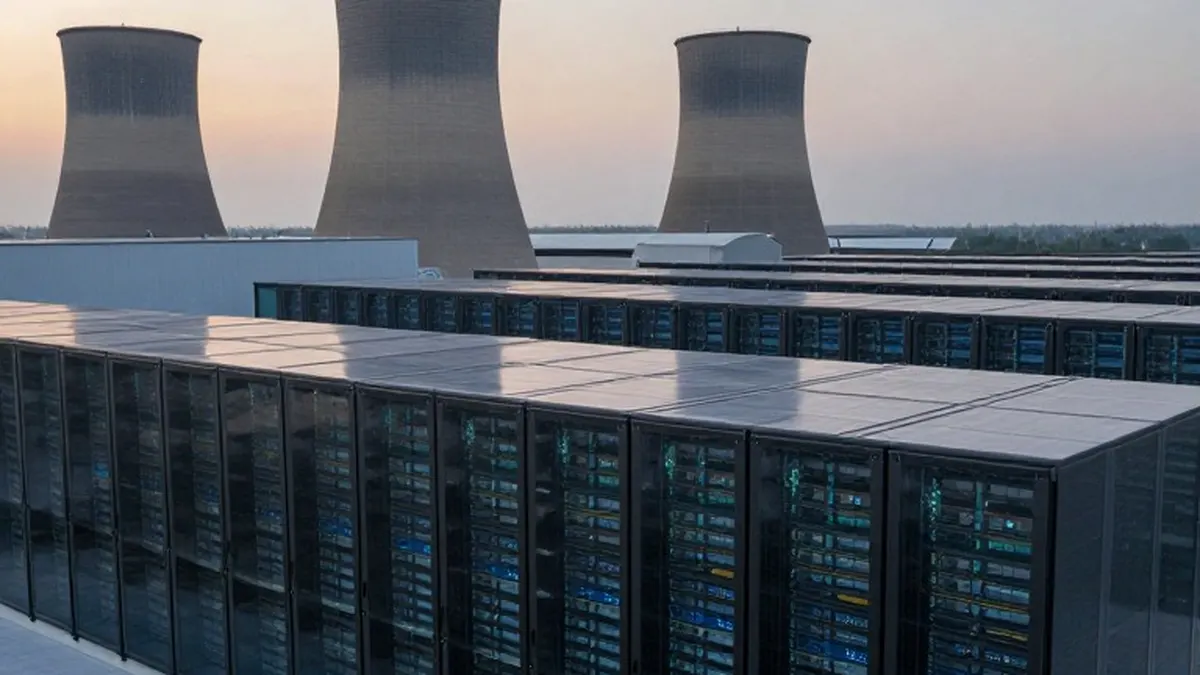
The backlash against data centers became evident in local ballot measures across ten states. An analysis by Ballotpedia, supplemented by additional results gathered by CNBC on Wednesday, showed that voters supported restrictions or rejected pro-development measures in all but one of the forty-one local votes. Opposition to these facilities grew rapidly over the summer, driven by concerns regarding environmental impact, increased utility bills, and potential job losses.
The broader market has also reflected a shift in sentiment toward the AI sector. Investors have grown skeptical due to rising borrowing costs, concerns about increasing corporate debt, and public resistance to the industry. The Nasdaq experienced its steepest decline in nineteen months on Thursday, driven by sharp drops in shares of chipmakers and neocloud companies closely linked to the AI buildout. However, these stocks managed to recover some of their losses by Friday.
Friar indicated that the election results do not represent a dramatic change for OpenAI, which relies heavily on data centers for training models and serving clients. On Thursday, the company released a policy blueprint and a set of commitments designed to apply to its future company-owned and operated data centers. Friar noted that if the midterm elections signal a greater focus on data centers and local communities, OpenAI is prepared to engage more deeply with those communities to build trust.
Regarding its path to the public markets, Friar confirmed that OpenAI confidentially filed its prospectus with the Securities and Exchange Commission in June. The company intends to continue exploring a debut in 2027. This timeline coincides with the efforts of its primary rival, Anthropic, which is attempting to go public first with a target of reaching the Nasdaq in mid-November.
Anthropic has reported significant financial growth, with revenue jumping approximately 1,200 percent in the first nine months of the year to reach $33.2 billion, according to its prospectus. The company has secured purchase commitments and lease agreements totaling approximately $895.4 billion, a figure that is substantially related to compute and infrastructure requirements.
OpenAI is currently engaged in negotiations to raise new funding at a pre-money valuation of $1.25 billion. Friar described the ongoing round as a standard practice for financial management, stating that a competent CFO raises capital when the opportunity presents itself. She emphasized that the demand for AI services remains robust and is widely accepted by industry participants.
Friar asserted that the demand for AI is a fundamental reality that few are willing to dispute. She suggested that any arguments to the contrary are likely to be a losing proposition, reinforcing the company's confidence in its long-term strategy despite short-term political and market headwinds.