Paraguay President Santiago Peña has resigned from his position following the rapid collapse of Ueno Bank, a significant digital lender that had become a household name in less than five years. The resignation comes hours after the country's central bank seized the institution, a move that sent shockwaves through the national financial system and led to immediate political turmoil.
The financial crisis escalated quickly on Wednesday. By Thursday morning, a rebellion among members of Peña's own conservative Colorado Party had grown into a party-wide revolt. Both main factions of the ruling party in the lower house pledged to support impeachment after former President Horacio Cartes, a powerful leader within the party, withdrew his backing for the current administration.
The path to impeachment requires a two-thirds majority of lawmakers present in the lower house to send the case to the Senate, where a similar two-thirds vote is needed to remove Peña, a 47-year-old former International Monetary Fund economist. Prior to his party turning against him, Peña had attempted to manage the situation through a video message. In it, he accepted no personal blame, promised to protect depositors' savings, and approved emergency payouts for affected customers.
Peña stated that Paraguay needed institutions capable of providing clear answers and protecting the resources of its people. He also appointed a new central bank chief on Wednesday. However, the political upheaval has left a larger question unresolved regarding how a bank with ties to the president, who held a stake in Ueno's holding company until last year, could grow so rapidly despite warnings about its lending practices.
Many Paraguayans attribute the crisis to the close relationship between the long-ruling Colorado Party and the country's business elite and regulators. Ueno, which rebranded from an older finance company, gained a banking license in 2023 and quickly expanded its presence. It attracted customers with cash-back offers, opened more than 70 locations, and sponsored the national soccer team.
Government funds flowed into Ueno under Peña's administration. He appointed Carlos Carvallo, president of Ueno's predecessor, to head the central bank, the very agency responsible for supervising the lender. As of last month, Ueno reported holding approximately $800 million in public deposits, which accounted for about a quarter of its total assets. These funds included money from state pension and health funds as well as operators of major hydroelectric dams.
Concerns within the central bank grew throughout 2025. Inspectors identified a pattern of risky lending to insiders, with large sums extended to companies tied to the bank's owners beyond legal limits and without sufficient collateral. In September 2025 alone, nearly $39 million was transferred to three such companies in a single day. Peña had previously dismissed these warnings as a smear campaign designed to spook the public.
The situation deteriorated sharply on Monday when regulators found poorly documented loans and incorrect asset reporting. After corrections, Ueno's capital fell to less than half the legal minimum. The central bank seized the lender on Tuesday and announced plans to transfer customer accounts to other banks before liquidating remaining assets. Ueno's digital services went dark, and branches closed their doors, leaving depositors unable to access their savings.
A rush to open accounts at other banks caused technical failures in their mobile applications, fueling public panic. Officials have since begun repaying depositors and opening new accounts for roughly 280,000 customers who banked exclusively with Ueno. Pedro Acosta Bernal, the interim central bank president appointed after Carvallo resigned, insisted that the broader banking system remains sound.
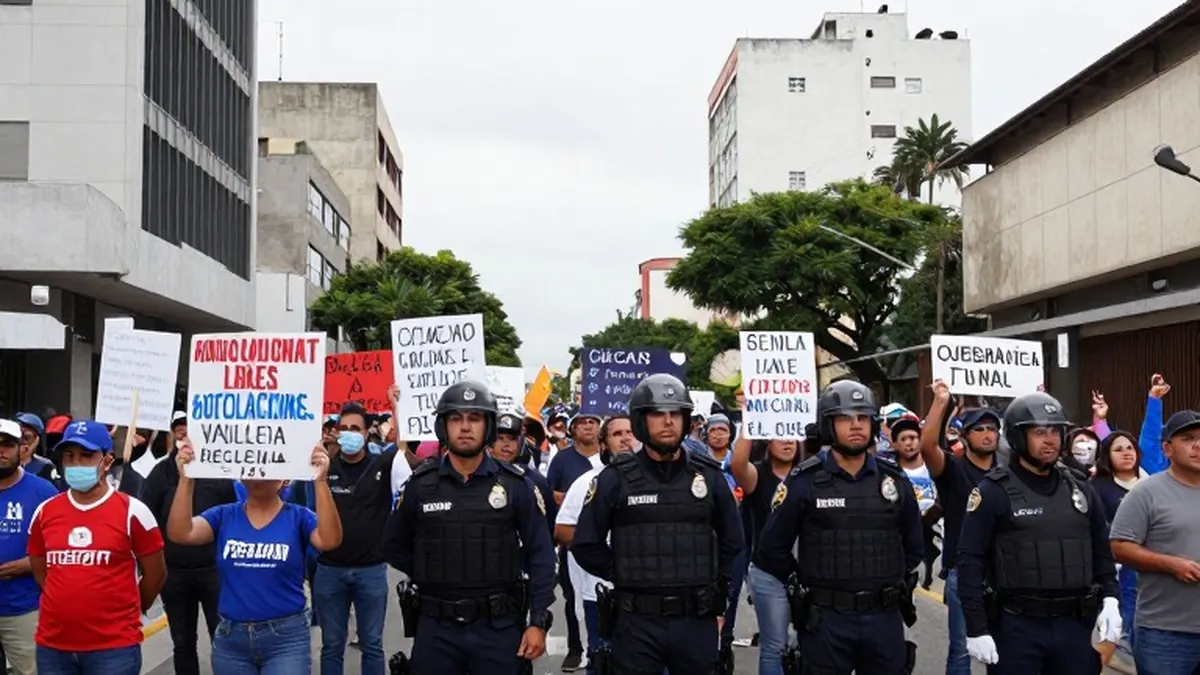
Authorities have detained eight senior Ueno executives, including founder Miguel Vázquez and bank President Juan Manuel Gustale. Prosecutors charged 27 bank officials and business associates with offenses such as breach of trust and attempted fraud. Protesters have flooded the streets of Asunción, demanding Peña's removal and the return of their money. Riot police used pepper spray and rubber pellets to manage the crowds, while hundreds of Ueno employees protested outside the Labor Ministry seeking unpaid wages and severance.