Santiago Pena, the former president of Paraguay, has been formally charged with breach of trust and administration for personal gain following a day of intense political turmoil. The charges were announced after Pena spent the morning of November 6 at the attorney general’s office in Asunción for questioning. This legal action comes just one day after lawmakers impeached him over his alleged involvement in a major banking scandal that has disrupted the financial lives of nearly half the country’s population.
The former president was placed under house arrest on Friday, shortly after an arrest order was issued following his removal from office. Prosecutors are now seeking pretrial detention for both Pena and Carlos Carvallo, the head of the central bank who was also charged on Saturday. Carvallo faces similar allegations of breach of trust and producing false public documents.
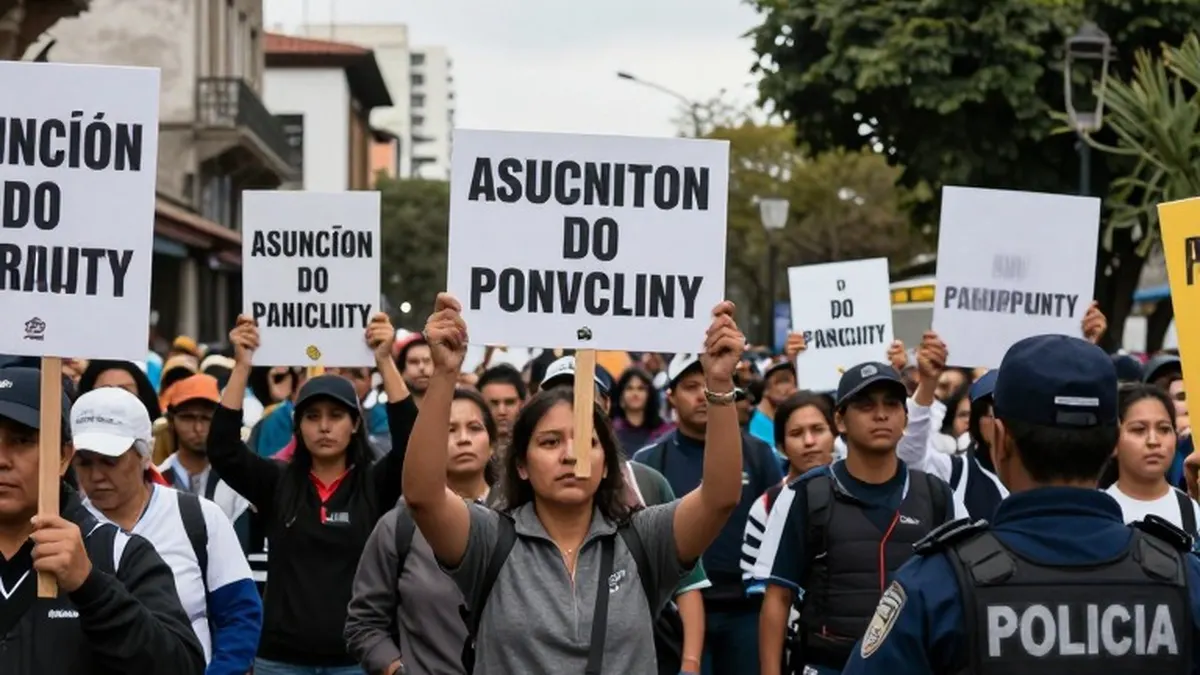
The crisis centers on Ueno, a digital bank that experienced rapid growth during Pena’s presidency. The institution attracted millions of customers and received an injection of more than 800 million dollars in public funds. However, the bank’s subsequent collapse has triggered widespread unrest, with days of protests across the nation as thousands of citizens demand access to their savings. Some demonstrations have turned violent, resulting in clashes between protesters and police forces.
Accusations against Pena include using his political influence to direct hundreds of millions of dollars in public funds into Ueno while shielding the bank from regulatory scrutiny. Investigators point to his 2023 appointment of Carlos Carvallo, a former executive at the company that became Ueno, as the head of the central bank. Critics argue that this move allowed the bank to operate with reduced oversight despite growing concerns about its risky lending practices.
Additionally, Pena is accused of allowing Paraguay’s state pension fund to deposit 355 million dollars at Ueno, an amount that exceeded legal limits. Pena has consistently denied any wrongdoing, maintaining that the bank’s issues were primarily a matter of regulation rather than political interference. He held a stake in Ueno’s parent company until March 2025, a period that coincides with the bank’s most significant expansion.
The political maneuvering surrounding the scandal began when Pena offered his resignation on Thursday. Lawmakers rejected this offer to prevent him from gaining the political immunity associated with stepping down voluntarily. Instead, they pressed ahead with impeachment proceedings, leading to his swift removal from office. Pedro Alliana, who belongs to the same conservative Colorado Party as Pena, was sworn in as the new president on Friday.
The bank collapse occurred after regulators took control of Ueno on Tuesday due to concerns about its solvency. This action left nearly three million people unable to access their savings or use their bank cards. The central bank reported on Saturday that 1.2 million customers had already received partial or full reimbursement of their insured deposits. Despite these efforts, public anger remains high, with many citizens still waiting for their money to be returned.
Public frustration has also been directed at Pena’s replacement. Pedro Alliana is himself under investigation in connection with the bank’s collapse, a fact that has complicated the government’s response to the crisis. Alliana has pledged to assist those affected by the financial disruption, aiming to restore stability and trust in the banking system. The situation remains fluid as prosecutors continue to build their case against the former leadership.
The banking scandal has exposed deep structural issues within Paraguay’s financial sector and raised questions about the intersection of political power and regulatory oversight. As the legal proceedings move forward, the focus remains on how the new administration will manage the fallout and ensure that the remaining depositors are made whole. The case has become a defining moment for the country’s democratic institutions and its economic future.