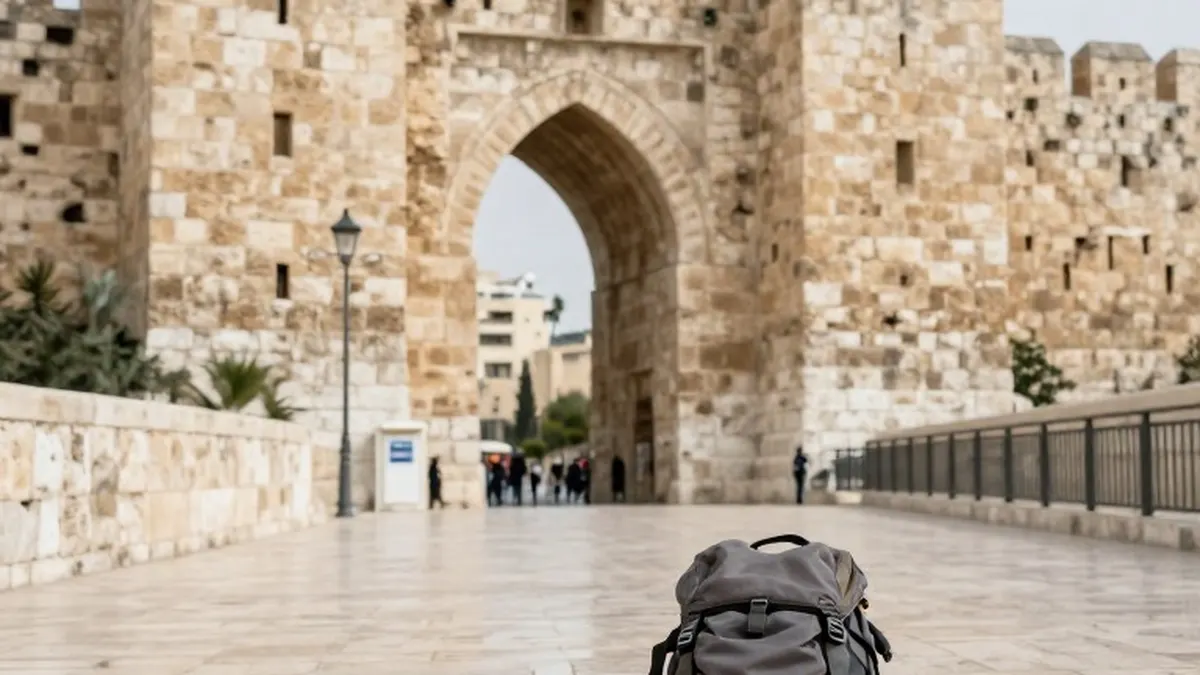
Pilgrims from nine European and Asian countries reached Jerusalem’s Jaffa Gate on Thursday after spending five days traveling along sections of the Way to Jerusalem. Their journey from Jaffa Port followed parts of the 111-kilometer pilgrimage route and ended with their arrival at the walls of the Old City.
Organized by Golan Rice and Yael Tarasiuk-Nevo and hosted by the Tourism Ministry, the initiative seeks to restore historic walking routes into Jerusalem. It offers international travelers and local participants a way to explore Israel’s religious heritage, archaeological sites and communities on foot. Stops on this journey included Jaffa, Rishon LeZion, Ramle, Tel Gezer, Latrun and Ein Karem.
For Joshan, a Catholic priest from Mumbai making his first visit to Israel, reaching Jerusalem brought together his faith and religious calling. Speaking to The Jerusalem Post as the group approached the walls, he described feeling humbled by the view after several days of walking. He said the moment had special meaning for his vocation and that he was eager to enter the Old City.
The group also included participants from Germany, Italy, South Korea, France, Spain, the United Kingdom, Austria and Hong Kong. Joon, a South Korean pilgrim, told the Post that seeing Jerusalem’s ancient walls for the first time had left a strong impression on him. He expressed pleasure at finally reaching the destination.
Ariella, who came from Hong Kong, said the physical demands exceeded her expectations. Before the pilgrimage, she had prepared with gym sessions and daily walks lasting 45 minutes. Even so, she was surprised by the distances, describing days involving 15 kilometers of walking and 25,000 steps. She credited the team and organizer with providing encouragement and support throughout the journey.
Tarasiuk-Nevo told the Post that the route connects places associated with both Jewish and Christian history while introducing walkers to different Christian traditions. Among the communities and sites visited were the Trappist monastery in Latrun, the Benedictine community in Abu Ghosh and Franciscan sites in Ein Karem, particularly the Church of the Visitation.
Alongside those encounters with religious and historical places, Tarasiuk-Nevo said the pilgrimage gives participants room to establish a personal spiritual relationship with Jerusalem. She described it as an opportunity for each person to connect with the city through their own beliefs and interpretation.
At the closing ceremony, Jerusalem Deputy Mayor Yael Biton de Lange thanked the visitors for coming during what she described as an especially difficult time for Israel following three years of war. She encouraged them to tell others about their experiences when they returned home, saying their accounts could help people view Israel, Jerusalem and its residents from a new perspective.