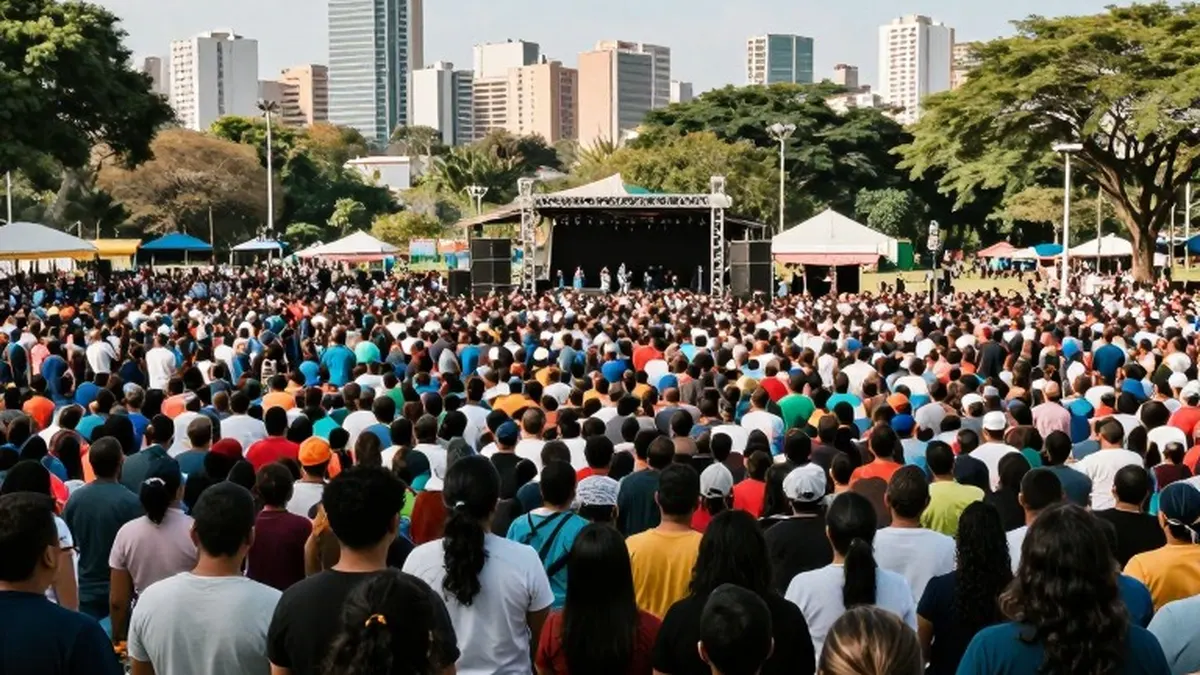
Pope Leo is set to finish his three-day itinerary in Argentina on Wednesday with an outdoor mass that is expected to attract millions of attendees. This event marks the conclusion of the first leg of his twelve-day tour across South America, which will continue through November 17. Following the service, the pontiff will depart for Peru, a move that carries significant personal weight as he returns to the country where he served as a missionary for approximately twenty years before his election.
The final day in Argentina will feature a morning celebration at the shrine of Our Lady of Lujan, recognized as the nation's most significant Catholic devotional site. Pilgrims have been gathering at the location for days in anticipation of his presence. In addition to the mass, Leo is scheduled to visit one of the country's largest penitentiaries. This visit underscores his focus on marginalized communities, a theme that has been prominent throughout his stay in a political landscape marked by the Church's criticism of President Javier Milei's reductions to social programs.
Leo holds both American and Peruvian citizenship, making the upcoming leg of his journey a deeply personal experience. He is returning to the northern city of Chiclayo, where he served as bishop from 2015 to 2023. The visit is expected to be emotional, with the pope reconnecting with old friends and spending three days in the region. However, the trip also presents a complex political challenge, testing how directly the pope is willing to engage with the current administration of his adopted nation.
Upon arriving at Peru's Callao Air Base at 5:30 pm local time, Leo will participate in a brief welcome ceremony before proceeding to the presidential palace. There, he will deliver a closely watched address to President Keiko Fujimori. Her election earlier this year was characterized as one of the closest in Peruvian history, but it was also complicated by accusations of fraud and delays in counting votes.
President Fujimori is the daughter of Alberto Fujimori, who led Peru from 1990 to 2000 and passed away in 2024. Her political victory signaled the return of a prominent and polarizing dynasty to power. The relationship between the pope and the Fujimori legacy has historical depth. In 2017, while still known as Bishop Robert Prevost, Leo criticized the pardon granted to Alberto Fujimori. He stated that the former president should personally seek forgiveness from victims of serious human rights abuses to facilitate genuine national reconciliation.
Academic observers suggest that the pope's deep familiarity with Peruvian society will influence his interactions with the current government. Jose Luis Guadalupe Perez, a scholar at Peru's Pacific University, noted that this is more than a pastoral visit, describing it as a return home. Perez added that Leo's intimate knowledge of the country means he is likely to address sensitive issues, potentially stepping on some political toes during his stay.
Peru has prepared for the arrival with considerable enthusiasm. A fourteen-meter statue depicting the pope with outstretched arms now stands in a seaside park in Callao. In Lima, merchants are selling shirts and souvenirs themed around the pontiff, while inmates at the country's largest women's prison have crafted velvet dolls in his likeness. These gestures highlight the fervent anticipation surrounding the visit.
This tour represents the first time Leo has traveled to South America in his role as pope. Throughout the journey, he has urged political dialogue and greater unity across the divided region. Analysts note that his Peruvian roots provide a unique vantage point for discussing the nation's political past. Martin Cassinelli of the Atlantic Council observed that no other country has a pope so attuned to its domestic politics, suggesting that any potential friction with the Fujimori government would likely center on reflections of the past.
Historical tensions between the late Alberto Fujimori's administration and sectors of the Catholic Church remain relevant. Disagreements often centered on human rights issues during the state's campaign against the Maoist Shining Path insurgency. The Church also opposed a 1995 amnesty that benefited members of the security forces accused of rights abuses, a point that may resonate during the pope's current address.