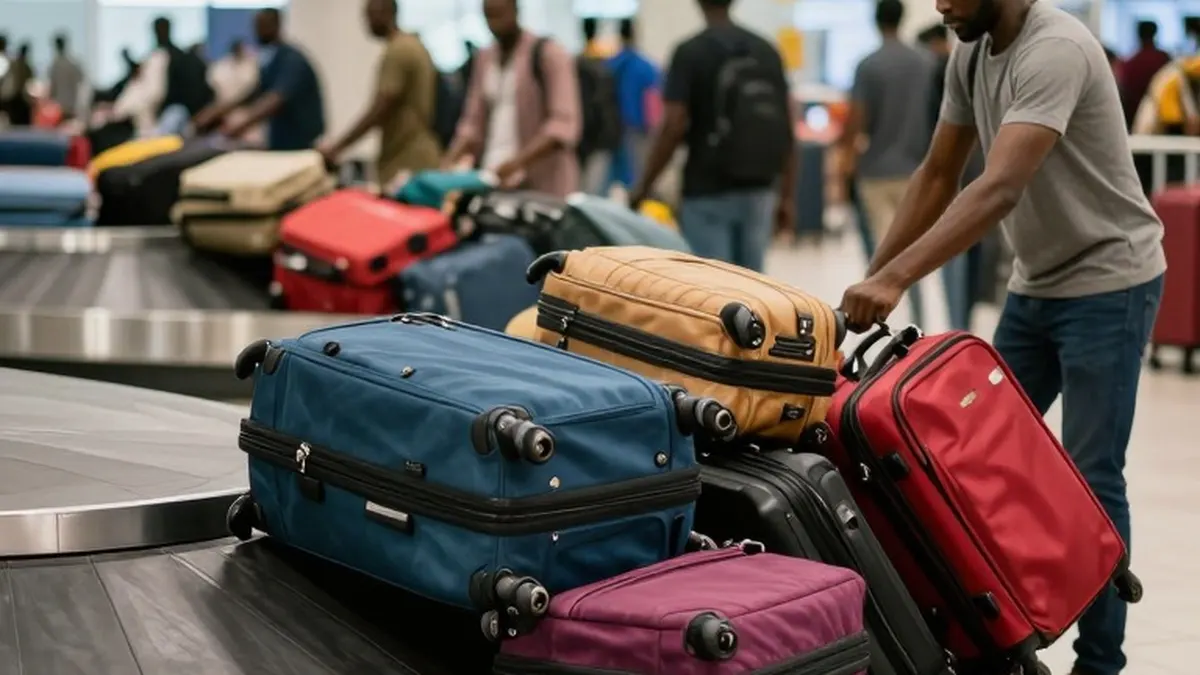
Nigeria’s National Drug Law Enforcement Agency announced on Sunday that it had arrested a South African professional golfer upon his arrival at Lagos airport. The agency reported that the suspect, Henlo Grobler, was found in possession of 50.4 kilograms, or approximately 111 pounds, of cannabis concealed within his luggage.
According to the NDLEA, Grobler, who is 37 years old, was taken into custody on October 11 after flying in from South Africa. The investigation revealed that he worked with an alleged accomplice, a 25-year-old Kenyan chef named Faiza Njambi Abubakar. The two suspects allegedly swapped luggage tags to obscure the true ownership of the narcotics.
The operation involved a specific division of travel classes to evade suspicion. Grobler traveled in business class, while Abubakar flew in economy. During the transit, Grobler carried bags tagged with Abubakar’s name. Meanwhile, Abubakar collected two bags bearing Grobler’s tags and exited the airport without being detained at that moment.
The bags that remained with Grobler contained 46 separate parcels of what the agency described as a strong strain of cannabis. Investigators noted that the suspects used tracking devices installed on the luggage and Grobler’s mobile phone. This technology allowed the wider syndicate to monitor the movements of its couriers and consignments throughout the journey.
Grobler stated during his interrogation that he had been recruited by a South African associate. He claimed he was promised a payment of 280 dollars upon the successful delivery of the drugs. In contrast, Abubakar, who was arrested on October 15 while preparing to board a flight back to Kenya, said she had been offered 8,000 dollars for her role in the operation.
NDLEA spokesman Femi Babafemi confirmed that both suspects identified each other during an official identification parade. The agency’s statement highlighted the sophisticated nature of the smuggling attempt, noting the use of electronic tracking to maintain contact between the local operatives and the masterminds of the drug ring.
This arrest is part of a broader pattern of high-profile seizures involving international athletes. On November 11, authorities discovered similar tracking devices in bags abandoned by an American professional basketball player, DaMonte Greene. Greene had 34 kilograms of cannabis in his possession and claimed he was in Nigeria to build networks for his career. However, an examination of his mobile phone suggested he was aware of and involved in the drug trafficking activity.
PGA South Africa currently lists a player by the name of Henlo Grobler, confirming his professional status in the sport. The recent incidents have drawn attention to the role of Nigeria as a major hub for drug production and trafficking. While much of the contraband is intended for export to other countries, researchers indicate that a significant portion also enters local markets.
Authorities are increasingly concerned about the expanding footprint of international cartels in the region. Recent discoveries of industrial-scale methamphetamine laboratories have raised alarms that Mexican cartels are establishing links in Nigeria to produce and ship the drug abroad. The arrest of Grobler and Abubakar underscores the continued use of airports as critical entry points for these global drug networks.