Government officials and the company behind the Federal Aviation Administration’s new artificial intelligence platform say the technology did not cause the ground stop that disrupted airline travel beginning Friday. The disruption came three days after the $875 million SMART system expanded nationwide, drawing attention to its role and the safeguards governing its use.
Homeland Security Secretary Markwayne Mullin said Friday there was no indication that the communications problems responsible for the ground stop were connected to the new system. Transportation Secretary Sean Duffy and FAA Administrator Bryan Bedford repeated that position Saturday. Air Space Intelligence, the startup that developed SMART, also denied that its products or their integration with FAA and air traffic control systems caused the disruption.
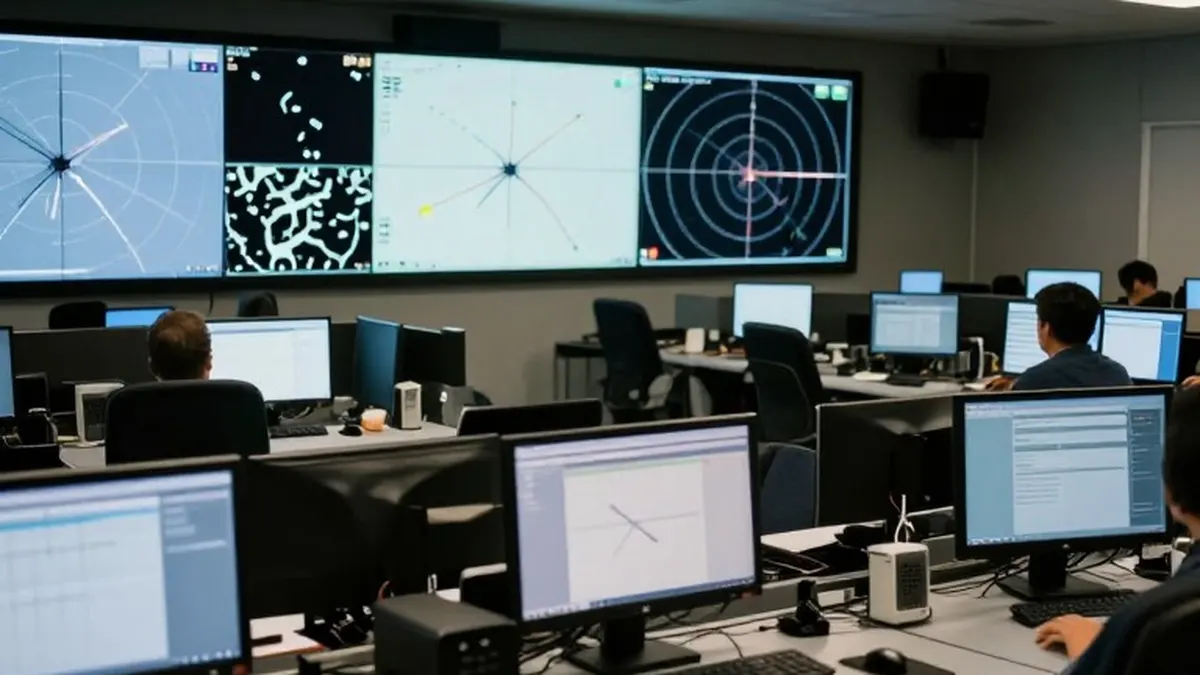
SMART, short for Strategic Management of Airspace, Routes and Trajectories, provides recommendations rather than controlling flights. A team working at a single location near Washington reviews flight schedules, weather forecasts and other information through the platform. Recommendations go to the FAA command center and then to controllers across the country for consideration. Duffy and Bedford introduced the system in September, describing a platform that brings together 200 data streams, including flight paths, traffic levels and controller staffing.
The FAA says SMART can help specialists anticipate congestion, find alternative routes, manage airport arrivals and reopen restricted airspace sooner. It is also intended to improve planning around storms. A government fact sheet says existing weather restrictions use broad rectangular areas that may exclude usable airspace, while SMART provides a more detailed view of how changing weather could affect flights.
During an initial Washington-area trial this fall, the FAA said the platform helped reroute 180 flights, saving an average of 10 minutes and 80 gallons of fuel per flight. The agency attributed a 42-minute reduction on one Tampa-to-Dallas flight to the system’s recommendations. On Nov. 10, SMART expanded to cover the airspace served by all 22 air traffic control centers.
Concerns about oversight preceded the ground stop. In an Oct. 13 letter requesting a Government Accountability Office audit, House Democrats questioned the software’s safety and safeguards. They said frontline aviation safety workers appeared to have had little involvement in its development and had received limited training and information during deployment. The lawmakers also questioned whether the technology could interfere with experienced controllers’ decisions or produce fabricated safety-critical information.
Mike O’Donnell, a former senior FAA official who spent 17 years at the agency and now works in aviation safety consulting, said recommendations need verification and validation. He warned against placing excessive trust in the technology before it has repeatedly demonstrated reliability. The FAA, he said, “cannot afford to be wrong on this.”
The rollout also comes during a longstanding controller shortage. The National Air Traffic Controllers Association, which represents about 14,000 controllers, including roughly 3,000 trainees, has raised staffing concerns for more than a decade. Experts say AI cannot replace controllers’ years of training. In an October NPR interview, Air Space Intelligence co-founder and CEO Phillip Buckendorf said SMART was designed for managers overseeing the national airspace, with human operators retaining authority over whether to accept its recommendations.