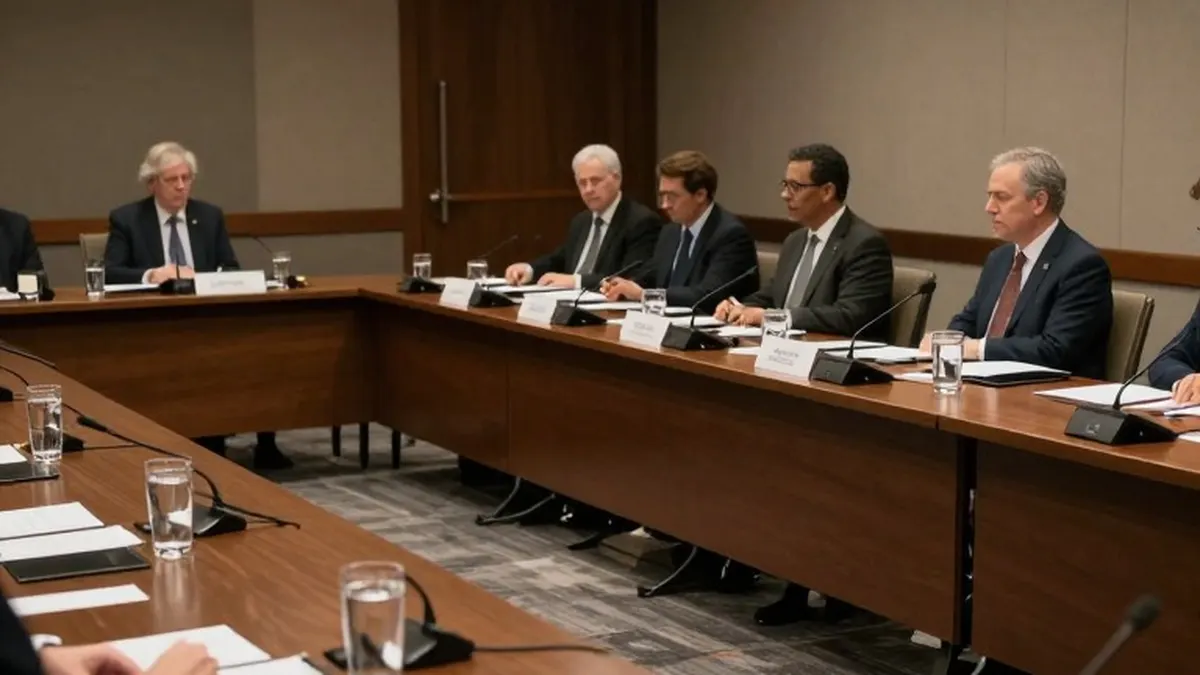
US Secretary of State Marco Rubio expressed uncertainty about whether negotiations could end the war in Ukraine as G20 foreign ministers concluded two days of talks in Atlanta on October 31. European officials told RFE/RL that he also privately questioned the prospects for an agreement in the coming months and whether Russian President Vladimir Putin would attend December's G20 summit in Miami.
At his closing news conference, Rubio said Washington was still assessing whether a settlement was possible. He said President Donald Trump's envoys, including Jared Kushner and Steve Witkoff, were spending much of their time on Ukraine and Iran, but cautioned against expectations of an imminent breakthrough. Rubio also said Ukraine negotiations had not been discussed at the Atlanta gathering itself.
Three European officials, speaking anonymously, said Rubio privately doubted Putin would accept the invitation to the summit, which Trump plans to host at his Doral resort in Florida. Publicly, Rubio said Russia had neither announced nor confirmed Putin's attendance. He left open the possibility of inviting Ukrainian President Volodymyr Zelenskyy, while emphasizing that Trump would decide.
Rubio defended inviting Russian Foreign Minister Sergei Lavrov to Atlanta and maintaining contacts with Moscow, arguing that a negotiated outcome required communication with both sides. He said Trump did not consider talks with foreign leaders an endorsement of their actions. Russia's nuclear arsenal also made continued communication important because of the risk of future escalation, Rubio said.
Rubio described his exchange with Lavrov as brief rather than a formal meeting. They discussed possible contact between their leaders at the upcoming Asia-Pacific Economic Cooperation gathering but made no firm G20 commitments. According to the European officials, Rubio privately described Ukrainian NATO membership as unrealistic in the near term and unacceptable to Putin. He also warned that acquiring all of Donbas would not satisfy Russia's territorial ambitions. The State Department did not immediately comment on those accounts.
A narrower diplomatic effort concerns a possible Black Sea cease-fire. European officials urged Moscow to stop attacks affecting shipping in waters crucial to Ukrainian agricultural exports. Rubio said more countries were interested in helping guarantee or facilitate an arrangement, but he resisted describing that interest as momentum. Washington was examining Turkish proposals, and India had expressed interest in offering ideas.
Rubio warned that disrupted grain and energy shipments were harming vulnerable countries, especially those reliant on imported food. Black Sea navigation also featured in Zelenskyy's October 31 talks with Turkish President Recep Tayyip Erdogan in Istanbul. Zelenskyy thanked Turkey for supporting Ukrainian sovereignty and efforts to keep the waterway safe.
European opposition to Lavrov's presence disrupted the Atlanta meeting, with several delegations refusing to join the traditional group photograph, which was canceled. EU foreign policy chief Kaja Kallas accused Lavrov of advancing false accounts of the war and said continuing attacks indicated Russia was not ready for peace negotiations. Lavrov criticized Europe's boycott while welcoming the Trump administration's engagement.
Rubio highlighted attacks on Ukrainian energy infrastructure, increasing civilian casualties and heavy Russian military losses. He estimated that about 20,000 Russians were being killed each month and warned that prolonged fighting would complicate Ukraine's eventual reconstruction. He said Washington was seeking to establish whether its relationships with both countries could help bring the conflict to an end.
Disagreements over Ukraine, the Middle East, trade and maritime security prevented a joint communique. The US presidency instead released a chairman's statement covering priorities including food and energy security, critical minerals, supply chains and navigation, without mentioning Russia, Ukraine or their war. Atlanta was the last high-level G20 meeting before the leaders gather in Miami in mid-December.