President Nayib Bukele of El Salvador announced on Tuesday that his country's military has targeted one of the largest criminal organizations operating in Haiti. The declaration was made on the social media platform X, where the right-wing leader shared details of the recent offensive. This development occurs at a time when international observers are closely monitoring the mission and urging both nations to strictly adhere to international human rights standards.
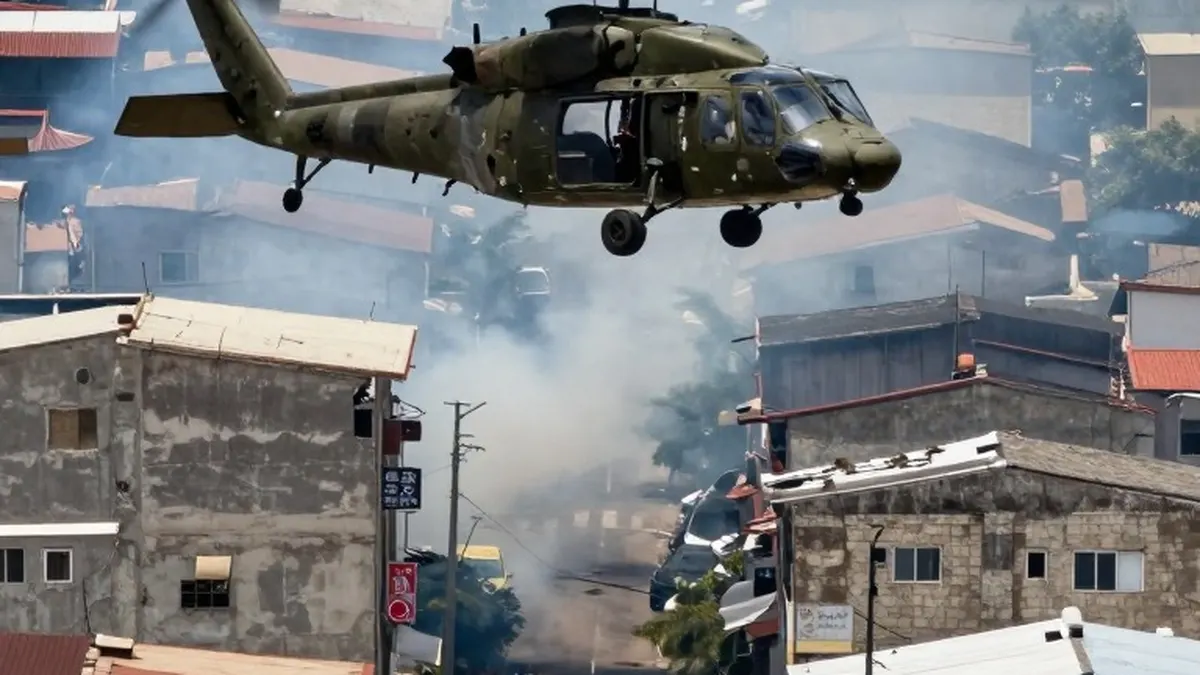
In a post on X, Bukele stated that the forces destroyed the residence of gang leader Lanmo San Jou along with the headquarters of the 400 Mawozo gang. He accompanied the text with a video showing helicopters circling the area and firing upon the site. The location of the strike was identified as Croix-des-Bouquets, a neighborhood situated near the capital, Port-au-Prince.
Reports indicate that the operation was carried out on Sunday by Haitian police officers working alongside Salvadoran troops. The joint effort resulted in the death of 20 individuals. The timing of the announcement is significant as Haiti's Prime Minister, Alix Didier Fils-Aime, is scheduled to visit El Salvador next week. The purpose of his trip is to discuss the future status and role of Salvadoran military personnel in the Caribbean nation, which continues to struggle with gang violence.
Amnesty International has called on both governments to ensure that all operations conducted by Salvadoran forces in Haiti are in full compliance with international human rights law. The organization has also requested that the agreement governing the mass deployment of troops be made public. Ana Piquer, the Americas director for Amnesty International, emphasized the need for clarity regarding oversight and accountability.
Piquer stated that both governments must explain how they oversee the deployed forces and what specific rules govern the use of force. She highlighted the importance of establishing mechanisms that allow people to report possible violations without the fear of reprisals. She urged the leaders of the two nations to ensure that all military actions meet the necessary legal standards for human rights protection.
The human rights director further called for the establishment of prompt, independent, and impartial investigations into all allegations of human rights violations. She warned that the response to gang violence in Haiti should not replicate the patterns of abuses and impunity that have characterized previous foreign interventions in the country.
Since the mid-October disappearance of four Salvadoran personnel, approximately 2,000 troops have been sent to Haiti by President Bukele. The vast majority of these soldiers are not participating in the United Nations-backed Gang Suppression Force, a fact that has raised concerns among observers about their rules of engagement and operational independence.
Bukele initially stated that the deployment was intended to bring home the four Salvadoran GSF soldiers who went missing during an ambush attack on October 18. However, more recently, he has hinted at a broader strategic goal of eliminating Haiti's powerful gangs. This approach mirrors the campaign he led in his own country, which has been marked by various allegations of human rights abuses.
The political landscape in Haiti is also shifting, as the country is set to hold elections in July and October of next year. These will mark the first elections in the nation in more than a decade, adding another layer of complexity to the ongoing security challenges.