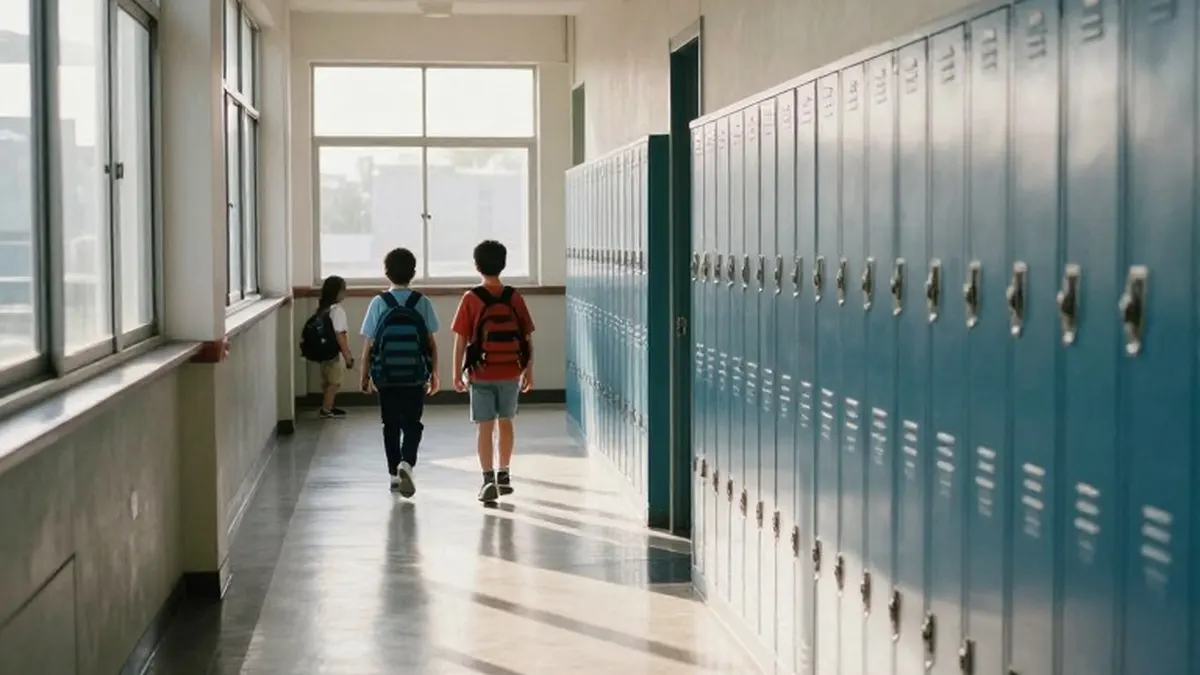
Students across the United States are facing a challenging start to the academic year as they adjust to new schools following the closure of their previous institutions. In Vallejo, California, fifth grader Penny Núñez-Brandão arrived at Glen Cove Elementary School in August only to find none of her former classmates. Her experience is representative of a growing national trend where cash-strapped districts are shuttering campuses to address financial shortfalls driven by declining birth rates and reduced funding.
According to an analysis of federal data by Big Local News at Stanford University, 1,156 schools closed during the last academic year. This marks the highest number of closures since the pandemic. However, new research indicates that student enrollment is dropping at a faster rate than schools are closing, suggesting that districts may face even more difficult financial decisions in the future.
The Vallejo City Unified School District, located near San Francisco, serves half as many students as it did two decades ago. District leaders have closed five campuses since 2025, which represents a quarter of its schools. They have also placed up to a third of all staff positions at risk to help cover a $36 million deficit. Despite these measures, researchers note that closures rarely provide the expected financial relief. Costs for busing students, paying severance to laid-off staff, and securing empty facilities often offset the savings.
The financial pressure is compounded by a nationwide decline in public school enrollment. Between the fall of 2019 and 2024, enrollment fell by more than 1.4 million students, or roughly 3%. While the total number of schools has decreased, it has only returned to pre-pandemic levels. This lag suggests that the system has not yet fully adjusted to the reduced student population. Factors contributing to the decline include lower birth rates, a federal crackdown on immigration, and the expansion of private school vouchers and homeschooling options.
Research groups Bellwether and WestEd estimate that declining enrollment could cause schools to lose $11.5 billion in state revenue annually by the 2030-2031 academic year. This loss could prompt widespread layoffs, cuts to academic programs, and further school closures. In Vallejo, enrollment has tumbled from nearly 18,000 in 2006 to about 9,300. The district is not alone in this struggle, as large systems in Cleveland, Houston, and Philadelphia face similar challenges.
Rubén Aurelio, the superintendent of Vallejo schools, stated that the district is right-sizing a system that was built for significantly more students. He emphasized the need to concentrate resources to improve outcomes for the remaining children. However, the closures have created instability for families. Some parents have chosen to homeschool or move to neighboring districts, while others have enrolled their children in charter schools. This exodus of students further erodes the per-student funding that districts rely on.
The logistical strain of the transition is evident in classrooms. At Glen Cove, a third-grade teacher had 34 children assigned to her room, forcing desks to be packed tightly together. On the first day of school, 7% of the district's teachers were substitutes. Marisa de la Torre of the UChicago Consortium on School Research noted that displaced students often suffer long-term drops in reading and math scores, particularly when they end up at low-performing schools.
To mitigate the impact, the Vallejo district is renovating older campuses and planning to open a Tagalog-language school to attract Filipino families from the Bay Area. The district has also taken aggressive steps to preserve enrollment, such as denying some transfer requests and offering tours to showcase its academic programs. Jason Willis, a school finance expert, compared this approach to the marketing strategies used by charter schools.
Despite these efforts, uncertainty remains high. In October, Penny’s teacher resigned, leaving the class to be handled by a long-term substitute. Her mother, Kimberly Núñez-Brandão, is now considering enrolling her daughter in a competing charter school. She believes that more closures are inevitable as the district continues to navigate its complex financial landscape.
The situation in Vallejo highlights a broader national issue where school districts must balance the need for cost-cutting with the goal of maintaining quality education. As enrollment continues to decline, the pressure on state and local budgets is expected to intensify, forcing difficult choices that will impact students and families for years to come.