Alan Dean Foster, one of the most respected names in science fiction, is back with a new novel. "Lost on Paradise," published by Blackstone Publishing, arrives this week as the latest chapter in a career that has lasted 55 years and earned him grandmaster status in the genre.
Foster's résumé reaches deep into Hollywood-adjacent sci-fi. In 1976 he ghost-wrote the first "Star Wars" novelization for George Lucas, and in 1978 he followed it with "Splinter of the Mind's Eye," which was meant to serve as a low-budget sequel in case the original film did not catch on. He also created the screen story for "Star Trek: The Motion Picture" and wrote novelizations of the first three "Alien" films, "The Black Hole," John Carpenter's "The Thing," "The Last Starfighter," "Transformers" and "Terminator: Salvation," among others. His original work includes the popular "Spellsinger" series.
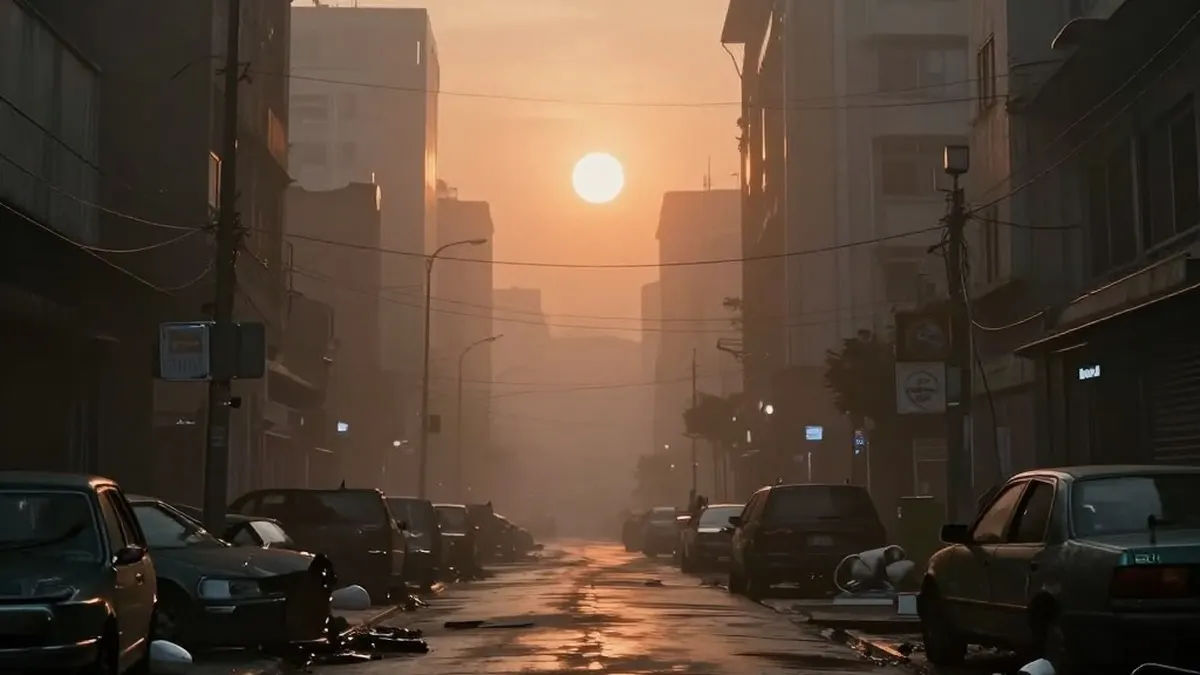
"Lost on Paradise" is set roughly 150 years in the future. According to the book's synopsis, Earth is crowded, polluted and dismal. Jonos and Liina, like millions of others, get by on her low-paying job and the little money he earns selling items scavenged from wealthy people's trash. They dream of Paradise, a clean and verdant planet shared by three races: the Eiquan, who command astonishing technology; the Lusanata, who hunt and farm; and humans, who live in a few scattered settlements but still enjoy a life far better than that on Earth. After a criminal act, the couple flee to Paradise and find all they hoped for, until tragedy strikes.
Foster told Space that the idea has been developing in his mind for years. "I had this notion of a planet called Paradise where everything is perfect, and everything on Earth is seriously messed up," he said. He described a couple with money troubles and a protagonist who is unusual for the genre: Jonos recognizes that Liina is smarter than he is, so she is the brains and he supplies the muscle. Foster stressed that Jonos is not stupid, noting that readers too often meet a hulking character with no intelligence. Liina also has a potentially fatal disease, and getting to Paradise is expensive and difficult.
Building a decaying future New York required care, Foster said. He wanted to avoid presenting as near-future a scientific development that is already contemporary. Creating an alien world meant to be beautiful, yet with hidden flaws, brought its own challenge in deciding what details would reveal those flaws.
Consistency in worldbuilding matters, he added, calling contradictions a common problem in science fiction. "Where somebody is breathing air, and suddenly they're breathing methane, and it just doesn't work," he said. Foster pointed to the arrival of the first Europeans in Tahiti as a model for how a paradise can be spoiled: the visitors brought venereal disease and smallpox, to which Polynesians had no resistance. "So it's Paradise until you get there, and then maybe you mess it up," he said.
In an excerpt released with the interview, Jonos walks home through the gloom of Earth's pollution, where the smog can make daytime as dark as night. He reflects on what emigrants say about Paradise: air that can be breathed without a mask, fresh food, clean water and work for those willing to accept the rule of the dominant species and the limits placed on newcomers. The Eiquan, he thinks, are tall, graceful and technologically superior, and appear indifferent to other species.
Jonos knows these accounts are only stories and rumors. He has never met anyone who has been to Paradise, or anyone who knows someone who has. Still, images released by the media show an Earth-like planet with fascinating wildlife, and he concludes that anything would be a step up from Earth.