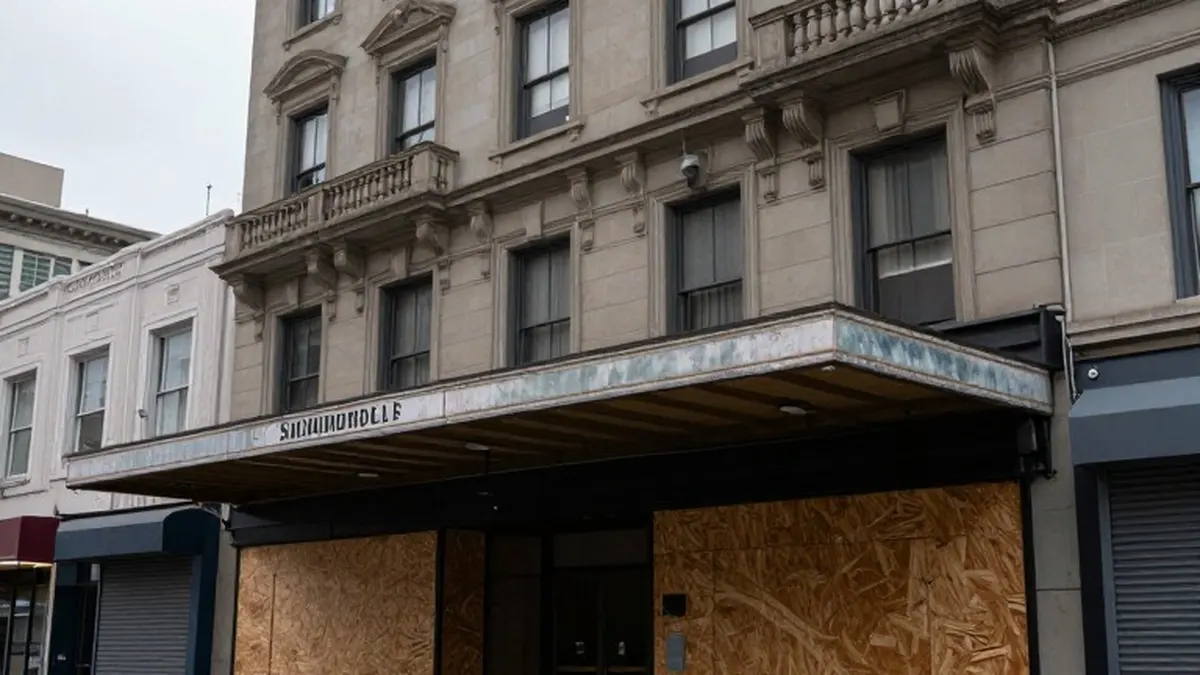
The Hotel Whitcomb in San Francisco was once a gathering spot for power brokers, from its stint as a temporary City Hall in the early 1900s to the years when Mayor Ed Lee often held morning meetings in its cafe. As of 2025-01-21, nearly two years after the city paid its owners $32 million to repair damage and cover lost pandemic revenue, the Market Street building remains empty.
The Whitcomb was among 25 hotels that joined a $415 million city program to shelter homeless residents during the pandemic. Its owner, RFR Holding, led by New York real estate figure Aby Rosen, received the largest payment of any participant: $89 million for a 33-month contract. After the program ended, RFR and eight other hotel owners filed legal claims against the city. RFR said program clients destroyed $29 million worth of property and that the hotel lost $35 million in revenue.
The city settled with RFR for $32 million, more than five times what any other hotel received, bringing the Whitcomb's total from the program to $108 million. Including a separate $25 million contract with the nonprofit Five Keys, which provided social services on site, the city's cost for the shelter reached $134 million. Overall, the city settled with nine hotels for a total of $59 million.
At least six hotels that received settlement money have reopened, but Department of Building Inspection records show no renovation permits for the Whitcomb. RFR has instead marketed the property for a reported $75 million. The company has since removed it from its website and in September filed a permit to decommission the boilers. Industry sources said the 459-room hotel's value keeps falling as it sits unsold, with nearby office buildings and similar properties trading at less than half of pre-pandemic prices. The Tilden Hotel and Hotel Union Square, which received $2.9 million and $5.4 million, have also not reopened.
RFR's legal claim said the payout was calculated to "repair and renovate the location" to its pre-pandemic condition. Jen Kwart, a spokesperson for the city attorney's office, said the claim is not legally binding and there was no agreement that the owners would spend the money on repairs. She said the city investigated the claims diligently. RFR and its attorneys did not respond to The Standard's requests for comment. Board of Supervisors President Rafael Mandelman said the situation raises a question: "Is this an expense [the city] would've chosen to make? Or would we have rather just bought the Whitcomb?"
Neighbors say the closure is hurting the area. Jeannie Kim, who owns SAMS American Eatery across the street, said hotel guests and staff made up more than half her business before the shutdown. She has since closed her second restaurant, Fermentation Lab, because of low foot traffic. "The bones of the building are still great," she said. "It needs to be sold and fixed. Then we can talk about this area getting revitalized."
The shelter program's record is mixed. At its peak, more than 400 people lived in the Whitcomb. The city sheltered over 3,700 people across two years, and 1,835 moved into housing. Supporters say it prevented a surge in homelessness. But 21 people died of overdoses inside the Whitcomb, and at least 755 people returned to the streets or unknown locations. Ricky Matthews, who worked for the Downtown Streets Team, described garbage in the lobby, broken windows and nonworking elevators, calling it "apocalyptic." Steve Good, CEO of Five Keys, said the hotel was not pristine beforehand and called the period "chaotic," though he said the rush to shelter people saved lives.
The city also has not received $519 million in requested federal Covid relief, about half of which went to the shelter program, according to the Controller's Office. There are doubts it will be recovered under President Donald Trump, which could add to an $867 million budget deficit over the next two years. Randy Shaw of the Tenderloin Housing Clinic asked why the city attorney is not suing, saying, "This should be the biggest story in town."
It remains unknown whether RFR spent any of the settlement on the Whitcomb. The company, which has a portfolio worth $16 billion, is reportedly struggling to pay commercial debts taken out before the pandemic.