The United States Department of Justice announced on Tuesday that Edgar Aaron Vazquez Alvarado, a cartel leader recently killed by Mexican security forces, played a significant role in helping former Olympian Ryan Wedding traffic drugs and avoid arrest. The allegation was detailed in a federal indictment unsealed on the same day. Prosecutors stated that Vazquez, known by the nickname El General, managed cocaine distribution for Wedding’s criminal organization. Additionally, he allegedly provided the group with rotating code words on a near-daily basis to facilitate safe passage through law enforcement checkpoints.
Vazquez, who was 42 years old at the time of his death, is also accused of using bribes to influence Mexican public officials. According to the Justice Department, these payments were intended to delay criminal investigations, tamper with physical evidence, and dismiss existing charges against the network. Beyond his role in the drug trade, Vazquez allegedly helped Wedding personally evade U.S. law enforcement agencies for a period of two years.
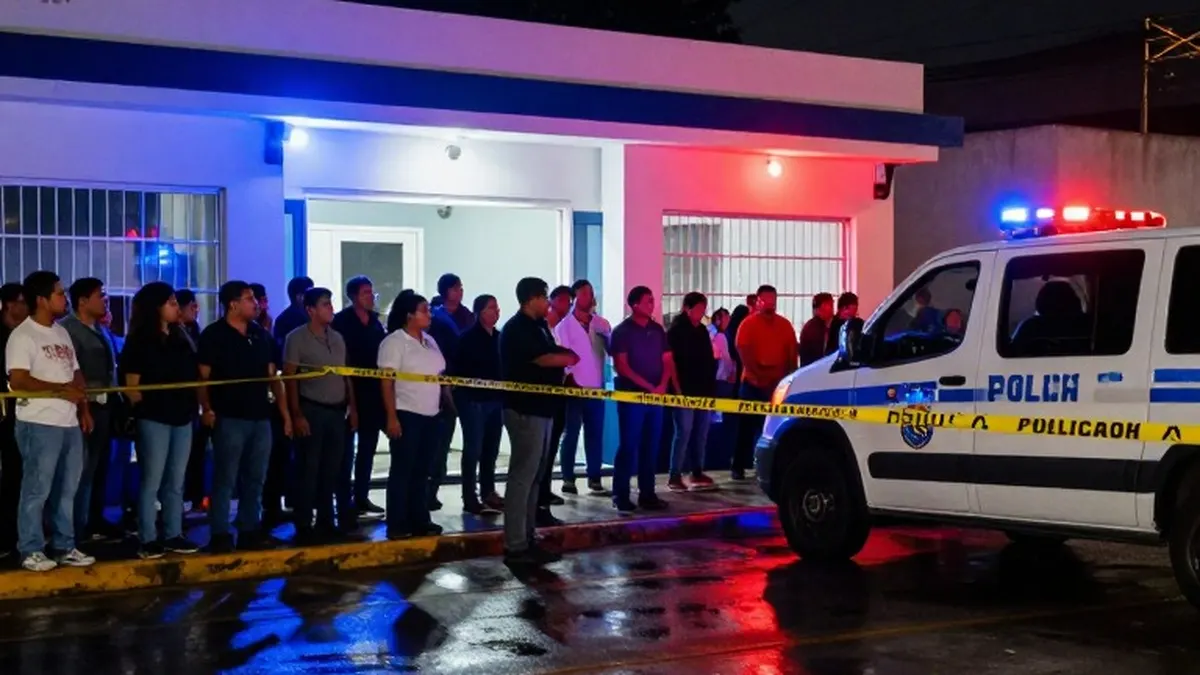
Vazquez was the founder of the El Cártel Nuevo Imperio based in Mexico City. He was shot and killed by Mexican security forces in Naucalpan, Mexico, while they were attempting to serve an arrest warrant. Omar García Harfuch, Mexico’s Security Minister, stated that Vazquez opened fire on the security team before being killed. Harfuch further claimed that Vazquez was responsible for the death of a Mexico City police chief during the incident.
In a related move, the U.S. Justice Department issued a six-count federal indictment against Roberto Gomez, a 51-year-old U.S. citizen and gang member residing in Mexico. Prosecutors allege that Gomez has acted as a drug supplier to various international criminal organizations, including Wedding’s network, for the past decade. His operations primarily involved transporting cocaine, methamphetamine, and fentanyl from Central America to Mexico using aircraft and maritime vessels. He then utilized land-based routes to move these substances into the United States and Canada.
One specific transaction highlighted in the indictment involved Gomez attempting to broker a sale of 1,000 pounds of methamphetamine to Wedding’s organization. The Justice Department estimated that this particular deal would have been valued at approximately 550,000 dollars. Between 2024 and 2026, Gomez is also accused of assisting Wedding in avoiding apprehension by U.S. authorities. His ability to do so stemmed from his connections with major cartels, including the Sinaloa Cartel, and his relationships with individuals who had access to sensitive information from both Mexican and U.S. law enforcement agencies.
If convicted on all six counts, Gomez faces a mandatory minimum sentence of 10 years in federal prison. The maximum potential sentence for him is life in prison. The broader investigation into Wedding’s international drug trafficking network has led to several other developments. Wedding is alleged to have operated his network as part of the Sinaloa Cartel. The investigation has also resulted in the charging of a Mexican judge, who was accused of accepting bribes to release an accused drug trafficker linked to Wedding.
FBI Director Kash Patel has described the former Olympian as a modern-day figurehead in the drug trade. Wedding was placed on a federal list before his arrest. He currently faces 17 felony charges across two indictments, which include counts for drug trafficking and murder. The Justice Department has indicated that Wedding will remain in U.S. custody without bond while the case proceeds through the legal system.
The unsealing of the indictment against Vazquez and the charges against Gomez mark a significant expansion in the federal government’s efforts to dismantle the network surrounding Wedding. The case highlights the complex interplay between international cartels, local officials, and U.S. law enforcement efforts to track down key figures in the drug trade. The deaths and arrests underscore the high stakes involved in these operations and the lengths to which criminal organizations go to maintain their operations and protect their leaders.
As the legal process continues, the focus remains on the financial and logistical structures that supported Wedding’s enterprise. The use of code words and bribery schemes suggests a well-oiled machine designed to outmaneuver traditional investigative tactics. The inclusion of Gomez, a U.S. citizen living in Mexico, points to the transnational nature of the network and the challenges faced by prosecutors in coordinating efforts across borders.
The Justice Department’s announcement serves as a reminder of the ongoing battle against international drug trafficking. By targeting both the leaders and the logistical operators, federal authorities aim to disrupt the flow of narcotics and hold the key figures accountable for their actions. The case against Wedding and his associates is expected to draw significant attention in the coming months as the trial progresses and more details emerge from the investigation.