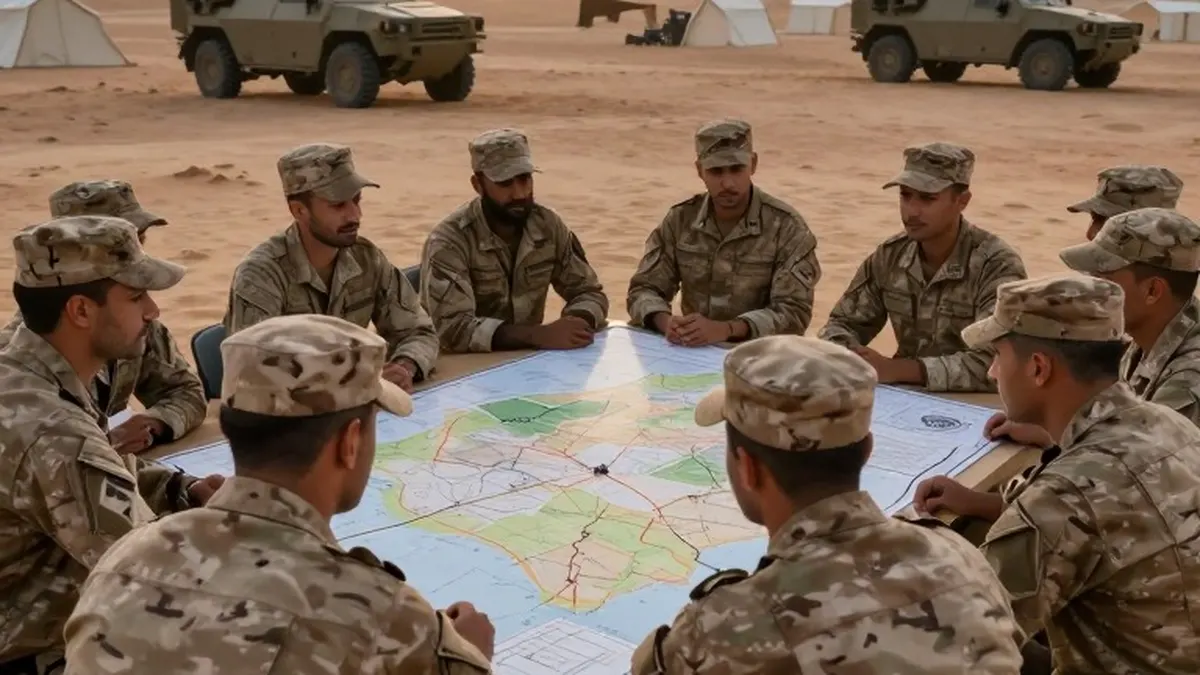
Syria is providing military advice and training to Saudi Arabia as the kingdom faces attacks from Yemen's Iran-backed Houthi movement, and has dispatched a limited number of military personnel to the kingdom, two Syrian military sources and a senior US official said.
Saudi Arabia has been engaged in intensifying hostilities with the Houthis since July, when the war in Yemen was reignited by the wider Middle East conflict. The escalation has pushed Riyadh to seek both defensive and offensive support from a range of allies.
The senior US official said Syrian advisers and training teams, drawn from forces battle-hardened by years of war at home, were traveling to the kingdom to train Saudi and Yemeni units there and improve their combat effectiveness. The two Syrian sources, who have direct knowledge of the matter, said scores of military personnel had traveled from Syria to Saudi Arabia in recent weeks. They said the mission involved advisory and training work, though its mandate could be broader.
Asked to comment, a senior Syrian diplomat said "any suggestion of military deployments at this stage is premature," adding that Syria's focus remained on internal security, border protection and reconstruction. The diplomat said a Syrian-Saudi defense cooperation deal signed on Wednesday "specifically includes advisory support, training and exchange of expertise."
A senior Saudi official told Reuters that continued expertise sharing with Syria was "mainly to restructure the Syrian forces .. but that doesn't mean also our Syrian partners don't help us in their combat experience regarding fighting militias." The official said joint training exercises were underway, with more planned in both security and defense.
The defense pact was signed during a visit to Riyadh by Syrian President Ahmed al-Sharaa, his second meeting with Crown Prince Mohammed bin Salman in less than a month. No details were announced. The senior US official said Washington has urged Damascus to move cautiously, warning that any Syrian deployment tied to the Yemen war risked drawing the country into the wider regional conflict it has so far avoided. The Saudi government, the Syrian Defense Ministry, the US State Department, Yemen's Saudi-backed government and the Houthis all did not respond to requests for comment.
Syria has become a close ally of Saudi Arabia and the United States since rebels led by Sharaa toppled Bashar al-Assad, an ally of Iran, in 2024. Its reconstituted military is built around former rebels who fought for years against Assad and the Iran-backed groups that backed him. Turkey, a close ally of Damascus, ratified on Thursday a defense pact signed in Mecca in August by Pakistan, Saudi Arabia and Turkey, clearing the way for Ankara to send military support to Riyadh.
The senior Syrian diplomat said the Saudi-Syrian "agreement may evolve to include broader defense cooperation in the future, such as" the Mecca pact, and described Wednesday's deal as a "broad framework for military cooperation" alongside agreements in other sectors, including finance and agriculture. The Saudi Fund for Development signed six agreements with Syria's Finance Ministry on Wednesday providing concessional development loans worth over $403 million, a critical lifeline for a country facing a reconstruction bill in the hundreds of billions of dollars.
Since the Yemen war restarted, the Houthis have seized territory from Yemeni government control in some areas while the government has made small gains in others. The Houthis have fired missiles at Saudi airports and oil facilities, and Saudi Arabia has carried out airstrikes in support of its Yemeni allies. Reuters reported in October that Syria was weighing military assistance to the kingdom, with options including defensive aid or an offensive deployment to help Saudi-backed Yemeni troops.
Syrian Foreign Minister Asaad al-Shaibani, speaking at a recent conference in Bahrain, said discussions were underway on Syria joining the Mecca pact. "Syria considers the security of the Arab Gulf part of regional security .. Syria stands by the people and the governments of the Gulf in the face of challenges and militias operating across borders," he said.