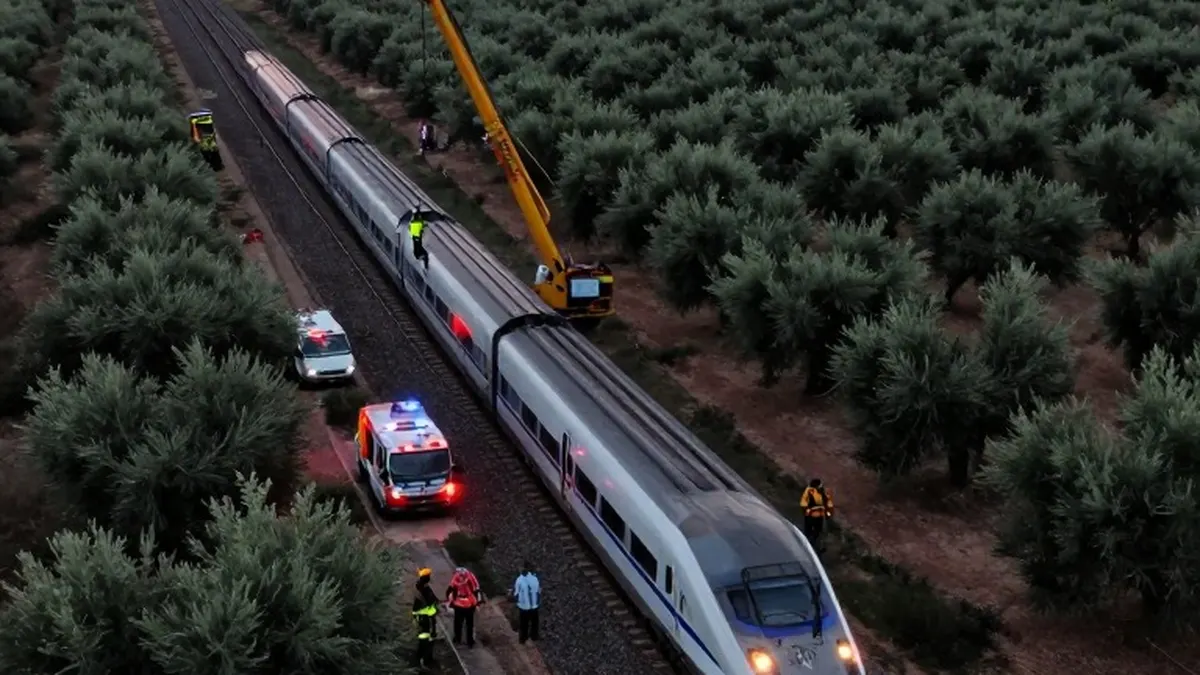
A high-speed train struck another from behind in central Spain on Wednesday, killing 68 people and raising fresh questions about the safety of the country's rail network. It is the second deadly high-speed rail disaster in Spain this year.
The crash happened on a quiet stretch of track lined by olive groves near the town of Urda, in the province of Toledo. Regional authorities confirmed that more than 60 people had died and that dozens more were being treated in hospitals. Hundreds of emergency workers, firefighters, police officers and soldiers took part in the rescue and recovery effort, and crews began using cranes late Wednesday to move parts of the damaged trains.
Spain's high-speed network has long been seen as a national triumph. Only China has more track mileage. Until this year, the system had never suffered a deadly crash in the more than three decades since it entered service. In January, 46 people died in southern Spain when one train derailed and slammed into the side of another traveling in the opposite direction. Both crashes involved a train run by the state-owned company RENFE and one from the privately owned IRYO, which began service in 2022 after Spain opened its high-speed rail market to competition in 2021.
Transport Minister Óscar Puente said the latest collision stemmed from what he called an "inexplicable" order from the central command center for Spain's trains. According to his account, a computer malfunction knocked out the security system on a 63-kilometer (39-mile) stretch at 8:30 a.m., halting all trains there. The IRYO train stopped near Urda, with the RENFE train 25 kilometers (15.5 miles) behind it. A few minutes later, the command center told the RENFE train to resume without speed restrictions. It hit the stationary IRYO train at 8:53 a.m. Puente said a stop signal was still active, so the train should not have been sent forward, and at minimum should have been told to slow down. He said the train engineers were not to blame.
Prime Minister Pedro Sánchez visited the site and promised an investigation along with steps to prevent similar tragedies. "It is clear that we need to reinforce the safety of our train service to rebuild the trust in our high-speed rail," he said, adding that it was not acceptable for Spain to suffer two high-speed accidents in a single year. His government declared three days of mourning starting Thursday. The network carried 45 million travelers last year, including millions of tourists.
The disaster comes four weeks before Spain votes in its first national election since 2023, which Sánchez called early this month. He had hoped to capitalize on public frustration over housing costs and high rents, but polls show he faces a difficult race. About an hour before news of the crash spread, he had posted on X that there were "lots of reasons to be optimistic about this country." He must now also contend with right-wing attacks over his migration policies and with corruption accusations against his Socialist party and his wife, which both he and his wife deny. Puente was asked by reporters whether he would resign, and said he was focused on the crash response rather than his own future.
Opposition leaders reacted differently. Popular Party leader Alberto Núñez Feijóo demanded a full investigation and canceled his party's campaign events for the day. "This is the moment to respect the dead, the injured and their families," he said, while adding that Spaniards were asking tough questions that demand answers.
Vox leader Santiago Abascal, who may hope to join a coalition government with the conservatives, showed less restraint. Just hours after the crash, he spoke of "more rage over being left to fend for ourselves" and vowed to work until the government, which he called "a criminal organization," answered for its crimes in court.