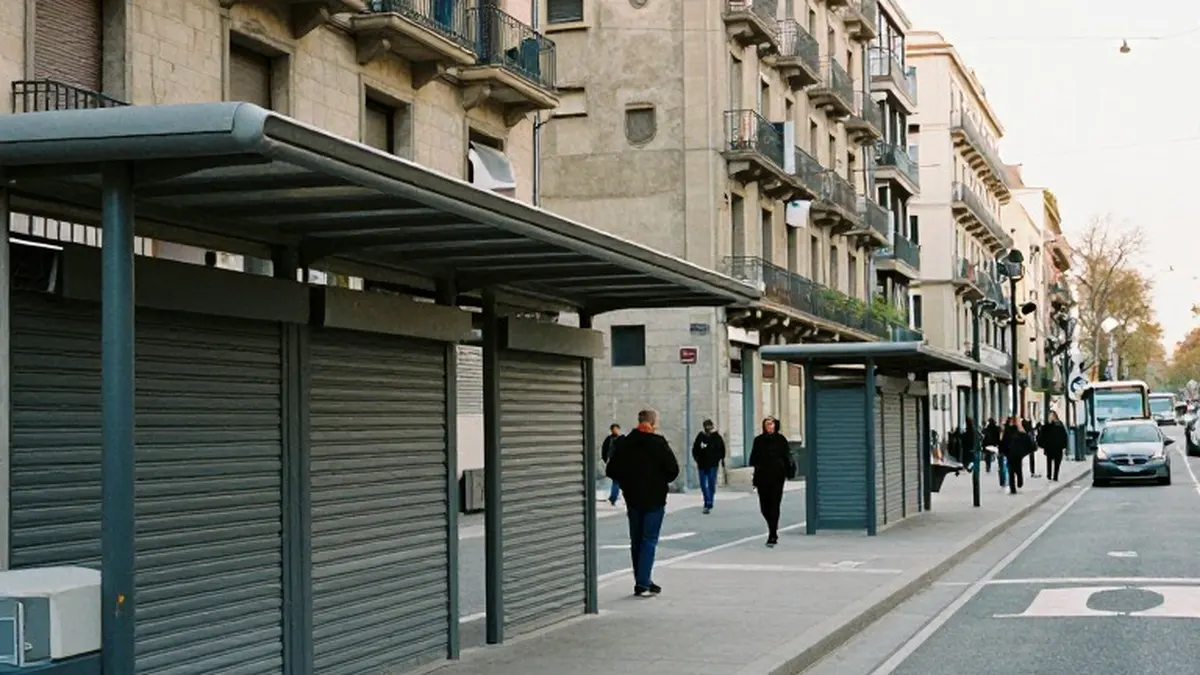
Millions of workers across Spain went on strike Wednesday, Nov. 11, demanding government action on housing costs ahead of a national election that could bring the far right to power. The country’s first general strike in 14 years was expected to disrupt public transportation and slow or close factories, shops and other businesses throughout the eurozone’s fourth-largest economy.
Early incidents included roadblocks in Barcelona, some involving burning tires, and scuffles between police and picketers near Spain’s main wholesale market outside Madrid. Workers gathering in Barcelona’s public squares marked midnight with fireworks. The unions organizing the walkout, UGT and CCOO, reported participation of 90% in the automotive and port sectors, 85% in the meat industry, 82% in waste collection and 75% in energy.
Average rents in Spain have nearly doubled over the past decade, putting pressure on household finances and fueling voter frustration. Anger intensified after the nationally televised eviction last month of an 87-year-old Madrid resident known as Maricarmen. Her subsequent death deepened the outrage, making her a symbol for people struggling with rent and unable to envision buying a home. Housing activists used the public response to rally support for a general strike, securing the backing of both major unions.
The groups supporting the strike have overlapping but distinct demands. Housing campaigners want tourist apartments eliminated, stronger action against property speculation and automatic lease renewals for tenants. UGT and CCOO are seeking greater state involvement in housing and negotiations with the business owners’ association on a new minimum wage agreement. The walkout’s official slogan is “Salaries. Housing. Prices.”
Protests over Maricarmen’s eviction prompted the government to introduce emergency measures restricting evictions and assisting tenants. Right-wing parties blocked parliamentary ratification, arguing that the measures would drive properties out of the rental market. Prime Minister Pedro Sánchez called an election on Oct. 5, seeking another four years for his left-wing coalition. His campaign has since been weighed down by a high-speed train collision that killed 69 people, Spain’s second fatal rail disaster this year.
Oriol Bartomeus, a political science professor at the Autonomous University of Barcelona, told The Associated Press that a successful, peaceful strike could help Sánchez’s Socialists and their potential allies shift the campaign’s focus back to housing. On Thursday, the government plans to ask a reduced interim Parliament to ratify the two housing decrees rejected by the full lower chamber last month.
In a social media video this week, Sánchez credited the workers’ movement and the right to strike with securing advances including the 40-hour working week and national health insurance. He also warned that right-wing parties would impose austerity and leave social services underfunded. Verónica Martínez, spokesperson for junior coalition partner Sumar, urged workers to mobilize, linking street protests to the achievement of rights through political institutions.
The conservative Popular Party and far-right Vox favor encouraging home construction over other government intervention in housing. Both accuse the unions of trying to keep Sánchez in office, while months of polling have shown voters leaning rightward. Popular Party spokesperson Miguel Tellado called the action “an electoral strike” on Tuesday. Bartomeus said violence during the walkout could instead benefit the two right-wing parties, which already govern together in some regions, by giving them an opportunity to campaign on restoring order.