The animated feature 'Steps' arrives on Netflix as a fresh take on the classic Cinderella narrative. The film positions itself within a growing trend of revisionist fairytales that seek to offer new perspectives on traditional characters. Much like the success of 'Shrek' and 'Wicked' in redefining villain archetypes, this production attempts to humanize the stepsisters. It suggests these figures were perhaps more complex than the standard antagonists who merely obstruct the heroine's journey. The result is a story that consistently generates laughs, though it occasionally feels convoluted and emotionally brief.
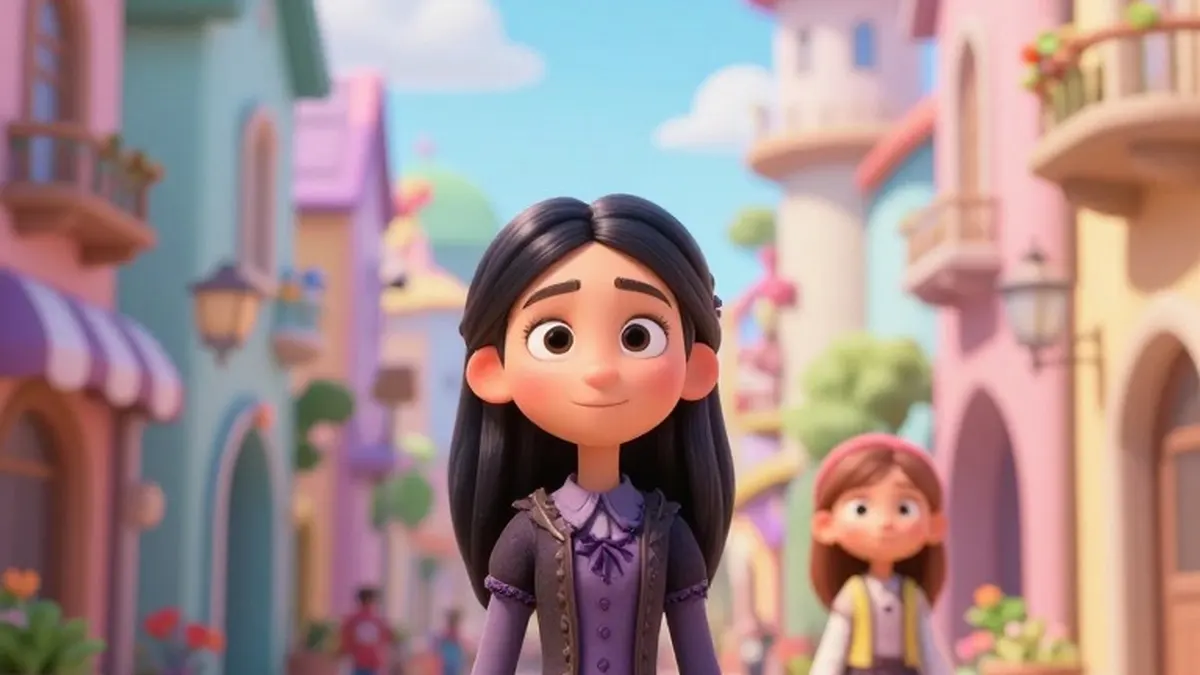
Veteran animator John Ripa, who previously co-directed the Oscar-nominated 'Raya and the Last Dragon', joins forces with first-time director Alyce Tzue for this project. The film introduces new lore to the timeless tale, shifting the spotlight away from Cinderella, voiced by Amanda Seyfried. Instead, the narrative centers on Lilith, voiced by Ali Wong, who is portrayed as an angsty goth girl with a distinct Hot Topic aesthetic. This character change provides a unique entry point into the familiar world of the story.
The backstory reveals that Lilith and her younger sister Margot, voiced by Stephanie Hsu, arrived in the kingdom of Alouette a decade prior. Their mother, a traveling seamstress, fell in love with Cinderella's father. A rift formed early in their relationship after Cinderella, fearing social ostracism, failed to defend the girls in a specific incident. As a teenager, Lilith now despises Cinderella's seemingly perfect personality. The film follows the stepsisters as they navigate a series of magical challenges while attempting to mend their fractured bond with their stepsister.
While the film features two Asian girls in a predominantly white society, this dynamic is not deeply explored. A musical number implies that the townspeople dislike Lilith and Margot simply because they assume the girls bully Cinderella. To avoid making Cinderella and Lilith direct antagonists, the story introduces Priscilla, voiced by Nikki Glaser. She is a self-centered girl who envies anyone who receives more attention. Her henchman, Roderick, voiced by Peter Dinklage, emerges as a memorable side character driven by an unrequited fatherly adoration for Priscilla.
The plot moves at a rapid pace, with the familiar Cinderella events concluding before the film's midpoint. This structure allows the story to venture into new territory, though the results are mixed. Critics note that the ten-year gap between the initial family rift and the present day is brushed over quickly. The family dynamics that allowed the grudge to persist remain underdeveloped, leaving questions about the stepmother and stepfather largely unanswered. A brief scene of the family eating dumplings is the only significant interaction shown involving the parents.
The script, credited to five writers, feels like a case of too many cooks in the kitchen. Emotional cohesion is often sidestepped in favor of boisterous action. The plot includes expected appearances by Bette Midler as the Fairy Godmother and Daniel Radcliffe as the prince. It also incorporates a romantic interest for Lilith, multiple chase sequences, and even time travel as a solution to the central conflict. These elements contribute to an overstuffed narrative that struggles to find a singular voice.
Despite the plot's density, the film succeeds in delivering humor. Numerous one-liners cleverly mock fairytale tropes and land with irreverence. This comedy serves to hold together various disparate elements of the story. Visually, the kingdom is rendered in gorgeous pastel colors, offering an intricately conceived world. However, the character designs are largely standard, resembling the typical 3DCG humans found in mainstream animated features.
One notable exception to the generic visual style is the transformation of Margot into a pudgy frog. In this form, her hair buns become the creature's eyes, providing a rare moment of interesting design. The brightly colored world, combined with the use of pop songs and the contentious banter between Wong and Seyfried, may effectively entertain young viewers. However, the film does quite a bit to establish its tone but ultimately does not make for a classic.