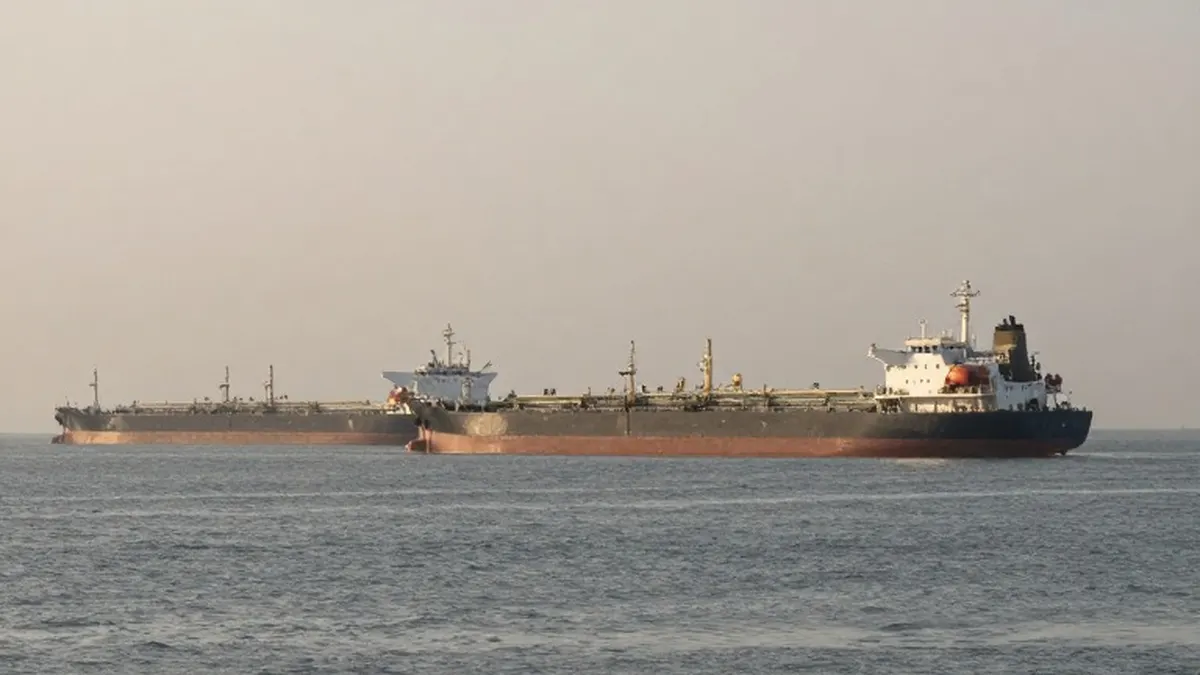
Qatar, the lead mediator in the conflict between the United States and Iran, is trying to secure an agreement allowing UN nuclear inspectors into Iran’s bombed nuclear facilities. Its proposal links access to the sites, including those holding highly enriched uranium, with steps towards reopening the Strait of Hormuz. Tehran would not have to promise to remove its uranium stockpile from the country, with down-blending to reduce its uranium content among the alternatives under discussion.
Under the proposal, Washington would immediately end its naval blockade on Iran in the strait and release part of Iran’s $8bn in frozen assets. Iran would accept visits by International Atomic Energy Agency inspectors under arrangements based on an agreement reached in Cairo in September 2025 that was subsequently abandoned. On the second day, Iran would reopen the waterway using a route negotiated with Oman, which the two countries would jointly submit to the International Maritime Organisation.
Qatar’s emir, Sheikh Tamim bin Hamad al-Thani, discussed the proposal with Donald Trump. The emir’s office confirmed their conversation on Friday without disclosing its contents. Qatar’s state news agency said the emir stressed dialogue and diplomacy as ways to resolve disputes and prevent further regional escalation. Trump is still weighing another attack on Iran’s nuclear facilities.
Negotiators also face several Iranian conditions for reopening the strait: an end to the war in Lebanon, the withdrawal of US forces from Iran’s coastline, commitments to ease some economic sanctions and agreement on war reparations. The order in which those obligations would be met has been central to mediation efforts. A memorandum of understanding envisaged a $300bn reconstruction and development fund for Iran, although its funding remained unclear.
Tehran remains reluctant to readmit inspectors, saying it has lost confidence in IAEA chief Rafael Grossi. Iran accuses him of failing to uphold the nuclear non-proliferation treaty because he did not condemn US attacks on its nuclear sites. It also fears information collected during inspections could be supplied to the United States and Israel for use in selecting targets.
In separate discussions about the strait, Oman’s foreign minister, Badr Albusaidi, again spoke with Iran about its future administration. Their talks covered the agreed shipping route, how temporary the arrangements would be and whether they should be registered with the IMO as a bilateral agreement or a joint regional proposal. Oman’s longer-term plan would charge shipping companies for services rather than impose tolls, in keeping with the law of the sea.
Amir Hayat Moqaddam, deputy chair of the Iranian parliament’s national security and foreign policy committee, told ISNA on Tuesday that vessels from China, India, Qatar and Iraq could pass through the strait. He said Chinese and Indian vessels paid transit fees, while Qatari ships travelled free. He described the exemptions as mutually beneficial, citing medicine from India and political support from China.
According to Kpler senior crude oil analyst Muyu Xu, around 42% of the 10.23m barrels of Gulf crude passing through the strait each day in October went to China, while 13% went to India.
Meanwhile, the Islamic Revolutionary Guard Corps navy said two oil tankers struck mines and caught fire while attempting an unauthorised route through the eastern strait. It alleged that both had switched off their navigation and identification systems and were attempting the passage with US military support.