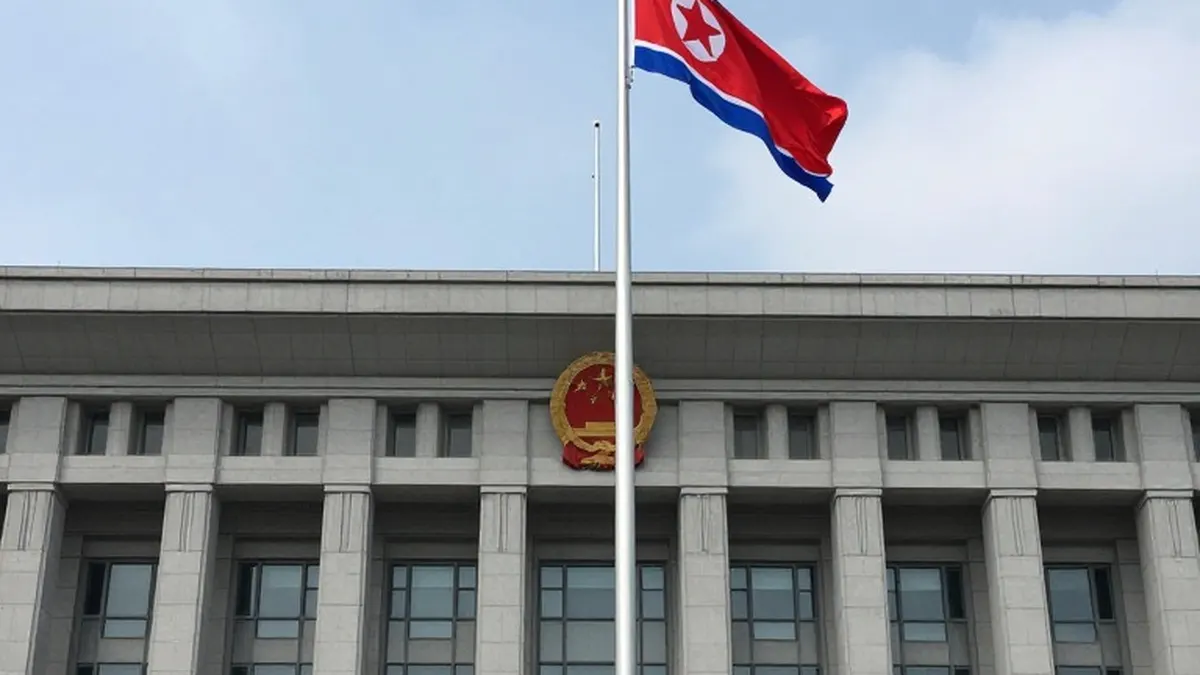
The Swiss government expressed its regret on Wednesday after North Korea decided to close the Swiss diplomatic office in Pyongyang. The decision came during a dispute over sanctions and marked a sharp reversal just weeks after Bern had formally reopened its mission in the North Korean capital.
Switzerland's Federal Department of Foreign Affairs confirmed that it was officially notified of the closure earlier in the day. The department stated that it is arranging for the head of the office to return to the Swiss Embassy in Beijing. The Swiss ministry described the diplomatic reopening as a measure consistent with its universalist foreign policy, aiming to maintain channels of dialogue even with states with which it has differences.
The tension escalated on Tuesday when North Korea condemned Switzerland for adding a specific facility to its sanctions list. Pyongyang accused Bern of an overtly hostile act by targeting the Songdowon International Children's Camp. The North Korean Foreign Ministry stated that the move infringed upon the country's sovereignty by denying children opportunities for culture and recreation.
According to a statement carried by the state-run Korean Central News Agency, the North Korean ministry summoned Sylvain Astier, the head of the Swiss diplomatic office. He was handed a memorandum urging the closure of the mission. The agency reported that Astier was declared persona non grata and ordered to leave the country within 48 hours.
Kim Yo Jong, the influential sister of North Korean leader Kim Jong Un, also weighed in on the matter. She argued that the sanctions violated the DPRK's sovereign rights and the interests of its citizens. The diplomatic friction stands out because Switzerland has maintained relations with North Korea since 1974 and is one of the few Western nations to keep a direct line of communication open with Pyongyang.
The closure occurs in a broader context of shifting diplomatic alliances. Over the weekend, Kim Jong Un personally received credentials from new ambassadors of ten countries, including Russia and Sweden, in a rare ceremony in Pyongyang. During the event, the leader stated that North Korea sought to expand relations with countries that respected its sovereignty while opposing efforts to restrict the independent rights of sovereign states.
Switzerland defended its stance by explaining that its sanctions policy operated independently of the recent diplomatic reopening. The ministry told Reuters that the goal was to preserve dialogue despite disagreements on certain issues. This approach contrasts with the view of some other Western nations, though Switzerland remains a key intermediary in global diplomacy.
Historical ties between the two nations run deep, with reports indicating that both Kim Jong Un and his sister attended school in Switzerland during the 1990s. However, recent geopolitical shifts have complicated these relationships. North Korea has closely aligned itself with Russia regarding the war in Ukraine, sending thousands of troops and significant shipments of weapons to support Russian President Vladimir Putin’s full-scale invasion.
In exchange for this military support, North Korea is believed to be receiving aid and military technology transfers from Moscow. This alliance has placed Pyongyang at the center of international debates over sanctions and sovereignty, a dynamic that has now directly impacted its diplomatic engagement with neutral Switzerland.
The swift expulsion of the Swiss envoy highlights the fragility of diplomatic channels in the current geopolitical climate. While Bern hopes to keep lines of communication open, Pyongyang has signaled that it will not tolerate what it perceives as violations of its national interests, even from long-standing partners.