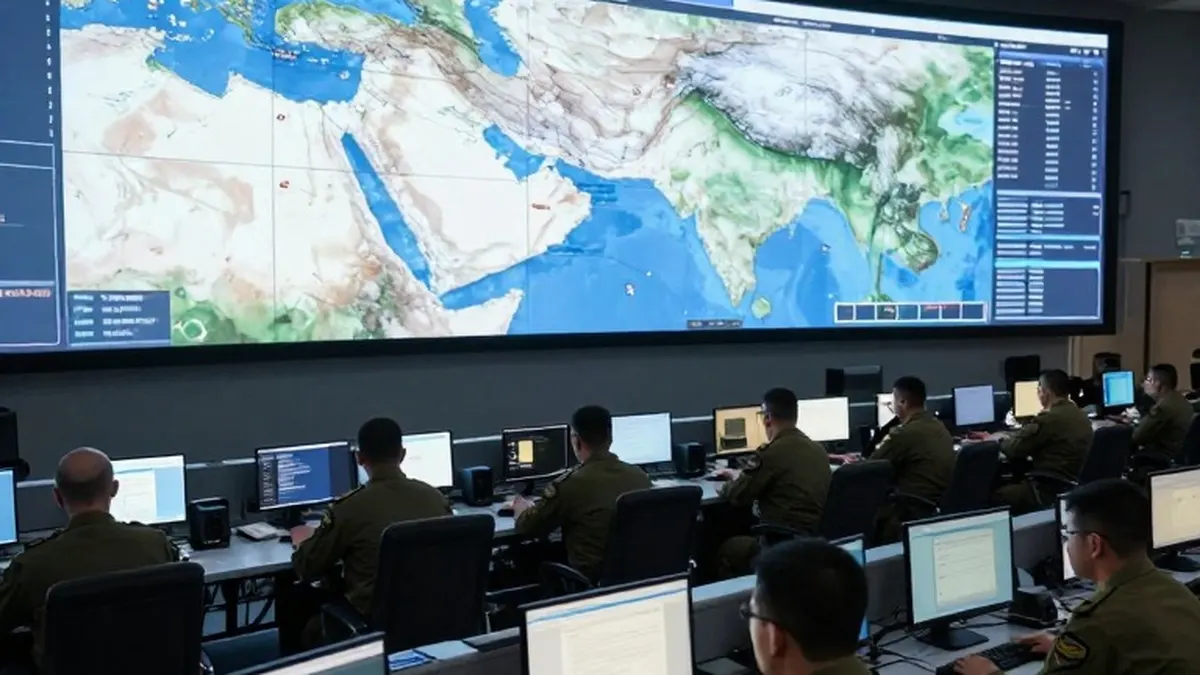
Syrian officials have confirmed that military personnel are being deployed to Saudi Arabia to assist in the ongoing conflict against Yemen’s Houthi forces. This development follows a recent visit by Syrian President Ahmed al-Sharaa to Riyadh, where high-level diplomatic discussions took place with Saudi Crown Prince Mohammed bin Salman.
The diplomatic meeting resulted in significant financial commitments, with Riyadh agreeing to provide 403 million dollars in loans to help repair infrastructure damaged during Syria’s thirteen-year civil war. While the financial aid was a major component, the Ministry of Foreign Affairs and Expatriates identified cooperation between the two nations’ defense ministries as the most notable outcome of the talks.
Initial reports suggested that Damascus was providing military advice and training within the kingdom after Saudi cities faced hundreds of Houthi missile attacks. Although there was some initial denial, a Syrian government official later clarified to the state news agency SANA that the troops were being sent for training, expertise exchange, and military consultations.
According to information shared with The Associated Press, Syrian military advisers have already arrived in the kingdom. Additionally, 600 special forces members are expected to arrive in the coming week. Nanar Hawach, a Syrian analyst, noted that this support role is significant for Riyadh as it demonstrates that the new Syrian leadership is willing to share the security burden of a regional partner.
The Houthi threat has been a central concern for Saudi Arabia since the group captured the Yemeni capital, Sanaa, in September 2014. Since March 2015, Saudi Arabia has led a military coalition to support the internationally recognized Yemeni government. Recent missile strikes on Saudi cities, alongside broader regional tensions following the US-Israel war on Iran, have heightened the need for a collective security framework.
The Mecca Joint Defence Agreement, which was signed by Saudi Arabia, Turkey, and Pakistan in August, is viewed by many in Riyadh as a key mechanism for this collective defense. Analysts suggest that Syria’s involvement could lead to its formal accession to this alliance. The Syrian official speaking to SANA indicated that the current military arrangement between Damascus and Riyadh could pave the way for Syria joining the Mecca Defence Alliance.
Hawach explained that while Yemen is geographically distant, allowing Syria to present its role as support for an Arab partner, the engagement is not without risk. Confronting Iran’s allies can invite retaliation, and soldiers killed far from home may be difficult to justify to a public expecting peace and recovery. Despite these risks, Syria’s battle-hardened forces and expertise in drone warfare make it a valuable addition to the regional security architecture.
Syria’s post-war government has faced pressure to engage militarily outside its borders, with US President Donald Trump frequently advocating for Syrian intervention in Lebanon to help disarm Hezbollah. Syrian fighters have previously participated in conflicts in the Middle East and North Africa, including the 2020 war between Azerbaijan and Armenia. Rob Geist Pinfold, a security studies lecturer at King’s College London, described this as a common Saudi strategy of leveraging partners cultivated through diplomatic links.
Since the fall of the al-Assad regime in December 2024, Saudi Arabia has been instrumental in helping the United States remove sanctions on Syria. This support has been critical in legitimizing the new government. By deploying troops, Syria is signaling its willingness to contribute to regional security, moving beyond a role solely focused on receiving aid. Samy Akil, a senior program adviser, noted that this cooperation helps Syria settle on a hierarchy of regional partners, with Saudi Arabia emerging as a top contender.
With Israeli raids continuing in southwestern Syria, Damascus may also benefit from having a major regional ally. The potential of joining the Mecca agreement is seen as a form of deterrence, aiming to stop further encroachment of Israeli troops in the Quneitra and Daraa areas. This strategic alignment underscores Syria’s effort to anchor its recovery within a broader regional security framework.