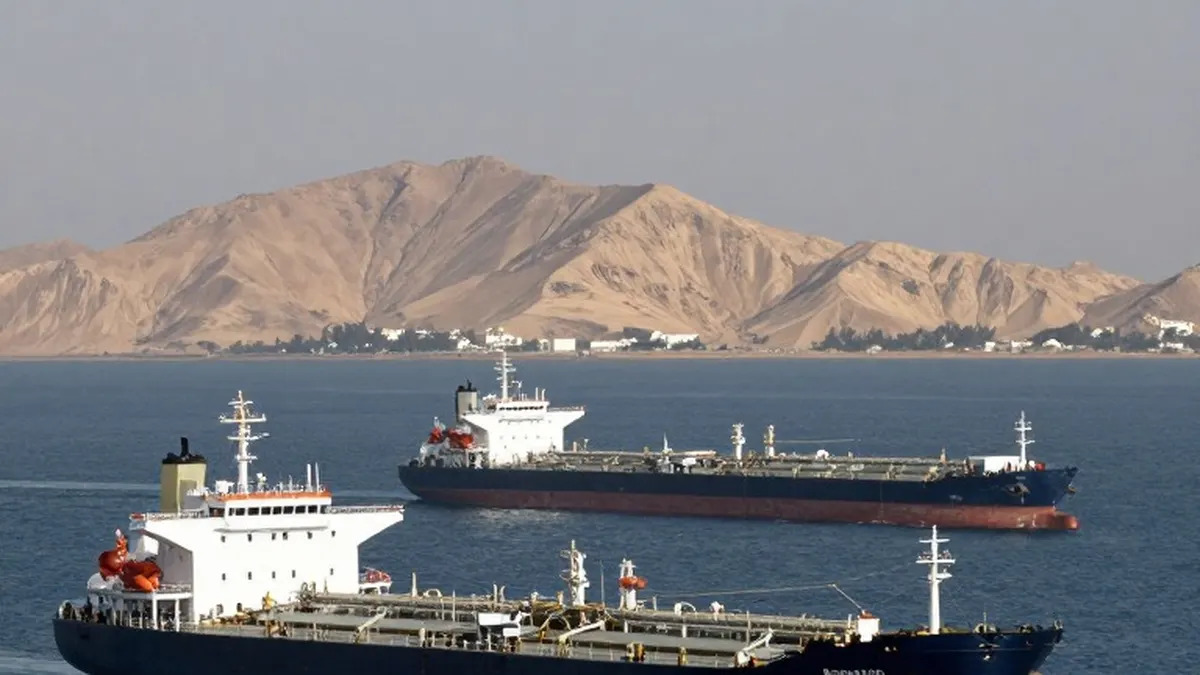
Oil tankers are continuing to carry substantial volumes of crude through the Strait of Hormuz despite October bringing more attacks on commercial vessels than any other month of the war with Iran. U.S. military protection and changes to shipping operations have helped sustain exports, although rising transport costs and worsening security are putting pressure on the trade.
Iran began attacking commercial shipping within 24 hours of the United States and Israel going to war with Tehran, seeking to disrupt a major route for global crude supplies. The initial impact was severe: Kpler data show exports fell nearly 90%, from 16 million barrels per day in February to 1.8 million in March. Shipments have since recovered substantially.
At least 30 vessels, most of them oil tankers, were hit in October through Oct. 27, with at least 16 seafarers injured, according to the International Maritime Organization. That compares with 15 confirmed incidents in September. Jakob Larsen, chief safety and security officer at shipping association BIMCO, said ships were facing attacks on a daily basis.
Despite the violence, October crude exports through Hormuz averaged almost 11.1 million barrels per day, about 2% below September, according to Kpler. Daily shipments remain volatile, however. Flows dropped to 7.3 million barrels per day in the week ended Wednesday, more than 40% below the prewar baseline. Crude prices have risen more than 13% this month, with Brent trading above $117 a barrel on Friday, close to its wartime closing peak of $118.35 in March.
A shuttle arrangement has helped operators keep cargo moving. Tankers collect crude at Persian Gulf ports, cross Hormuz with their transponders switched off and transfer their loads to vessels waiting in the Gulf of Oman. Those ships then deliver the oil to Asian refiners. Mary Melton, senior tanker analyst at London ship broker Braemar, said the arrangement lowers insurance costs for vessels remaining outside the strait.
Kpler figures show flows through Hormuz have increased more than 70% since July. But Melton said the shuttle operation is expensive, complicated and inefficient, requiring additional equipment, vessels and experienced crews. About 20% of the global supertanker fleet is involved in moving oil out of the Gulf through this system, she said.
The daily cost of hiring a supertanker for the Gulf of Oman to Asia route climbed from $249,000 in early September to more than $900,000 in the first week of October, according to Melton. Transport costs consequently rose from about $6.50 to roughly $21 per barrel. Freight can now account for 20% to 30% of the delivered cost of crude for Asian importers, squeezing refinery margins.
Higher freight rates and oil prices have increased the commercial incentive to undertake dangerous voyages, Larsen said. Melton said more Gulf producers are assuming shipping costs and risks to recover market share in Asia from U.S. and other Atlantic suppliers. They are also increasingly deploying their own tankers through Hormuz.
How long exports can be sustained remains uncertain. Larsen said tankers crossing Hormuz depend entirely on U.S. air protection. The future of that involvement is also unclear, particularly if Democrats regain Congress in Tuesday's elections and demand an end to the war. The Wall Street Journal reported that Washington had told several Gulf Arab nations to prepare for a short, intense military campaign after the Nov. 3 midterms, citing people briefed on the discussions. Meanwhile, the U.S. Navy, which is enforcing a blockade against Iran, has advised vessels without essential transit needs to avoid the region.