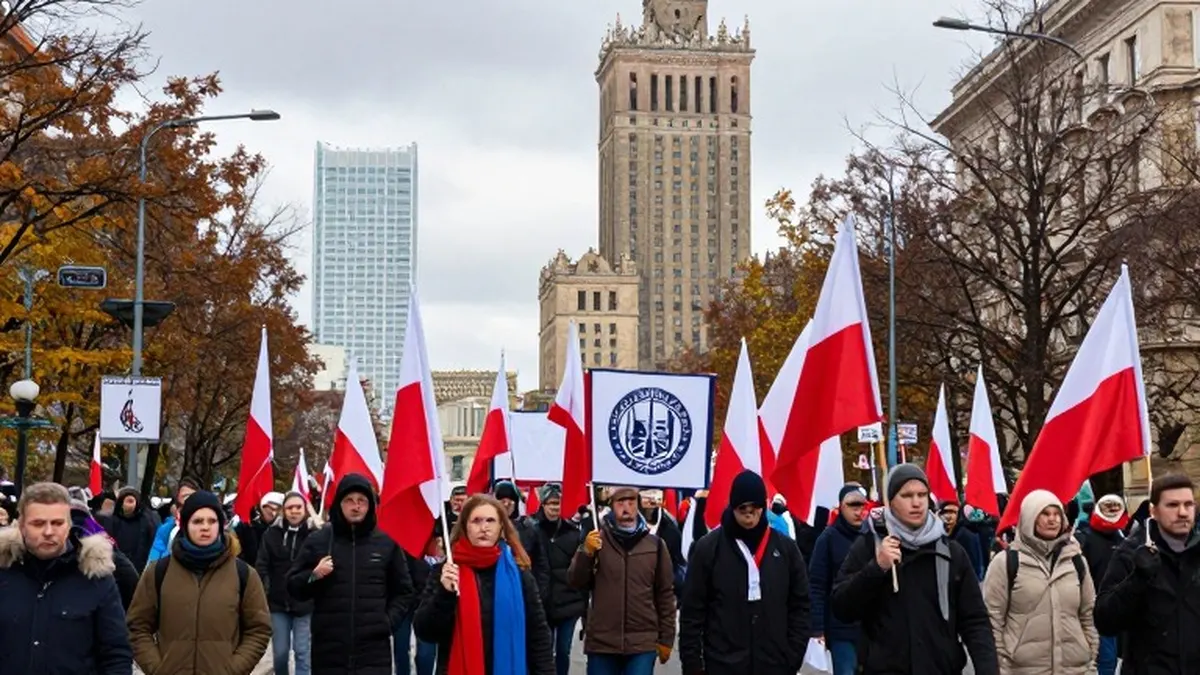
Tens of thousands of Polish nationalist sympathizers assembled in Warsaw on Wednesday, November 11, for the country's annual Independence Day March. The demonstration took place just days after a deadly shooting spree in the city of Krakow, an event that sent shockwaves through the nation and heightened public attention on domestic security.
The annual procession serves to commemorate a pivotal moment in Polish history: the end of 123 years of partition. In 1918, the country regained its sovereignty after being divided and controlled by three neighboring empires, namely Russia, Prussia, and Austria. The date, November 11, remains a central fixture in the Polish national calendar, drawing large crowds to the streets of the capital.
While the march is traditionally a peaceful celebration of national identity, it has not always been without incident. In previous years, the event has occasionally been marked by tensions and clashes between participants, police officers, and counter-demonstrators. This history of occasional friction adds a layer of complexity to the proceedings, particularly in the current climate following recent violent events.
The presence of a large crowd in Warsaw comes at a sensitive time for the country. The recent shooting in Krakow has left a lasting impact on the public psyche, prompting questions about safety and the role of nationalistic movements in the broader political landscape. Despite the recent tragedy, the turnout for the Independence Day events in the capital remained significant, indicating a strong desire among attendees to mark the anniversary.
The march highlights the enduring significance of the 1918 restoration of independence for modern Poles. For many participants, the event is a reaffirmation of their cultural heritage and historical resilience. The gathering in Warsaw serves as a reminder of the sacrifices made to break free from foreign domination and establish an independent state.
As the demonstration proceeded, the atmosphere in the city reflected a mix of solemn remembrance and national pride. The proximity of the event to the Krakow shootings meant that security was a visible concern, though the large turnout suggested that the community remained committed to honoring the historic date. The annual march continues to be a major focal point for political and social discourse in Poland.
The event underscores the dynamic nature of Polish public life, where historical commemoration intersects with contemporary political currents. The response to the Krakow incident and the subsequent gathering in Warsaw illustrate how national identity is actively negotiated and expressed through public ritual. The march remains a key moment for observing the pulse of the country.
In the days following the Krakow shootings, the focus of national attention has shifted between mourning the victims and celebrating national independence. The Wednesday march in Warsaw provided a platform for this duality, allowing citizens to come together in a shared historical narrative while navigating the emotional aftermath of recent events.
The annual Independence Day March is more than just a parade; it is a significant civic event that brings together diverse groups of Poles who share a connection to the country's past. The scale of the gathering in Warsaw this year reinforces the importance of the occasion, even in the face of recent challenges. The event serves as a reminder of the nation's journey from partition to independence.
As the day drew to a close, the crowds in Warsaw reflected the ongoing significance of November 11 in Polish society. The march, held in the shadow of the Krakow tragedy, demonstrated the resilience of public tradition and the deep roots of national commemoration in the country. The event stands as a testament to the enduring power of historical memory in shaping present-day identity.