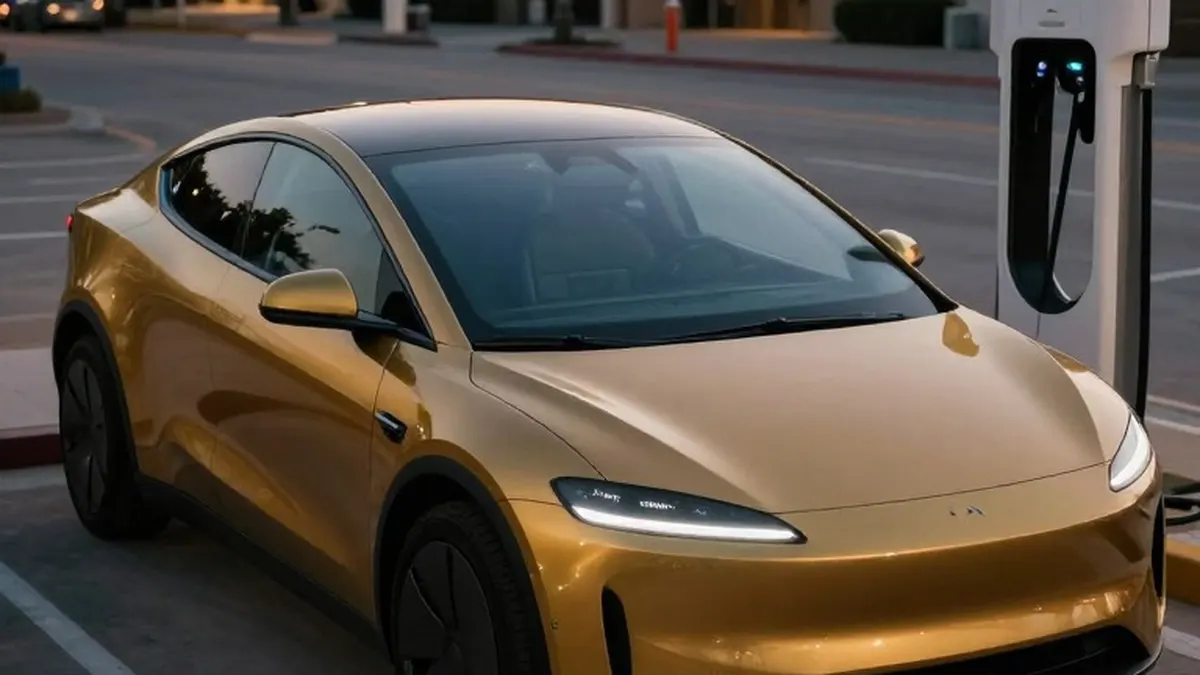
Tesla has begun inviting what it describes as select customers to purchase a Cybercab for personal use, expanding its autonomous vehicle ambitions beyond its own ride-hailing operations. The offer carries a significant restriction: the two-seat vehicle, which has no steering wheel, will only be available in supported service areas, meaning buyers must live in one of the cities where Tesla currently operates its Robotaxi service.
The Cybercab is listed at $29,990, but ownership requires a mandatory $299 per month Autonomy Subscription. Tesla's Robotaxi account on X announced the offer, sharing screenshots of the order page and the invitation email, which warns that initial availability is limited.
Tesla started offering Cybercab rides through its Robotaxi service in Austin in September, alongside vehicles based on the Model Y. The company now has 278 Cybercabs in operation, roughly 40 percent of its fleet, according to the crowd-sourced Robotaxi Tracker.
The mandatory subscription is likely to frustrate some fans who remember Tesla CEO Elon Musk introducing the Cybercab in 2024 as a roughly $30,000 driverless car, with no mention of such a fee at the event. Tesla currently charges $99 per month for its Full Self-Driving feature. Over a standard five-year ownership period, the $299 monthly payment adds $17,940 to the sticker price, even with the first month included, bringing the real baseline cost to roughly $47,600 before taxes, charging and insurance. That is more than a brand-new Model 3 or Model Y, either of which can be driven anywhere in the country.
Unlike a standard Tesla, where canceling Full Self-Driving simply returns the car to manual driving, ending the Autonomy Subscription renders the Cybercab completely unusable on public roads because there is no manual fallback. Buyers must also put down a $1,000 non-refundable deposit for a December delivery window that Tesla does not guarantee.
A central promise of Musk's 2024 We, Robot presentation was that regular people could buy a Cybercab and add it to Tesla's Robotaxi network to earn passive income. The order terms explicitly prohibit commercial use, which rules out Uber, DoorDash and Tesla's own network. Tesla AI chief Ashok Elluswamy has floated the second quarter of 2027 as a possible target for letting customer cars join the network, leaving early buyers with no way to offset the monthly fee.
The terms also allow Tesla to raise the price with just 30 days of warning, and continued use of the service counts as agreement to any updated rules. Customers who cancel, or whose access Tesla suspends, receive no partial refund for the remainder of a paid month.
On X, Musk promised a much wider rollout, subject to regulatory approval. He also called his own company's $299 monthly fee too high, arguing it should be $115 per month or closer to the $99 Full Self-Driving subscription. Musk spent part of the exchange taunting YouTuber Marques Brownlee, who had promised to shave his head if Tesla delivered a Cybercab for under $30,000 before 2027. Brownlee has said he thinks his hair is safe.
The offer leaves major questions unanswered, starting with how Tesla plans to sell a vehicle that does not comply with current Federal Motor Vehicle Safety Standards requiring traditional controls such as steering wheels and pedals. Tesla says the subscription covers autonomous driving, maintenance and towing, but excludes auto insurance, and the company has not explained how insurers will underwrite a car with no human driver or how liability would be divided after an autonomous crash. It has also not disclosed how invited buyers are chosen or how many units are set aside for private sale.
The National Highway Traffic Safety Administration has opened a formal audit into how Tesla self-certified a vehicle without a steering wheel, pedals or side mirrors. Tesla submitted its legal justification to the agency in October, requested that the entire response be kept confidential, and is now collecting customer deposits while the federal ruling is still pending.