Residents of Zaporizhzhia, Ukraine, are facing a renewed sense of insecurity as Russian attacks on the region intensify. Many internally displaced people who fled to the city for safety are now weighing the prospect of having to relocate once again due to deteriorating conditions. The constant threat of aerial bombardment has transformed daily life, making even routine activities feel precarious for those living in the regional capital.
Volodymyr, a resident of the shelter, recounted the trauma that led him to abandon his home in Preobrazhenka. Located just over 40 kilometers from the city center, his village has been subject to escalating strikes. He described being in a cellar when drones began bombing the area, resulting in severe burns to his hands. He noted that only eight people remained in his village before he made the decision to leave for the relative safety of Zaporizhzhia.
The severity of recent attacks is highlighted by events in Komyshuvakha, a town south of the city. On November 2, nine Russian glide bombs struck the area, killing at least 50 people in one of the deadliest attacks of the year. Many victims had gathered at a local school to receive humanitarian aid. Several individuals remain missing, with fears that they are trapped under the rubble of the destroyed building.
Military analysts and residents note that the war has demonstrated that armies no longer require a significant physical presence on the ground to inflict damage. The frequent appearance of Russian First-Person-View drones is often interpreted as a precursor to infantry advances. Footage from other cities such as Kherson, Kramatorsk, and Sloviansk shows these drones targeting both vehicles and civilians, a pattern now emerging in Zaporizhzhia.
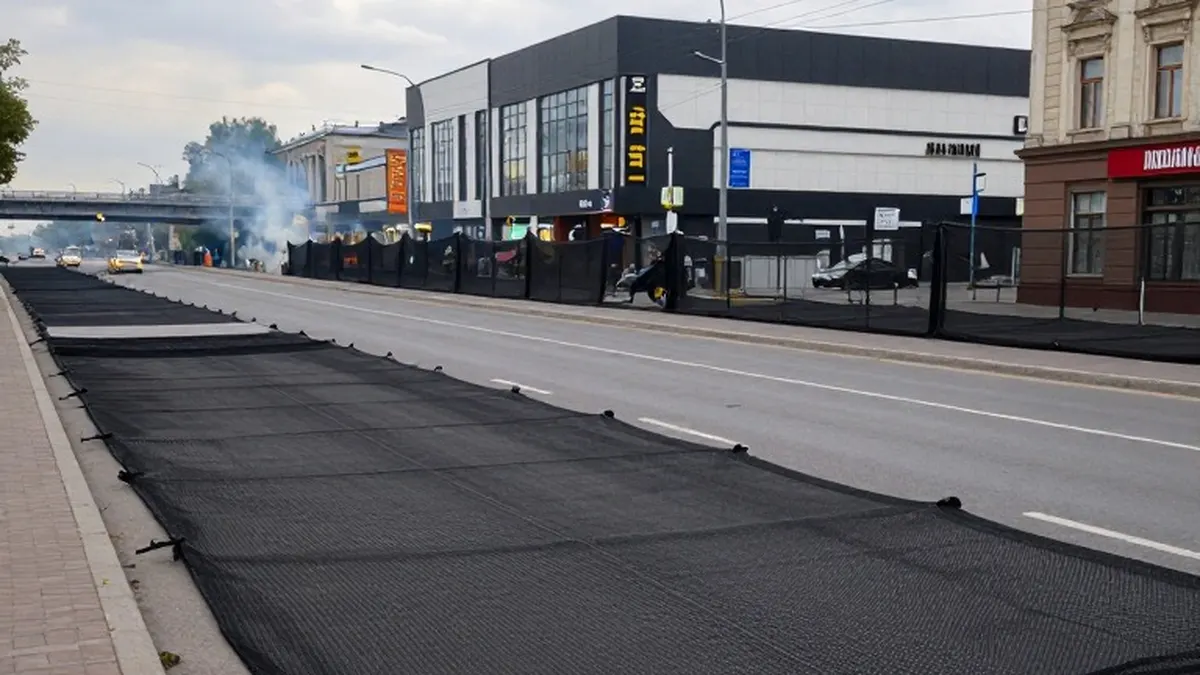
City authorities are implementing various measures to mitigate the risk. Anti-drone netting has been installed over streets and civilian infrastructure in the Cosmos neighborhood. However, the cityscape still bears the scars of previous attacks, with boarded-up windows and damaged buildings visible across the area. Denys Knysh, a regional military administration official, stated that authorities are preparing to move the shelter where Volodymyr stays to another neighborhood if the situation worsens.
Evacuation efforts are complicated by the demographics of those seeking refuge. Many residents in shelters are elderly or have limited mobility. Additionally, some lack the necessary documentation to relocate smoothly. Despite the risks, many prefer to remain in Zaporizhzhia, hoping to stay close to their former homes in case they can return once the conflict ends. The city has served as a refuge for thousands of people fleeing Russian-occupied areas like Mariupol and Melitopol since the war began.
Local businesses are adapting to the new reality. Alina, who works in a flower shop protected by drone netting, expressed her reluctance to leave despite hearing the buzz of drones almost daily. Along the Pryberezhna Highway, petrol stations and shops are covered in protective netting. Nataliia, an employee at a local fuel station, described the atmosphere as scary and dangerous, noting that a drone flew over her location just that day.
Earlier in the day, Russian Banderol missiles, described as low-cost jet-powered cruise missiles, struck a shopping mall and the main bridge into the city. An FPV drone also hit a city bus. Despite these incidents, signs of normalcy persist, with twinkling lights on restaurant terraces and bustling streets. However, the adaptation to threats is gradual, involving streets covered in nets, drone jammers on bus roofs, and children carrying drone detectors.
Officials acknowledge the difficulty in tracking the exact number of people remaining in the city. Knysh noted that the population fluctuates daily as people leave, making demographic data unreliable. Authorities maintain that they are ready to evacuate the city if the time comes, though the process remains complex and ongoing.