The city of Memphis typically marks September 1 as 9/01 Day, a festive celebration mirroring the city's area code. This year, the holiday brought together residents for food, music, and special deals at local businesses. However, for the families of 121 individuals, the date is now defined by a significant event that occurred just days earlier. On August 30, agents from US Immigration and Customs Enforcement conducted one of the largest single-day raids in the country, targeting a bar in the city's Berclair neighborhood.
The raid took place at El Corralón, a bar primarily serving the Hispanic community. According to reports, more than a dozen agents entered the building late in the evening. They turned off the music and instructed patrons to gather on the dancefloor. While some individuals screamed or attempted to hide, others prayed. Agents questioned people about their legal status, zip-tied those detained, and transported them via buses to detention centers.
The operation was executed under a warrant from the Tennessee Bureau of Investigation. The warrant, signed the previous Wednesday, authorized a search for illegal gambling machines and potential drug activity. A Department of Homeland Security statement noted that five of the arrested individuals had prior records involving crimes such as assault and cocaine possession. However, Maria Oceja, a co-founder of the volunteer group Vecindarios 901, stated that the raid predominantly targeted innocent people.
One family member affected was Valentina, a nine-year-old girl who was at her mother and sister's workplace during the raid. She had anticipated celebrating her birthday the following morning. Upon learning of the detention, she stood on Beale Street holding a sign that read, 'ICE took my mom!' Hunter Demster, another co-founder of Vecindarios 901, described the family's struggle, noting that the mother worked three jobs to support them. He said the sister, Camila, now cares for her younger siblings.
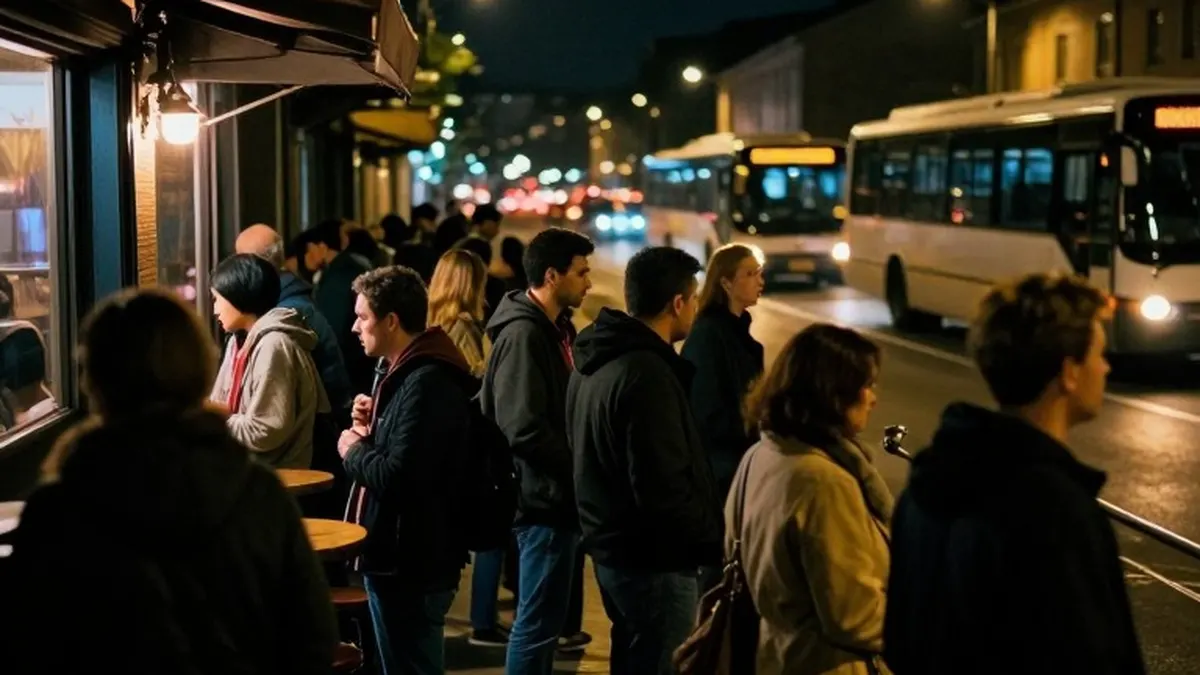
Witnesses described the scene outside the bar as chaotic. Federal agents blocked portions of the street, and multiple agencies including the Memphis Police Department and state troopers were present. Dexter Britt, a volunteer who arrived shortly after 1 am, heard chains rattle as people were loaded into vans. He noted that family members, including children, gathered to see their relatives, often for the last time before they were taken away.
The raid occurred within the context of the Memphis Safe taskforce, a multi-agency initiative established by a presidential memorandum in September 2025. The taskforce includes national guard members and agents from various federal agencies. While the memorandum cited high violent crime rates, crime in the city was at a 25-year low before the taskforce arrived. In its first year, the taskforce has made nearly 23,000 arrests, with 64 percent of those for non-violent crimes.
Critics argue that the presence of federal agents is intimidating local residents. Amber Hampton of Indivisible Memphis highlighted that some children lost both parents in the raid, forcing them to change schools or live with new caregivers. Volunteers from various organizations met with about 100 family members in the week following the raid to provide legal aid and support. These families included grandparents, aunts, and children who were suddenly responsible for younger siblings.
The Memphis City Council passed a non-binding resolution on October 20 calling for the removal of the taskforce. The resolution cited concerns about due process and the disruption of local families. US Attorney General Todd Blanche visited the city in mid-October to discuss the initiative's progress. He stated that the taskforce would remain in Memphis as long as necessary, emphasizing that the effort was not yet complete.
For many in the community, the emotional toll remains high. Demster noted that families are working to manage finances and care for children left behind. He described the experience as traumatic for every family affected. The incident has sparked broader discussions about immigration enforcement tactics and their impact on the social fabric of the city.