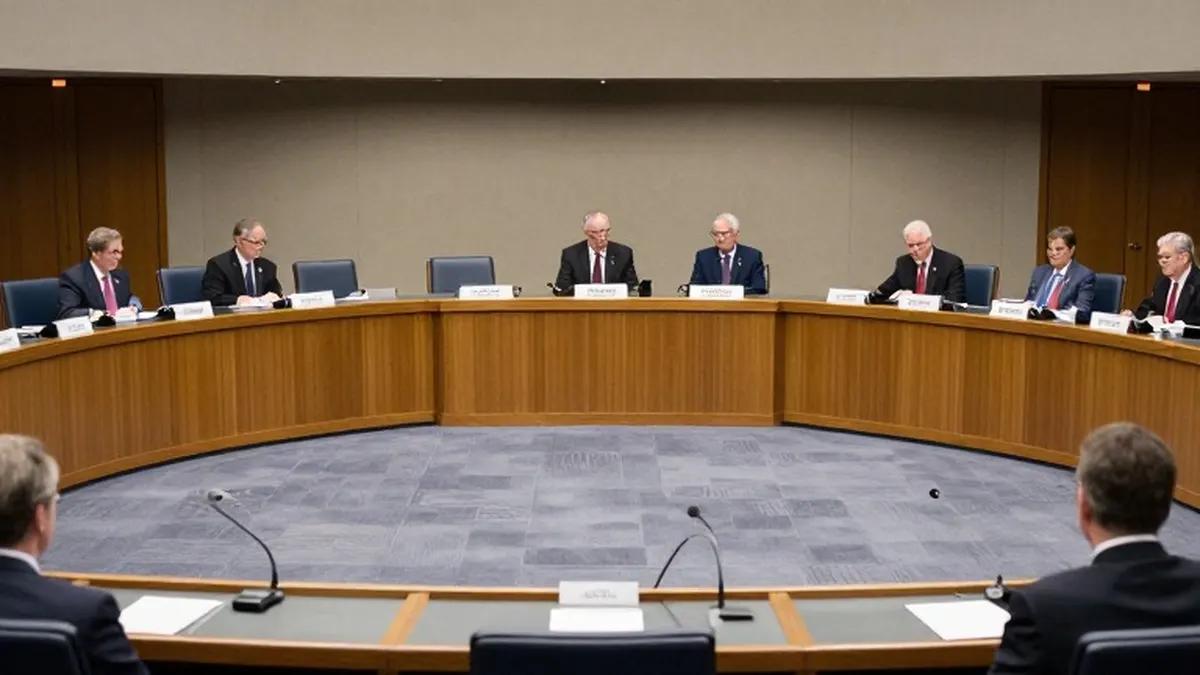
Michael LoSapio, the presidential nominee to head the Cybersecurity and Infrastructure Security Agency (CISA), found himself at the center of a contentious Senate hearing on Thursday. LoSapio, who currently serves as the chief information security officer at the technology firm Palantir, faced pointed inquiries from lawmakers regarding his views on the 2021 U.S. Capitol attack and the outcome of the 2020 presidential election. The exchange highlighted growing tensions over the nominee's perceived political leanings and his approach to historical events that have defined recent American politics.
During the session, Senator Richard Blumenthal, a Democrat from Connecticut, pressed LoSapio to identify who won the 2020 election. According to video footage shared by Blumenthal on social media, LoSapio stated that he was not going to answer questions about an election from six years prior. The senator argued that the nominee should rely on established facts, stating, "You're supposed to look at the facts and you're supposed to tell us the facts." LoSapio responded that his only involvement in that election cycle was voting for the President of the United States.
Blumenthal accused the nominee of lacking independence and objectivity, suggesting that his evasive answers disqualified him for the role. When LoSapio replied that he was there to discuss the future, the Connecticut senator asserted that LoSapio was disqualified from the position. The senator specifically asked about the 2020 popular vote, a question LoSapio declined to answer directly.
The hearing also covered the events of January 6, 2021. LoSapio told lawmakers that he did not believe the incident constituted an attack. He noted that he was not involved in politics at the time and that his understanding came from watching the news coverage. This characterization drew sharp criticism from some members of the committee who viewed the event as a significant breach of security.
In the wake of the testimony, political maneuvering began immediately. Politico reported that Senators Thom Tillis of North Carolina and Ron Wyden of Oregon intend to place a hold on the nomination. Tillis, a Republican, plans to block confirmation specifically because of LoSapio's comments regarding the Capitol attack. Wyden told the outlet that the nation cannot afford to have an insurrectionist executive from Palantir overseeing cybersecurity and election security.
Senate Homeland Security Committee Chair Rand Paul, a Republican from Kentucky, indicated that the confirmation vote is scheduled for early December. Paul, who has been a vocal critic of the January 6 events, described the incident as huge and something that should be criticized rather than excused. He acknowledged that while some participants were violent and locked up, others were not, suggesting a nuanced view of the event's nature.
LoSapio is not the only Trump nominee to navigate this political minefield. Don R. Berthiaume, the nominee for the Department of Justice inspector general, also addressed the January 6 events. The Associated Press reported that Berthiaume acknowledged violence occurred on the Capitol grounds but expressed hesitation about using the term "attack" to describe the incident.
The role of CISA director has been politically charged in recent years. The previous head of the agency was Jen Easterly, who served until January 2025. Before her departure, President Trump had nominated Sean Plankey, a former Energy Department and Coast Guard official. Plankey withdrew his nomination after it failed to gain passage in the Senate.
The history of the agency under the current administration also includes the firing of former Director Chris Krebs near the end of Trump's first term. Krebs was dismissed after affirming that the 2020 election, in which Trump lost reelection, was secure. The president has maintained that he won that election, despite former President Joe Biden securing the Electoral College vote and serving until 2025.
As the confirmation process moves forward, the comments made during the hearing are likely to remain a focal point for both supporters and opponents of the nomination. The interplay between cybersecurity expertise and political perception will be crucial as the Senate prepares to vote on LoSapio's appointment in the coming weeks.