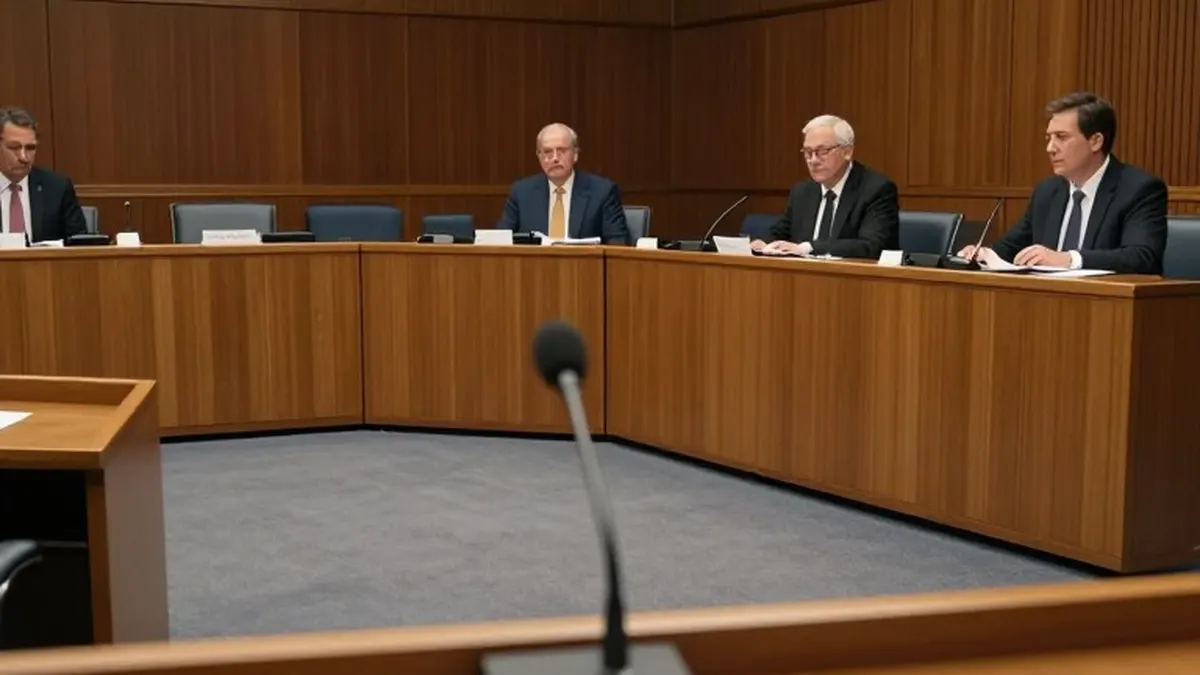
Michael LoSapio, the nominee selected by President Donald Trump to lead the Cybersecurity and Infrastructure Security Agency, faced intense scrutiny on Thursday during a confirmation hearing before the Senate Homeland Security Committee. LoSapio, who currently serves as the chief information security officer at the data and software firm Palantir, was pressed by Sen. Richard Blumenthal, D-Conn., on key political questions regarding recent history.
When asked directly who won the 2020 presidential election, LoSapio declined to provide a name. He stated, “I’m not going to answer the question about an election six years ago.” He added that his only involvement in that specific race was voting for the president of the United States, a reference to Trump.
Blumenthal criticized the nominee’s response, accusing LoSapio of “ducking the question in a way that betrays your lack of independence and objectivity.” The exchange highlighted ongoing tensions between the White House and Senate Democrats over the legacy of the previous administration.
The hearing also focused on the events of January 6, 2021. Blumenthal asked LoSapio if there was an attack on the Capitol that day. When the senator pressed him further by asking, “You don’t know?” LoSapio replied, “No, I don’t believe it was an attack.” He explained that he was not involved in politics at the time and based his assessment on what he saw on the news.
LoSapio maintained this position when asked again about the nature of the riot, reiterating that “it was not an attack.” This stance contrasts with Trump’s own evolving narrative. The president initially described the events as “acts of violence and destruction” in January 2021. However, during his 2024 campaign, he shifted his language to call it a “day of love.”
Since returning to office, Trump has taken several actions related to January 6. He pardoned approximately 1,500 people who participated in the riot and commuted the sentences of another 14. Additionally, the Trump Justice Department attempted to establish a controversial “anti-weaponization” fund earlier this year to compensate Trump allies.
CISA has not had a Senate-confirmed director since Trump returned to office in January 2025, when Jen Easterly vacated the role. The agency was established during Trump’s first term to protect critical infrastructure, including elections, from cyber threats. The leadership of CISA has been shaped by the 2020 election, as Trump fired the agency's first director, Chris Krebs, just days after the vote over his assertion that the race was secure.
LoSapio was one of 13 nominees who appeared before the committee on Thursday. These candidates are seeking to take over federal oversight, inspector general, Postal Service, and D.C. Superior Court positions. For LoSapio to become director, the committee must vote to advance his nomination to the full Senate, where a simple majority is required for confirmation.
Time is becoming a factor for Trump’s nominees, as Democrats are set to take control of Congress in January. This timeline adds urgency to the confirmation process for key federal positions.
LoSapio is not the first Trump nominee to avoid answering questions about the 2020 presidential race. On Wednesday, Cody Hiland, the president’s pick for a federal appeals court seat, told Blumenthal, “I’m not going to answer that,” when asked the same question. Hiland explained that he avoided the topic to prevent an ethical violation, saying it was going down a political track regarding an event from six years ago. Blumenthal responded by saying, “We know the White House told you, ‘Don’t answer that question.’”