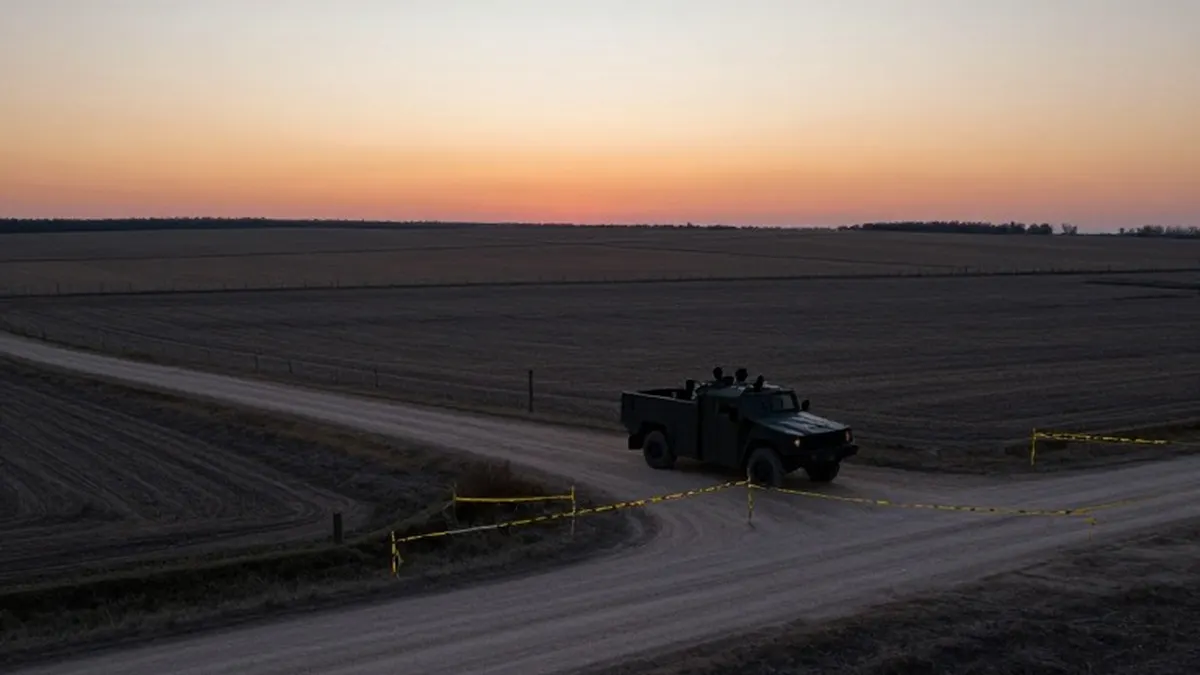
President Donald Trump indicated on November 23 that he is effectively pausing a scheduled military operation to detonate lead-containing munitions in Iowa. The President stated that the final decision on whether to execute the controlled demolition will rest with the federal courts and the state’s incoming Democratic governor, Rob Sand.
In a post on the social media platform Truth Social, Trump expressed his support for removing the hazardous materials but emphasized that the military should not act without specific authorization. He noted that he has ordered the military to hold off until the Eighth Circuit Court of Appeals agrees that the operation can safely move forward. Additionally, he made the decision fully contingent on Governor Elect Sand agreeing to the plan.
The President warned that if either the courts or Sand do not approve the operation, the government will be forced to leave the hazardous materials in place. He stated that in such a scenario, the incoming governor would be held responsible for any death or destruction caused by the long-term situation.
The Army had originally intended to detonate the munitions last week. However, the operation was postponed to Wednesday due to significant public outcry. Military officials have argued in official documents that a controlled detonation is the superior option. They contended that this method avoids the risk of an accidental and uncontrolled explosion, which could result in catastrophic damage to the surrounding area.
Governor Elect Rob Sand has been critical of the process, describing the situation as marked by an unacceptable lack of communication and clarity. In a Facebook statement issued on Thursday, when the detonation was still scheduled for the following day, Sand argued that the safety of current and future residents of Iowa should be the government’s primary concern.
Sand questioned the rationale behind the chosen method, stating that the public deserves to know why other options were considered worse if the detonation is indeed the safest choice. He added that if the operation is not as safe as possible to perform immediately, it should not happen the next day.
The decision to pause the operation comes amid legal challenges. Environmental organizations have filed suits to challenge the Environmental Protection Agency’s emergency permit for the Army’s action. These groups are seeking to halt or modify the approval process in the courts.
The incident has drawn attention to the management of lead azide, a sensitive explosive material. The interplay between federal military operations, state political leadership, and judicial review has created a complex situation for residents in the affected area of Iowa.
As the deadline for the operation approaches, all parties are waiting for formal signals from the judicial and political branches. The outcome will determine whether the hazardous materials are removed through a controlled blast or remain in storage, with the potential long-term consequences for the local community.