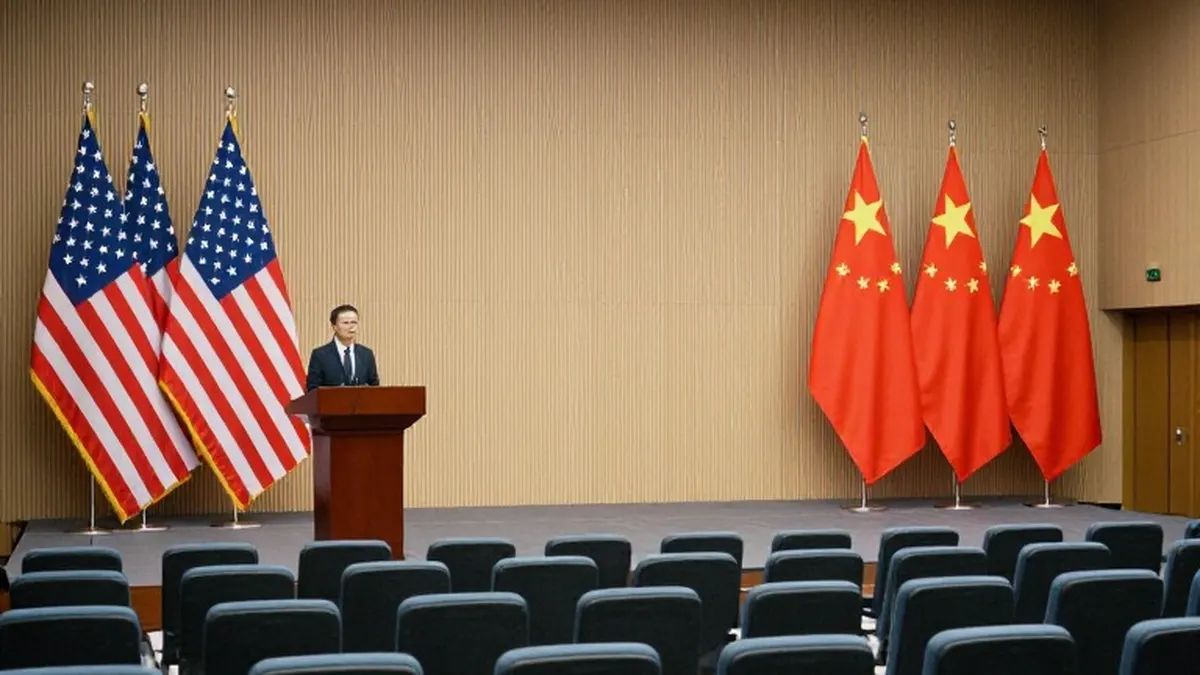
President Donald Trump renewed his threat to annihilate Iran on Wednesday if the nation proceeds with its reported plans to launch a dirty bomb on U.S. soil. Speaking from Shenzhen, China, where he is attending the Asia Pacific Economic Cooperation summit, Trump addressed the potential threat directly. When asked by Fox News reporter Jacqui Heinrich whether residents of Washington, D.C., should be concerned about such an attack, Trump responded with a definitive lack of worry. He stated, 'I don’t think so, no,' before adding, 'I mean, look, if it does happen, we’ll wipe them out.'
The President indicated that intelligence suggests Iran has been examining various methods to strike the United States, specifically looking at gases and biological agents. He noted that while these options are under consideration, the use of nuclear weapons is a more difficult undertaking for the Iranian regime. Trump described the country as 'nasty people' and reminded the audience that the U.S. did not start the current conflict. He pointed to the USS Cole incident as a historical reference, claiming that 400 of the country's children were killed in that event, a statement that dates the start of the war to 51 years ago in his telling.
This latest remark follows comments made by the President on Tuesday, when he said he took the dirty bomb threat very seriously because he believes the Iranian leaders are 'crazy.' He warned that the Islamic regime would pay a price unlike any country has paid before. The underlying allegations were first reported by CNN and other news organizations, which cited U.S. intelligence indicating that Iran is developing plans to target senior administration officials using a radiological dispersal device.
While the President’s rhetoric has been forceful, other officials in the administration have offered a more nuanced view of the threat level. Jay Clayton, the Director of National Intelligence, told lawmakers on Wednesday that threats from Iran have substantially increased. He noted that the United States and its service members stationed abroad are under greater threat than previously assessed. However, other cabinet members have sought to reassure the public.
Markwayne Mullin, the Secretary of Homeland Security, downplayed the impact of the recent media reports on Tuesday. He stated that the homeland remains secure and that there is no new threat arising from Iran’s aspirational planning. Mullin’s comments suggest that while the possibility exists, it is not an immediate or changing danger to national security.
Iranian officials have strongly pushed back against the narrative that they are preparing a dirty bomb attack. Esmaeil Baghaei, the spokesperson for the Foreign Ministry, called the allegations baseless and described them as a fabricated media narrative in a post on the social platform X. He argued that the reporting was designed to create fear without substantial evidence to back it up.
Abbas Araghchi, the Iranian Foreign Minister, was even more critical of the reporting. In his own post on X, he called the claims rubbish and suggested that the story was reminiscent of the propaganda used to justify the Iraq War. He noted that many people are not buying the narrative, particularly given the involvement of Israeli interests in the region.
The U.S. is considered particularly vulnerable to a dirty bomb attack due to the nature of the weapon. A dirty bomb, or radiological dispersal device, uses conventional explosives to spread radioactive material, contaminating a large area and affecting as many people in a dense urban environment as possible. Washington, D.C., is a prime target in this regard, as it is home to 700,000 people and sees tens of thousands more commuting in for work every day.
Although a dirty bomb is generally considered far less damaging than a conventional nuclear bomb, the explosion could still cause death or injury to anyone within the blast radius. The primary danger lies in the contamination and the subsequent panic, rather than the nuclear energy release of a full-scale detonation.
As the President continues his diplomatic tour in Asia, the debate over the level of threat posed by Iran remains a central topic in Washington. The administration is balancing the need to project strength with the desire to avoid overreacting to what some officials call aspirational planning by the Iranian government.