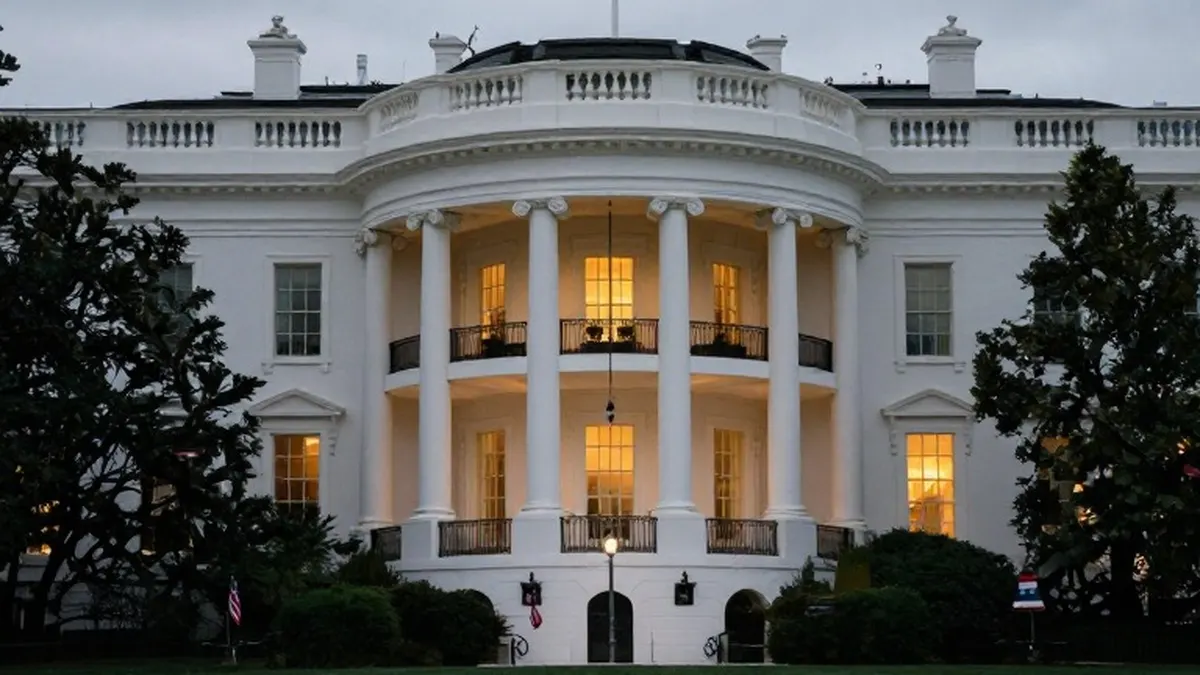
President Trump has tapped Stephen Miller to serve as his next chief of staff, replacing Susie Wiles, who resigned Friday. The appointment is being widely interpreted as a blunt message to the incoming Democratic majorities on Capitol Hill and sets up what is likely to be a contentious two years between both ends of Pennsylvania Avenue.
Miller is loathed by most Democrats, many of whom view him as xenophobic and racist. The incoming chief of staff is also not known for compromising with the other side of the aisle, preferring a combative approach to advancing the Trump agenda.
Many in Washington see the move as Trump signaling that he is not thinking about compromise and will implement his agenda through executive authority. "They are not going to slow down on executive power, executive orders, and regulations," said Joe Grogan, who directed Trump's Domestic Policy Council in his first administration and is now a senior adviser at Covington and Burling LLP. "Stephen is going to move aggressively on all of that."
Mick Mulvaney, who served as Trump's chief of staff during his first term, said the pick sends "a clear message" that "the White House will continue to prioritize executive authority in the next two years." "Stephen is a good choice on many levels, but face it, if the president was looking to build bridges with the new incoming Democrat majorities, he would probably have gone in a different direction," he added.
Not everyone in Trump's orbit is pleased. "We're cooked," said one former Trump administration official. "It's exactly the opposite direction voters are begging Republicans to go. Susie was the best thing that happened to President Trump," the former official said, referring to Wiles. Another former White House official who worked with Miller described him as "smart and opinionated, but does not have many close friends on the White House staff," adding that most colleagues view him as "somewhat of an arrogant lone wolf."
That official said Trump likes Miller because he has been a hard-liner on immigration enforcement in both of his terms, but noted the president has also gone against Miller when his "no holds barred" approach went too far, as it did in Minneapolis earlier this year. The violent optics of clashes between federal immigration enforcement and protesters in Minnesota contributed to the ouster of former Homeland Security Secretary Kristi Noem and the removal of Border Patrol commander at large Gregory Bovino. Miller, who strongly defended the operation, kept his role.
The promotion came days after Trump said Wednesday that he would "probably get along with the Democrats unless they want to be destructive," pointing out that he wields "the power of the veto." "They've already called, and they want to talk about things, and that's fine," the president said.
Democrats say the Miller promotion has thrown that possibility out the window. House Minority Leader Hakeem Jeffries, the likely next Speaker, called Miller "a dangerous xenophobe and reckless extremist who has American blood on his hands" in a post on X, adding: "Fire him today." Senate Minority Leader Chuck Schumer wrote that Trump has "learned nothing from his historic defeat," calling Miller "the architect of the most barbaric, inhumane policies of this administration" and vowing that "our Democratic majorities will fight him every step of the way."
One Republican lobbyist warned the move will only worsen relations between the White House and Capitol Hill. "The president has two directions, one was to work with the Democratic Congress to try to get some things done. The other is to go to war with them. Stephen is more of a go-to-war guy," the lobbyist said. Grogan, however, argued the choice could itself be a negotiating tactic: "Trump is a negotiator and by picking Miller he is negotiating because he's projecting strength, not weakness."