President Donald Trump announced on November 23 that he has instructed the U.S. military to temporarily halt the planned detonation of unstable explosives in Iowa. In a statement posted to Truth Social, the President said he is deferring the final decision to the U.S. Court of Appeals for the 8th Circuit and Iowa’s incoming Democratic governor, Rob Sand. The Army had originally scheduled to carry out the controlled blast earlier this week.
The announcement comes after the military intended to proceed with the removal of tons of unstable explosives at a munitions plant in Middletown, Iowa. This move occurred despite a federal court order that had previously paused the operation indefinitely. The Army argued it did not need to follow the pause, citing the significant risks associated with the possibility of the materials detonating spontaneously without intervention.
Residents of the small southeastern Iowa community have expressed strong concerns about the potential impact of the explosion. Specifically, they worry about the risk of toxic particles spreading across Iowa and into the neighboring state of Illinois. These local fears have become a central point of contention as the federal government and state officials navigate the complex legal and environmental issues.
The legal battle intensified last week when two environmental groups filed a lawsuit with the Eighth Circuit. They sought to block the detonation by challenging the validity of an emergency permit granted by the Environmental Protection Agency. In response to this new legal challenge, the appeals court issued a stay on Thursday, holding the process in abeyance pending a final decision on whether the permit is legally sound.
In his social media post, Trump described the situation as delicate, noting a substantial chance that the material will explode on its own volition. He stated that he believes detonating the materials now is the safer option. However, he emphasized that he intends to respect the wishes of the courts and the incoming governor. The President referred to Iowa as a very special place to him, adding a personal dimension to his political decision.
Trump wrote that while he feels the proper course is to eliminate this long term problem, he has ordered the military to wait until the Eighth Circuit agrees to move forward. He further made the decision subject to the approval of incoming Governor Sand. The President stated that if either the courts or Sand do not agree to the operation, the federal government will have no choice but to proceed with the controlled removal.
The President added a specific warning in his statement. He noted that if the operation does not proceed, he will be forced to hold the incoming governor responsible for any and all death or destruction caused by this unfortunate and long term situation. This comment highlights the high stakes involved in the management of the hazardous materials stored at the facility.
The timeline for the operation has been driven by weather conditions. The federal government informed the court over the weekend that it needed to conduct the controlled detonation by Tuesday. This deadline was set because temperatures are expected to drop below freezing, which could affect the stability and handling of the explosives.
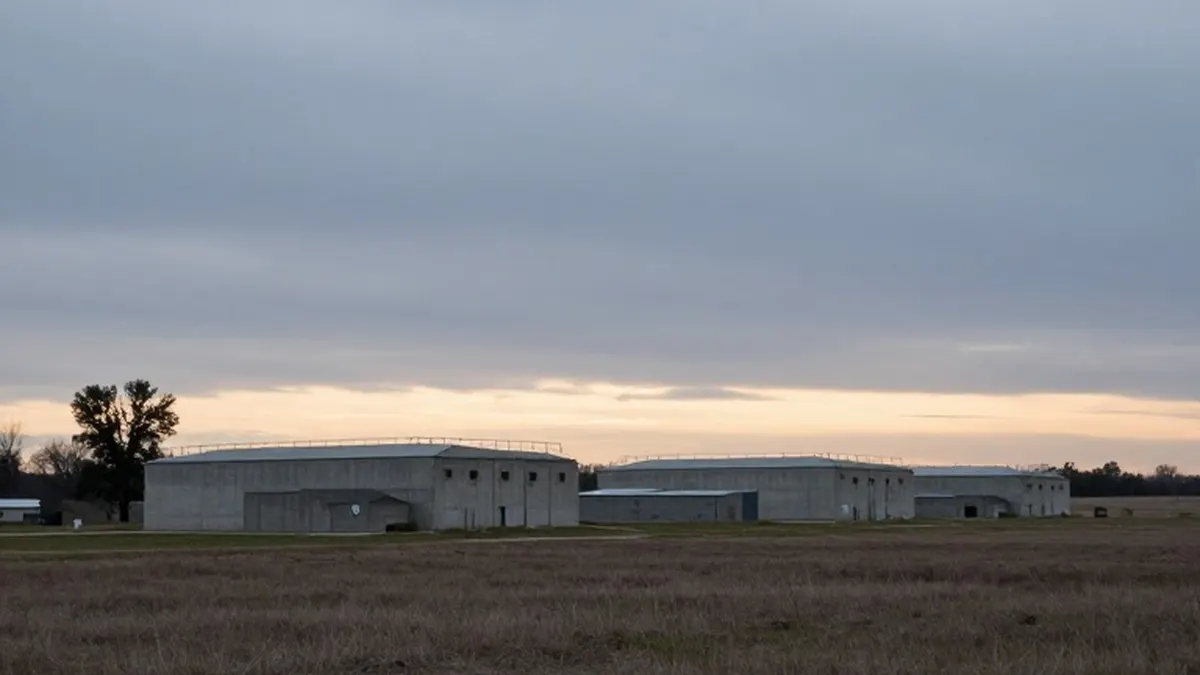
The instability of the materials was first identified earlier this year. The Army reported that dozens of drums of lead azide began recrystallization. This lead compound has been stored in bunkers at the munitions plant, a facility that was originally built during World War II. The discovery of the recrystallization triggered the series of events leading to the current legal and political standoff.
As of the evening of November 23, the Pentagon has not issued a formal response to the President's latest directive. CBS News has reached out to the Department of Defense for comment on how the Army plans to implement the pause and what the next steps will be in coordination with the courts and state officials.