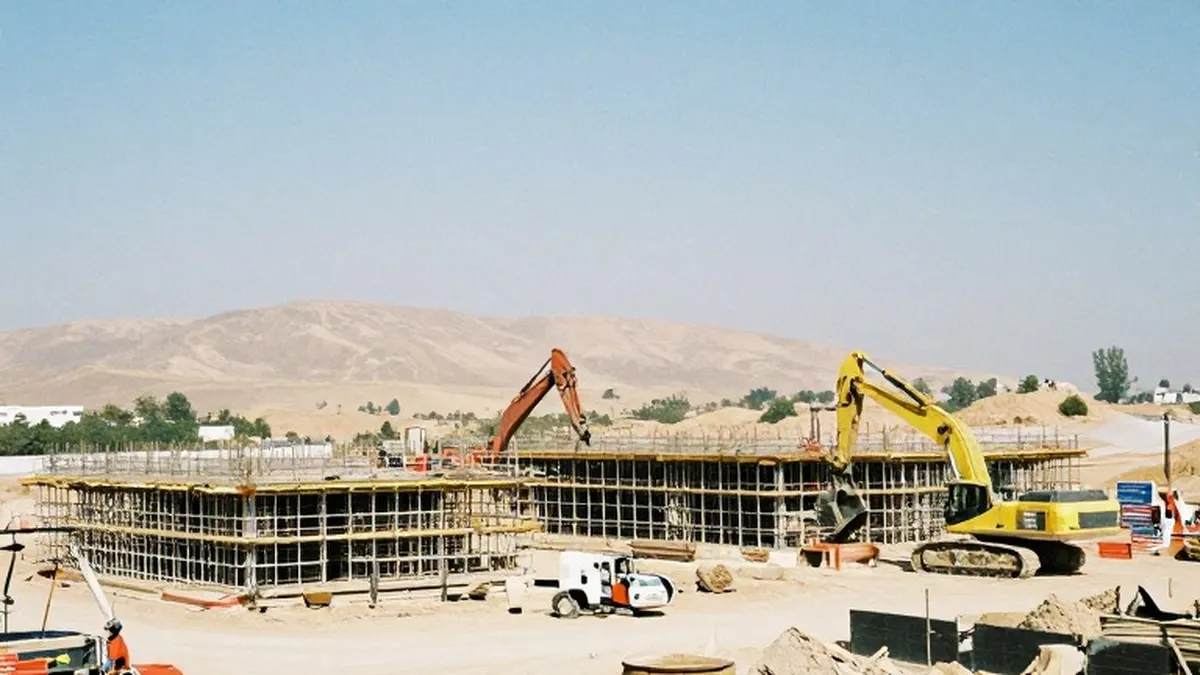
The United Kingdom announced on Tuesday that it is imposing sanctions on eight Israeli construction companies involved in the development of settlements in the occupied West Bank. The government also targeted an activist group responsible for blocking humanitarian aid to the Gaza Strip. These measures include asset freezes and the disqualification of directors, aiming to disrupt the firms' access to finance and their support for further construction projects.
Among the targeted entities are Har Hevron Development Company, Hemdat Shomron, and S.A.G. (Velvel) Construction and Development, all of which build and develop homes in the region. The timing of the announcement coincided with the final deadlines for the E1 tender, a major settlement project that would divide the West Bank and cut it off from East Jerusalem. This project is viewed by Palestinians as a threat to the land that would form the core of a future state.
British Foreign Secretary Ed Miliband emphasized that protecting the two-state solution remains the primary goal of the government's approach. He stated that the message regarding the E1 project is clear: do not bid, do not build, and do not profit from the destruction of the two-state solution. This stance highlights the UK's continued focus on diplomatic and economic levers to influence settlement policies.
In response, Israeli Foreign Minister Gideon Saar described the sanctions as a hostile act targeting private, law-abiding companies. He noted that the Israeli government is currently considering a wide range of countermeasures to strengthen settlements in the West Bank and will announce its decisions in due course. Saar remains in his role within a caretaker government led by Benjamin Netanyahu, following an October 27 election that removed the coalition's parliamentary majority without producing a clear winner.
The Palestinian Authority welcomed the British sanctions and called on other nations to take similar action. The new measures are the latest in a series of steps by Britain to target settlement policy, underscoring Israel's growing diplomatic isolation among some traditional allies. The relationship between the two countries has deteriorated significantly over the past three years due to disagreements over the war against Hamas and the expansion of settlements.
Tensions peaked in September when Israel threatened to close the British Consulate in East Jerusalem after London imposed trade sanctions on settlements. British and Israeli diplomats reached a last-minute agreement last month to avoid this closure. In 2025, Britain joined countries like Canada in recognizing a Palestinian state and announced plans to block imports from Israeli settlements.
The UK also previously sanctioned two far-right Israeli cabinet ministers, Itamar Ben-Gvir and Bezalel Smotrich, for inciting violence against Palestinians. While those earlier measures were coordinated with international partners, the current sanctions on the construction companies were implemented unilaterally by Britain.
In addition to the construction firms, the government sanctioned Tzav 9, an Israeli activist group accused of regularly blocking aid trucks carrying food, water, and fuel to Gaza. The sanctions prevent sanctioned individuals from using corporate structures to operate or raise funds. The U.S. State Department and the European Union had previously sanctioned the group in 2024 for similar reasons.
According to the United Nations, over 150,000 tents and 300,000 tarpaulins purchased by humanitarian partners are held outside Gaza by Israeli authorities. The UK stated that timber is also being blocked, leaving no emergency shelter kits available in the territory. Mohammed Salha, general director of the Palestinian NGO Network in Gaza, told CBC News that the lack of sheltering equipment is causing significant suffering.
Israel's military agency COGAT, which coordinates aid, maintains that it has a proactive winterization plan and that supplies and medicines continue to enter Gaza. The new sanctions mark a significant escalation in the diplomatic friction between London and Jerusalem.