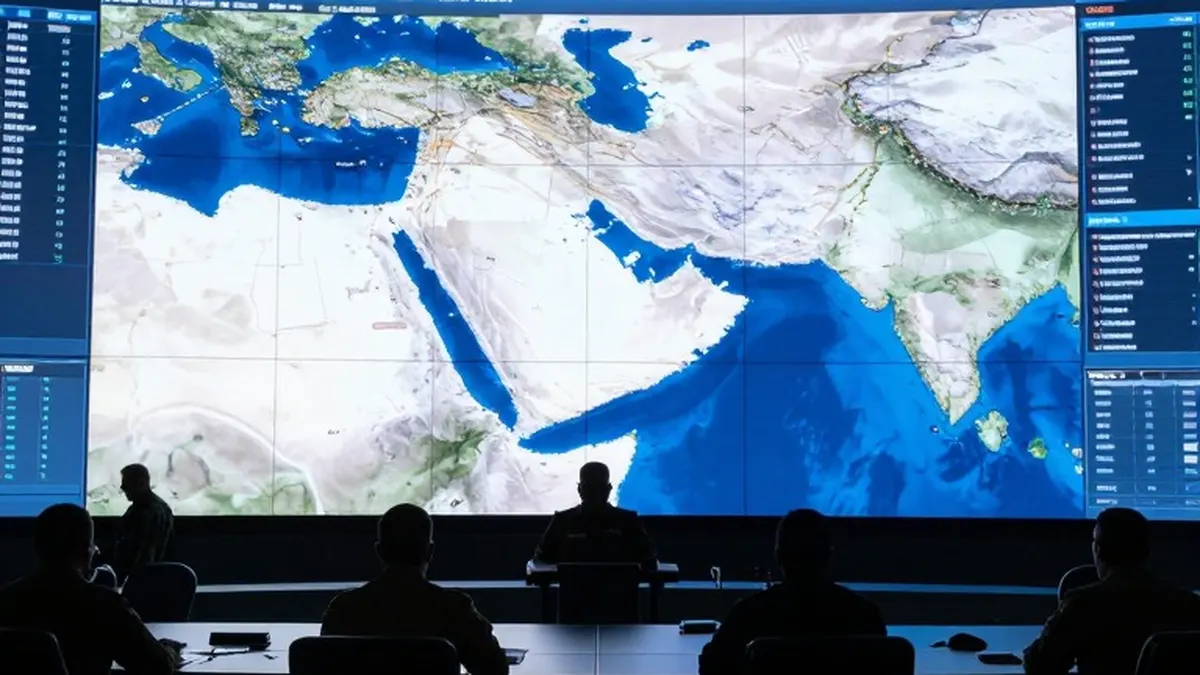
The United States and Israel are evaluating plans to launch a new military offensive against Iran in the near future, according to sources familiar with the discussions. Prime Minister Benjamin Netanyahu's government has expressed alarm over the speed at which Iranian forces are reconstructing their ballistic missile production lines. Additionally, officials are concerned by the rapid pace at which Tehran is moving its military and nuclear assets underground to protect them from potential aerial strikes.
Diplomatic efforts to resolve the conflict have stalled. Months of indirect negotiations between Washington and Tehran have failed to secure a ceasefire agreement that would reopen the Strait of Hormuz. Iran has maintained a firm stance, refusing to discuss its nuclear program until the United States lifts its naval blockade and agrees to six other significant conditions.
Israeli military leadership is currently in a high state of readiness. Sources indicate that the Israeli Defense Forces are in peak defensive posture, prepared to respond immediately to any initial attack from Iran. While the Netanyahu administration favors a coordinated joint operation with the U.S., it remains unclear whether President Trump will authorize new military action or what specific form that intervention would take. The ongoing war was a significant factor in the Republican defeat in the recent midterm elections, and public opinion in the U.S. remains largely against further conflict.
The United States maintains a substantial military presence in the region, including tens of thousands of troops and two aircraft carrier strike groups. These assets, which include dozens of warships and aircraft, are already positioned to support a new offensive. American commanders have stated that if President Trump issues the order, a major operation could be initiated within two to four days.
Political timing presents challenges for both leaders. Netanyahu faces a shift in power in the coming weeks as his political rivals move to form a new government following the recent national election. Similarly, the Republican Party will lose control of both chambers of the U.S. Congress in January, which would give President Trump's opponents a stronger voice in financing the war. Both leaders jointly initiated the current conflict almost nine months ago with a series of massive strikes on the Islamic Republic, and they recognize that the window for coordinated action may be narrowing.
President Trump has recently suggested that Iran might be seeking to develop chemical or biological weapons, a claim he made without providing specific evidence. He told a Fox News reporter in China that Iran is exploring gases and biological agents because the U.S. has blocked their nuclear progress. The Iranian foreign ministry rejected these allegations on Thursday, comparing them to the pre-invasion claims against Iraq in 2003.
High-level military and intelligence coordination has increased recently. U.S. Central Command Chief Admiral Brad Cooper met with senior Israeli security officials, including Mossad Director Roman Gofman and Chief of Staff Eyal Zamir, at the Israeli defense ministry. This meeting was described as a joint and comprehensive situational assessment. The unusual public confirmation of the Mossad director's attendance has been interpreted by many in Israel as a signal that Iran is a central topic of discussion.
The speculation of a new operation comes amid a renewed exchange of fire. The U.S. launched strikes in the Strait of Hormuz on Tuesday, which officials described as self-defense following Iranian attacks on U.S. assets in Bahrain. Iran has also targeted Kuwait this week, though officials reported no damage. Iranian leaders, including Supreme Leader Ayatollah Mojtaba Khamenei, have warned that any new round of hostilities would see Iranian missiles reaching targets without geographical limits, potentially including U.S. bases in Europe and Gulf energy infrastructure.
Despite the rising tensions, President Trump has sent mixed signals. He stated on Wednesday that he wants to reach a lasting deal with Iran but reiterated his threat to use force. However, he told Israel's Channel 12 on Thursday that he is not rushing into any decision and will wait to see what happens after the beginning of the year. This suggests a willingness to let the current stalemate continue into 2027.
Netanyahu is using the security threat to argue for a unity government, accusing Iran of having nuclear ambitions. Although Iran has denied seeking nuclear weapons, international monitors believe approximately 900 pounds of uranium enriched to 60 percent purity remains under the rubble of damaged facilities. This material is close to weapons-grade. Some of Netanyahu's rivals suspect he is pushing for war to avoid losing power, a theory supported by his recent security briefings with those same opposition figures.