The British government has said it will consider calls to change the age of consent after a woman waived her right to anonymity to allege publicly that Russell Brand raped her when she was a 16-year-old schoolgirl.
Mia Latter, now 37, told the Sunday Times that the comedian orally raped her when she was a teenager and he was 30. She is calling for a staggered age of consent, which would make sexual relationships between adults and 16 and 17 year olds illegal. Under current UK law, adults of any age can legally have sex with people of that age.
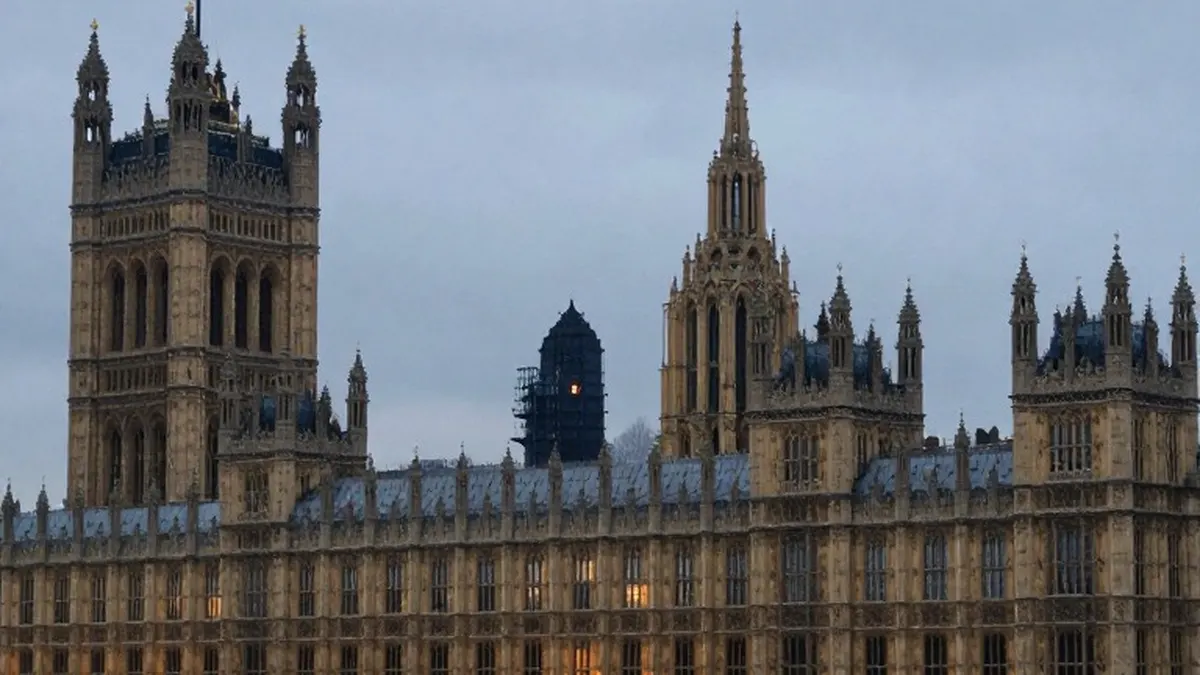
Louise Haigh, the de facto deputy prime minister, said Latter's 'heart-breaking story' meant a change in the law deserved consideration. 'It clearly would be a massive step to change the age of consent, but it deserves proper consideration and scrutiny,' she said. 'I can absolutely understand why she is calling for it.' She added that lawmakers must listen to victims so that their experience is at the heart of what Parliament considers.
Latter, who was referred to by the pseudonym Alice in earlier reporting by the Sunday Times, the Times and Channel 4's Dispatches documentary, said she first met Brand in Leicester Square in central London when she was 16, while on her way home from a shopping trip. He took her number and later messaged her, asking if she wanted to go for dinner. Brand, who was working at MTV at the time, still asked to meet after she confessed her age to him, she said. She alleges he orally raped her towards the end of their three-month relationship.
'I think we all sort of agree that .. adults shouldn't be allowed to have sexual relationships with children, with somebody under the age of 18,' Latter said. 'That really doesn't seem like a gigantic leap to take.'
Brand denied all of the allegations made by Latter when they were first reported by the Times in 2023. She spoke to police after the documentary aired, but the Crown Prosecution Service decided not to include her case in Brand's trial at Southwark Crown Court. He was convicted of attacks against four of the six women who gave evidence against him, and is now serving a 10-and-a-half-year prison term for one count of rape and three sexual assaults.
The debate comes days after it was announced that the Metropolitan police are probing a series of 'serious' sex offence allegations against comedian David Walliams, following an investigation by the Guardian and ITV News. One woman described her alleged encounter with Walliams when she was 15 as 'sexual assault'. Walliams denies any wrongdoing.
Haigh said that, in light of news that one of Walliams's accusers was asked to sign a non-disclosure agreement, the government should also consider banning NDAs. 'I do think there is a very strong case to look at banning NDAs in all circumstances where they relate to harassment or discrimination,' she said, adding that no victim should ever be silenced.
Support for a review extends beyond Labour. Jess Brown-Fuller, the Liberal Democrat justice spokesperson, praised the 'extraordinary bravery' it took for Latter to waive her anonymity, and said looking at a staggered age of consent was an important step, noting that rules already recognise power imbalances between teachers and students. Bridget Phillipson, the minister for women and equalities, said she and thousands of others across the country 'will be in awe of her courage and determination'.
The Metropolitan police said the investigation into Latter's allegation remains ongoing. A spokesperson said officers launched an investigation in January 2026 and were advised by the CPS that further information was needed before a charging decision could be made. 'We understand the delay has been distressing for this victim-survivor,' the spokesperson said. The CPS said it would continue working closely with investigators so that cases progress as quickly as possible.