The British Ministry of Defence has stated that it takes the safety of its bases, equipment, and personnel very seriously. This clarification came after media reports indicated that the Royal Air Force has adopted new precautions to guard against potential drone attacks. The statements serve to address growing concerns about the vulnerability of military sites in the current security climate.
Reports from The Times and Sky News on Wednesday revealed that aircraft are being moved into hangars and hardened shelters during the night. Additionally, anti-drone nets are being installed to protect warplanes that remain exposed on the tarmac. While the Ministry of Defence did not explicitly confirm these specific operational details, it issued a statement noting that it is constantly adapting its strategies to counter any potential threats.
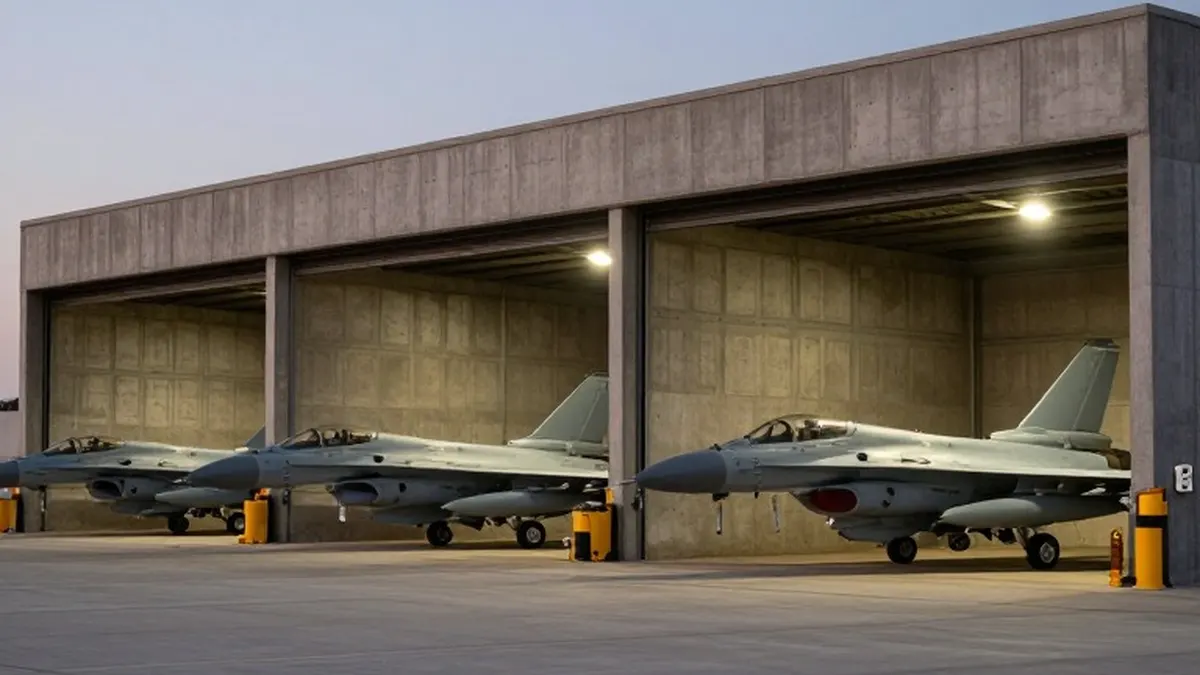
Justin Bronk, a senior researcher at the Royal United Services Institute in London, described the reported tactics as a sensible and logical response. He noted that this approach is particularly appropriate if intelligence suggests a likely drone threat. Bronk highlighted that major RAF fighter bases, including Coningsby, Marham, and Lossiemouth, still possess hardened aircraft shelters from the Cold War era. These structures have been maintained in usable condition for storage, protection, and limited maintenance.
However, Bronk cautioned that the number of hardened shelters is insufficient to protect all jets at each airbase. This shortage stems from the consolidation of squadrons into super bases after the Cold War ended, coupled with a mistaken assumption that such physical protection was no longer critical. The Ministry of Defence is addressing this by investing an additional 470 million pounds to strengthen security at military sites. This funding will improve physical protection, surveillance, and counter-drone capabilities. Furthermore, 15 million pounds has already been invested in drone technology and restricted airspace over 44 critical defence sites.
British authorities have regularly issued warnings regarding threats posed by Russia and Iran. In October, members of Parliament warned that the military needed to make dramatic progress to be ready for a potential Russian attack on a NATO country. On Tuesday, the domestic intelligence service MI5 and the Ministry of Defence issued a joint alert. This warning advised UK military suppliers to Ukraine about increasing sabotage attempts by Russian actors.
Bronk explained that aircraft inside standard hangars or hardened shelters are protected from small drones used by infiltrated adversary cells or terrorists. However, only those in hardened shelters are protected from larger one-way attack drones, such as the Russian Geran series, which are based on an original Iranian design. He emphasized that even though these shelters appear old-fashioned, they offer a low-risk, inexpensive, and effective way to improve fighter fleet resilience during wartime.
The thick concrete and blast doors of hardened shelters provide almost total protection from drones. They also ensure that any unintercepted cruise missile can destroy at most a single jet with a direct hit. This level of protection is crucial for maintaining operational capability in a high-threat environment.
Recent incidents have heightened security concerns. Earlier this month, US forces responded to possible unauthorised drone activity over a military base in the United Kingdom that hosts American warplanes. A US Air Force spokesperson stated that no personnel, aircraft, or infrastructure were affected at the eastern RAF Lakenheath base during this event.
There was also a security scare on September 27 at the southwestern RAF Fairford base, which was used by US planes. A group of men allegedly drove three vans up to a nearby village and abandoned them with filled petrol barrels inside, sparking a bomb scare and evacuation. Washington had used this airbase in its war on Iran. Days after the incident, the US withdrew all its B-1 bombers from the site. Two men have been charged in a UK court over the incident, and three in the United States.
The US military also withdrew its planes from RAF Mildenhall, located near Lakenheath, on November 9. This move followed a threat from Iran, according to reports from The Wall Street Journal and The Financial Times. These recent withdrawals underscore the ongoing efforts to secure military assets in the region.