Ukrainian authorities have increased the death toll from a Russian strike on an aid centre in the southeastern Zaporizhia region to 40 people, President Volodymyr Zelenskyy announced on Wednesday.
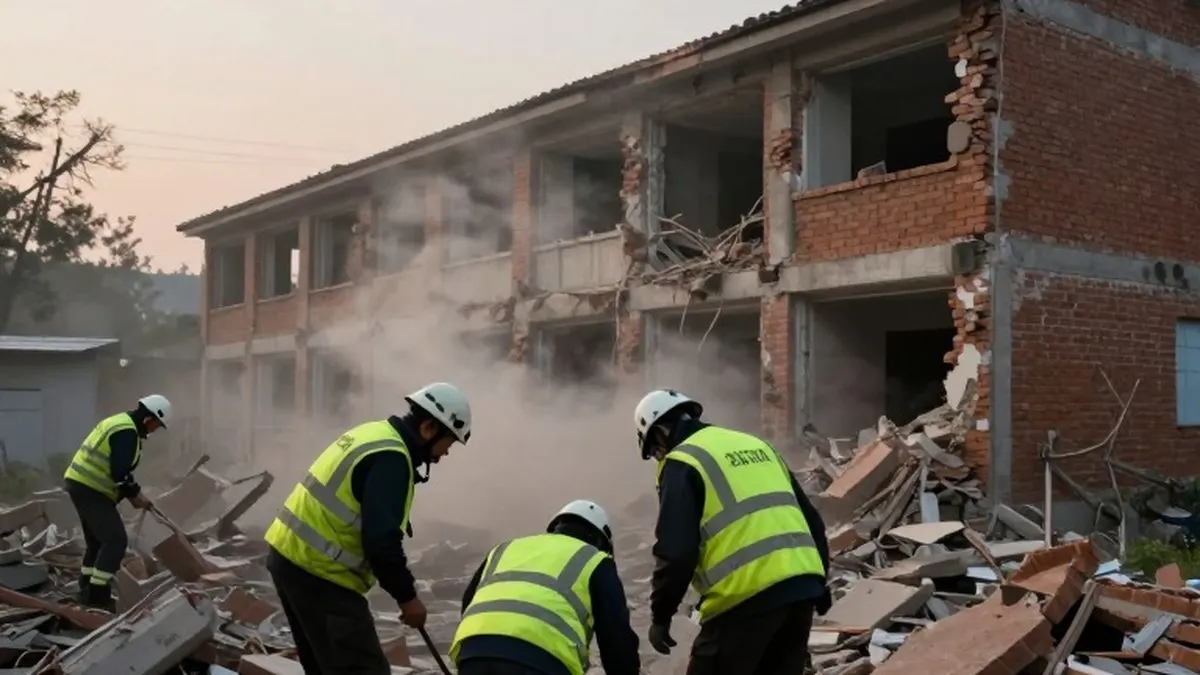
Zelenskyy said some of the bodies had yet to be accounted for and warned that more than 30 people could still be buried beneath the rubble.
The attack took place on Monday and ranks among the deadliest strikes on civilians in Russia's war on Ukraine, which is approaching the five-year mark. It struck just as Kyiv was preparing to join US-brokered ceasefire talks with Moscow scheduled for next week.
Local officials had previously confirmed 37 deaths and estimated that around 38 people might remain trapped. Russia dropped several bombs on a school building in the front-line village of Komyshuvakha, which was being used to distribute aid. Ukraine said a follow-up strike then hit an underground shelter packed with people.
Four police officers and two rescue workers were among those killed. Zelenskyy denounced the "vile terrorist strike" and said it demonstrated that Russia had no interest in de-escalating the conflict, adding that the attack had squandered an opening created by a ceasefire and humanitarian mission last week in the front-line village of Oleshky.
Ukrainian police published body-camera footage from one of the four officers who died. The video shows people being directed into the underground shelter as the officer receives a radio warning of incoming guided aerial bombs, followed by scenes inside the shelter before the recording cuts to black and silence.
The United Nations human rights mission in Ukraine said on Tuesday that the bombing likely violated international law. Meanwhile, local authorities reported that Russian drones were obstructing the search for victims in Komyshuvakha, though Mykhailo Semikin, acting head of the regional military administration, said rescue operations would continue regardless.
The United States has announced a new round of negotiations aimed at ending the war. Special envoy Steve Witkoff said Ukrainian and Russian delegations will meet in Abu Dhabi on November 10 and 11 to discuss post-war security agreements, de-escalation, humanitarian measures and ending the conflict.
Russian President Vladimir Putin agreed to the talks after meeting Witkoff in St Petersburg on October 21. Previous rounds of such meetings have yielded little progress, with Moscow refusing to soften hardline demands that Kyiv cede territory, demilitarise and pledge not to pursue NATO membership. The Trump administration has appeared sympathetic to Russia's stance, alarming officials in Kyiv and across Europe.
Zelenskyy, who has previously tried to influence the US president by describing his country's suffering, appeared to make a similar appeal after the Zaporizhia attack. "Unfortunately, there has been very little reaction from the world to this insane attack," he wrote on social media. "But it, like thousands upon thousands of other war crimes Russia has committed against Ukraine and Ukrainians, demands a strong response. Evil always goes further if it is left unanswered."