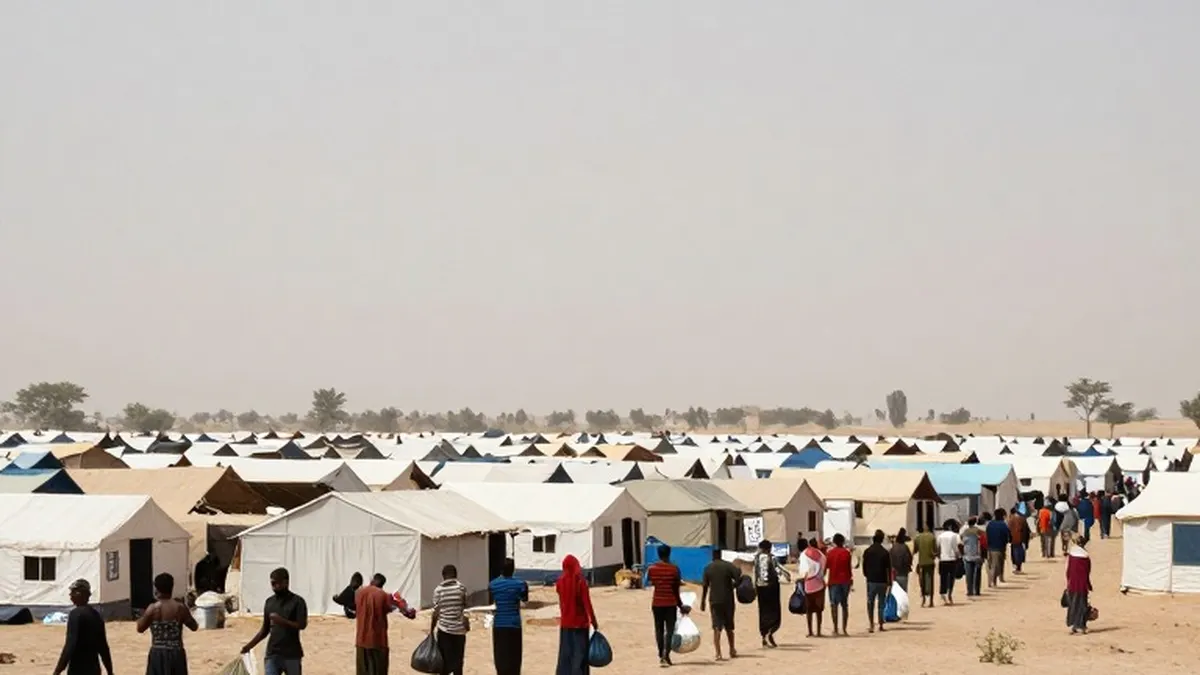
The head of the United Nations refugee agency has described the ongoing war in Sudan as shameful, urging the international community to pursue a political resolution to end the conflict. In a recent interview with France 24, Barham Salih highlighted the severity of the crisis, noting that the war has entered its fourth year and has resulted in the displacement of millions of people.
Salih, who assumed the leadership of UNHCR in January, expressed deep regret over the humanitarian toll of the fighting. He stated that hundreds of thousands of individuals have been killed, maimed, or traumatized by the violence. The former Iraqi president, who was himself a refugee in the past, emphasized that for such events to occur in the 21st century is embarrassing and, in his words, shameful.
The UN refugee chief called for a political solution to bring the conflict to a close. He warned that global forced displacement is at a record high, creating immense pressure on humanitarian resources. Salih cautioned that funding reductions are having a negative impact on populations that are in dire need of assistance.
Specific examples were provided to illustrate the strain on UNHCR operations due to financial constraints. Salih pointed to Adré in Chad, where the agency has been able to provide refugees with only eight liters of water per person per day. He also cited a community of approximately 60,000 refugees in Gambela, Ethiopia, which has access to only one doctor. The agency head described these conditions as unacceptable.
Salih noted that the impact of funding cuts from the United States has been drastic on the agency's ability to operate. However, he also observed that the European Union has increased its support to UNHCR. These shifts in financial backing have complicated the agency's mission to provide essential services to displaced populations worldwide.
The refugee chief warned that the global asylum system is under threat amidst what he described as a politicized and even weaponized debate. He argued that asylum should not be viewed as competing with immigration control, stating that the two are in fact complementary processes.
Salih defended the integrity of the asylum system, asserting that efficiency has its limits. He stressed that the current levels of displacement require a coordinated global response rather than fragmented approaches that may undermine the protection of those seeking safety.
The interview served as a reminder of the personal history of the UNHCR chief, who understands the plight of refugees from direct experience. His comments aim to galvanize international action to address the root causes of displacement and to ensure that adequate resources are available to support those affected by conflicts like the one in Sudan.
As the war continues, Salih’s call for a political solution underscores the need for diplomatic engagement to resolve the conflict. The agency's leadership remains focused on maintaining the integrity of the asylum framework while navigating the complex landscape of international funding and political debates.
The situation in Sudan remains a focal point for humanitarian efforts, with the UN refugee chief emphasizing the urgency of addressing the crisis before the number of displaced persons continues to rise. His remarks highlight the critical intersection of political will and financial support in effective humanitarian response.