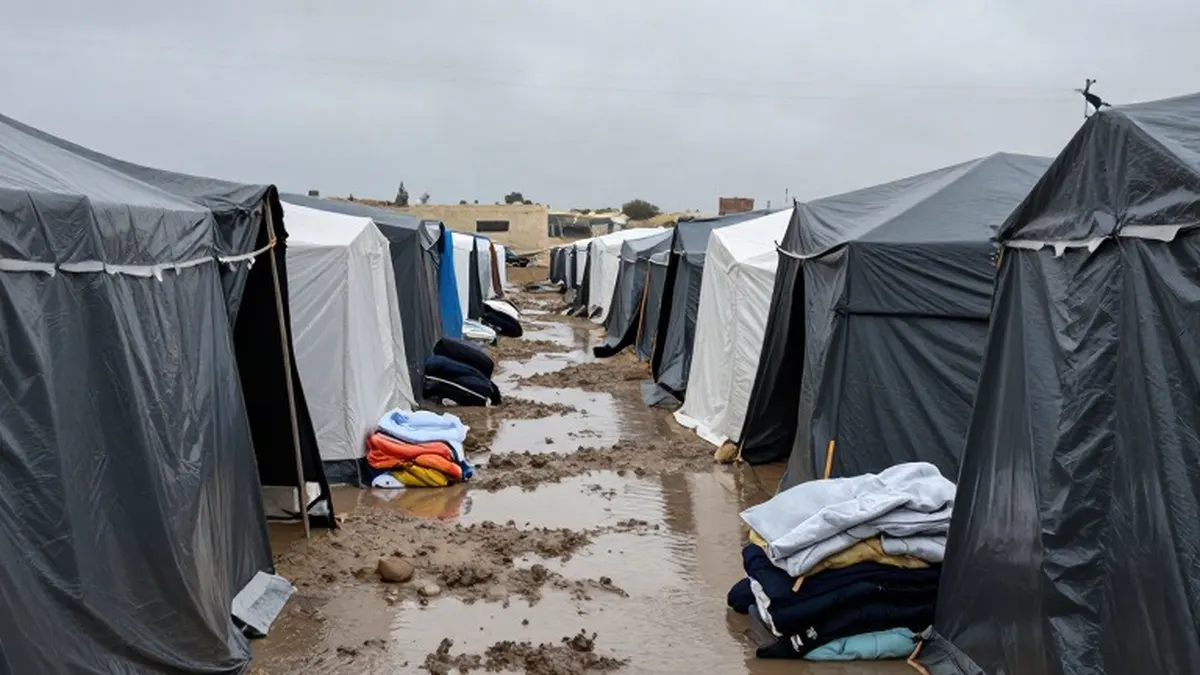
Interim Prime Minister Benjamin Netanyahu’s office defended Israel’s restrictions on supplies entering Gaza on Tuesday, saying it was helping prepare the territory for winter while accusing Hamas of failing to fulfill its commitments. The statement followed criticism from the US-backed Board of Peace and several countries over limits on humanitarian assistance as rainfall flooded tents.
In its English-language response, the Prime Minister’s Office said Israel was cooperating closely with the United States and the Board of Peace and remained committed to President Donald Trump’s 20-point plan. It said the proposal requires Hamas to surrender its weapons before reconstruction begins. The office accused Hamas of retaining its arsenal and failing to relinquish governance, demilitarize or begin efforts to reverse radicalization in Gaza.
The Board of Peace had called on Israel a day earlier to expand aid access, blaming Netanyahu’s outgoing government for the lack of progress in the territory. It also criticized Hamas for refusing to disarm, saying that refusal complicated efforts to meet civilians’ needs. Established as part of the October 2025 ceasefire, the board said Israel’s response remained inadequate despite measures the government was considering.
The board urged Israel to permit materials needed for temporary shelters, water and sanitation systems, waste management, drainage and sewage removal. It also called on the government to meet its obligations under the Sharm El-Sheikh Humanitarian Protocol, which was signed when the ceasefire took effect. Australia, Denmark, Egypt, Jordan, Kuwait, Qatar, Saudi Arabia and the United Kingdom have also sought fewer restrictions on items with both civilian and military uses.
Netanyahu’s office argued that such materials could strengthen Hamas. It accused the group of using cement intended for housing to construct tunnels, converting water pipes into missile launchers and using sanitation pumps to make rockets. The office also alleged that Hamas diverted humanitarian assistance toward military infrastructure while the United Nations and UNRWA ignored the practice. It maintained that Hamas would continue exploiting dual-use supplies while it remained in power.
Israel said it had permitted additional humanitarian goods to help Gaza’s population cope with winter. According to the Prime Minister’s Office, COGAT facilitated a winter preparedness plan with the Board of Peace, the United Nations, international organizations and donor countries. The plan includes more than 91,000 tents, over 8,200 truckloads of winter clothing and supplies, 12 sewage-removal trucks and repairs to water and sewage infrastructure.
Mobile homes nevertheless remain barred from Gaza. Aid organizations say they are the most necessary form of protection against heavy rain and winter weather. Netanyahu’s office pledged continued support for winter preparations but said humanitarian equipment must not enable Hamas to rebuild its military capabilities.
The office placed responsibility for Gazans’ suffering solely on Hamas and urged mediators to demand its immediate disarmament across the territory so Trump’s plan could proceed. The statement followed reports that Trump had urged Netanyahu the previous week to advance implementation of the proposal following the conclusion of Israel’s election.