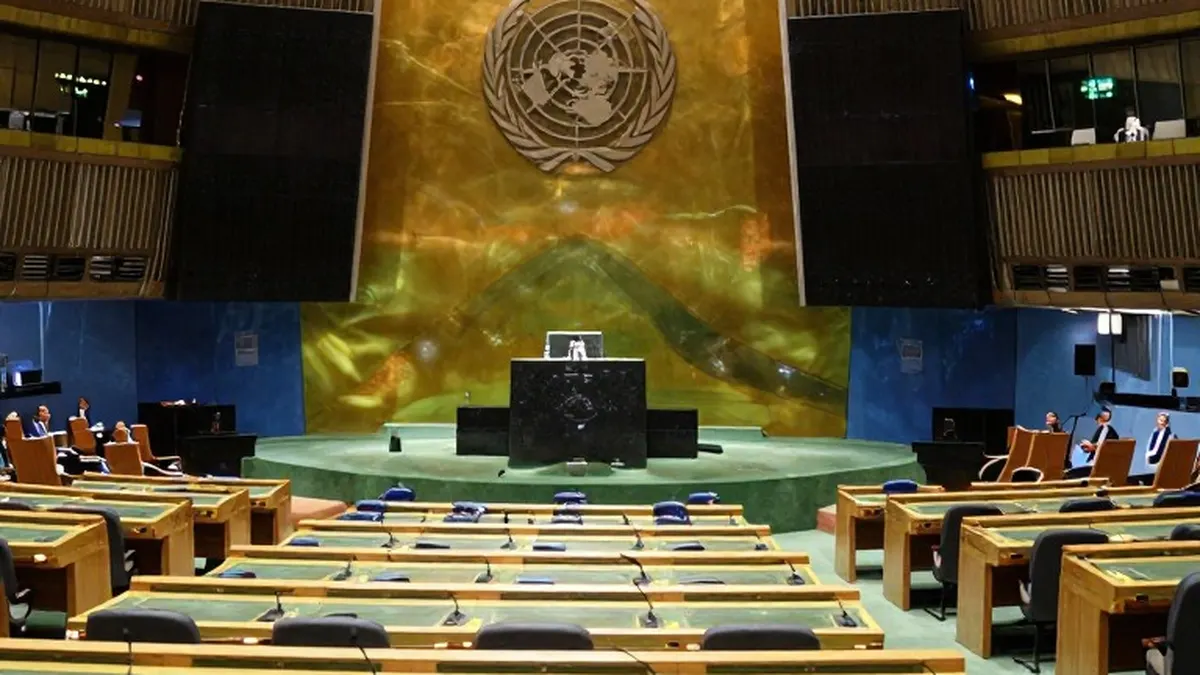
The United Nations General Assembly voted on Wednesday to elect the Islamic Republic of Iran to the UN Committee for Programme and Coordination. This decision grants Tehran a position on a significant body tasked with reviewing and coordinating the organization's global programs and strategic priorities.
The election took place despite widespread criticism regarding Iran's record of human rights abuses and its support for various terrorist organizations. According to the official voting results, the Iranian candidate secured 144 votes in favor during the secret ballot process.
During the session, Israel raised formal objections to the proceedings. Israeli representatives described the process as a double standard in the treatment of candidates from their nation. They accused Arab groups of repeatedly subjecting Israeli candidates to politically motivated votes, labeling the entire process a waste of time and resources.
Critics had long urged international representatives to intervene before the final vote. Among them was Hillel Neuer, the Executive Director of UN Watch, who had repeatedly called for a specific vote to block Iran's candidacy. This push for a veto followed the Islamic Republic's initial nomination by the UN's 54-member Economic and Social Council in April.
Neuer highlighted the irony of Iran's selection for a committee that shapes priorities in areas such as women's rights and terrorism prevention. He stated that the plan to elect the Iranian regime to this influential body was a travesty of justice. He pointed out that the country had massacred tens of thousands of people in January, making the subsequent nomination an absurdity.
Following the announcement of the vote, Neuer took to social media to express his disappointment. He wrote on X/Twitter that the UN General Assembly had just elected the murderous Islamic Republic of Iran to its Committee for Program and Coordination.
In his post, he emphasized that this is the main body shaping the world organization's priorities on critical issues including women's rights, human rights, disarmament, and counter-terrorism. The election has now placed Iran in a role where it will help determine the direction of these key UN initiatives.
The outcome highlights the complex political dynamics within the General Assembly. While the vote was decisive with 144 affirmative ballots, the strong objections from Israel and prominent advocacy groups like UN Watch suggest that the election will remain a point of contention for many member states.
The Committee for Programme and Coordination plays a vital role in the UN's operational framework. By securing a seat, Iran gains a direct voice in how the organization allocates resources and defines its strategic focus on global challenges. This development is likely to influence future discussions on international security and social policy.
As the new term begins, observers will watch closely to see how Iran exercises its influence within the committee. The contrast between the country's external policies and its new mandate to oversee human rights and counter-terrorism priorities may lead to further debates within the UN system in the coming months.