The United States military has announced the creation of Task Force Iron Gate, a new unit designed to prevent Iran from moving advanced weapons and other materials over land routes and across the Caspian Sea. The announcement by US Central Command came on Saturday, as concerns mount over the possibility of a renewed and expanded war with Tehran.
On the same day, the Islamic Revolutionary Guard Corps unveiled plans for underground complexes capable of sustaining missile and drone production even under bombardment. That announcement followed reports of ongoing construction near Iranian missile bases, based on satellite imagery, and earlier claims by Tehran that US strikes had failed to destroy its underground facilities.
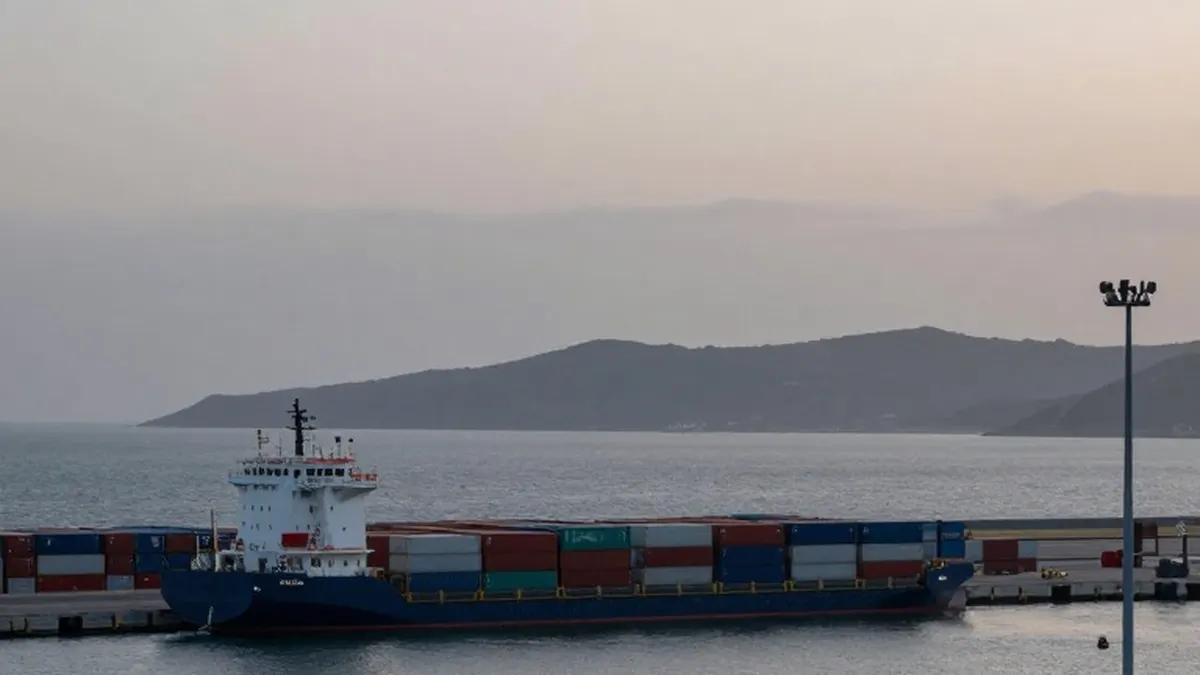
According to CENTCOM, the new task force will be based in Tampa, Florida, and staffed by around 20 civilian and military personnel. It will coordinate with other US government agencies on preventing the movement of advanced weapons systems, dual-use technologies, sanctioned materials and illegal revenue streams across Iran's land borders and the Caspian Sea. Iran shares borders with seven countries: Afghanistan, Armenia, Azerbaijan, Iraq, Pakistan, Turkiye and Turkmenistan. CENTCOM Commander Admiral Brad Cooper said the unit would reinforce "the success of our ironclad blockade against Iran at sea".
Michael Mulroy, a former US deputy assistant defence secretary for the Middle East, told Al Jazeera the task force will seek to establish where "weapons systems are coming in, how they could potentially be cut off" and how "Iran is transporting its energy". He suggested that if President Donald Trump escalates the war, likely targets would be economic and infrastructure sites rather than military ones, unlike the earlier Operation Epic Fury. "It's primarily a coordination body that's looking for how the US can increase its economic strangulation strategy by going after the ground routes as they've already covered a majority of the maritime routes," he said.
Iran dismissed the plan outright. IRGC spokesman Sardar Mohebi called it "just a play on words", according to the Fars news agency, saying Washington could not achieve its aim of applying severe economic pressure to collapse the Iranian economy. He noted that the US had previously predicted an Iranian economic collapse within two weeks, which did not materialise.
Although CENTCOM did not explicitly cite Iran's weapons trade with Russia, analysts view the task force as an effort to disrupt supply networks that include Russian connections. US media have reported that Russia has shipped drone components and explosives to Iran via the Caspian Sea, and there are claims Russian technology may be helping Tehran develop advanced supersonic cruise missiles. Mahjoob Zweiri, a professor at Qatar University, called such reports a "real concern" for Washington and warned the task force could "cause a confrontation with Russia".
Rami Khouri of the American University of Beirut questioned whether the mission can succeed, pointing to Iran's thousands of years as a trading nation. "It's virtually impossible for the US to seal off every one" of Iran's contacts across the region, he said, adding that Washington cannot control the behaviour of Russia, China, the United Arab Emirates and others. He noted that materials entering Iran's weapons systems are often bought from other countries, sometimes even the US or European states, and channelled through companies in Asia.
Joe Kent, a former Trump aide and top counterterrorism official who resigned in March over the US war on Iran, accused CENTCOM of trying to undercut diplomacy. "This is CENTCOM inviting Iran to escalate while the vice president is attempting to negotiate with the Iranians," he posted on X, describing the move as "policy by CONOP". The Wall Street Journal has reported that Cooper, alongside Defense Secretary Pete Hegseth, is among officials pressing Trump to renew attacks on Iran.
Zweiri argued the task force may be largely symbolic, since the US has no military presence on the Caspian Sea and littoral states such as Azerbaijan and Armenia are unlikely to cooperate for fear of upsetting Russia. He added that the Caspian accounts for just 11 percent of Iran's economy, limiting the task force's potential impact. Al Jazeera could not independently verify that figure, but the New York based Soufan Center says the Caspian represents only a fraction of Iran's overall maritime trade.