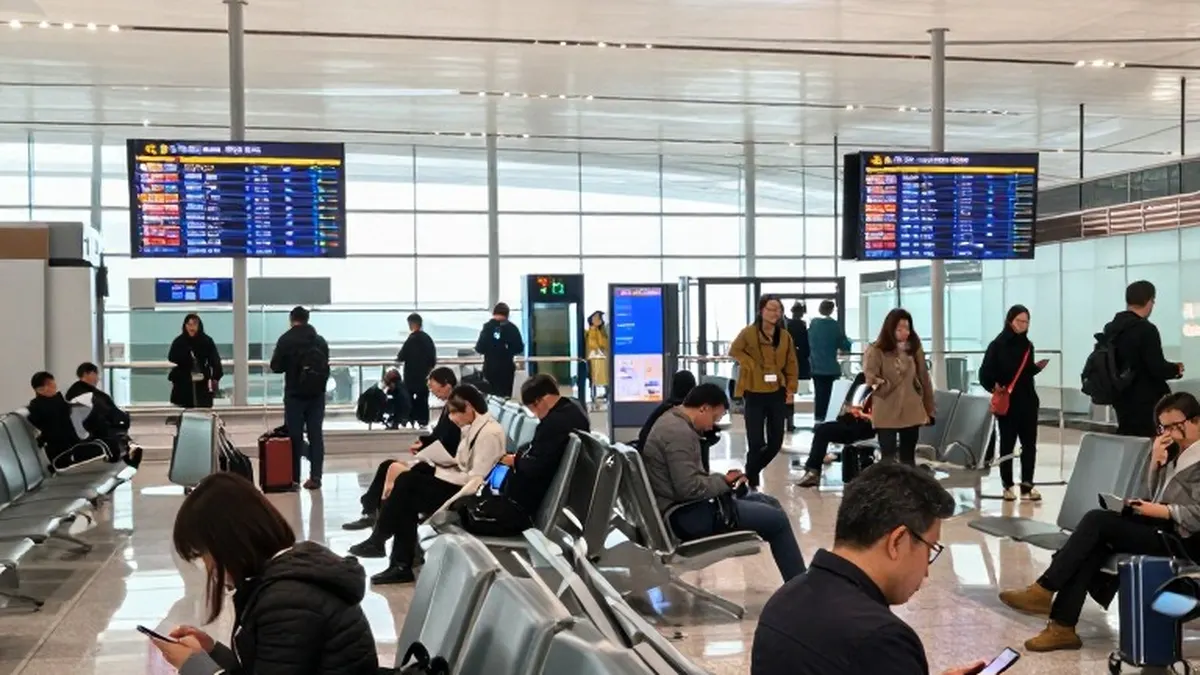
Significant chaos unfolded at airports across the United States on Friday when the Federal Aviation Administration implemented a nationwide ground stop for all departing flights. The decision was made after officials detected critical problems with radar and communications systems, rendering normal air traffic operations unsafe.
Transportation Secretary Sean Duffy announced that the disruption began at 3.36 pm EST, or 8.36 pm GMT. He explained that radar and communications systems at facilities across the country became unstable, leading to inconsistencies in the data received from radars and in communication with aircraft. The FAA confirmed that the communication issues affected multiple air traffic control centers, prompting technicians to launch an immediate investigation.
More than 3,500 aircraft were already in the air when the ground stop was enacted. These planes were permitted to continue their flights and land safely at their intended destinations. However, the restriction left many passengers stranded on the ground, with thousands of flights cancelled and hundreds others diverted to different airports.
The FAA lifted the restriction at 8.15 pm EST. Despite the end of the ground stop, Duffy cautioned that the process of restoring normal operations would be gradual. He described the recovery as slow and urged travelers to contact their airlines directly, as carriers worked to reposition aircraft and crew members to their correct locations.
This major aviation disruption occurred just one day after a global Microsoft outage affected a wide range of digital services. The previous day’s technical failure impacted popular platforms such as Outlook, Teams, and Copilot, causing significant delays for government agencies and businesses around the world.
The Microsoft outage, which began on Thursday and persisted into Friday, was attributed by the company to a technical problem within its infrastructure. Microsoft stated that there was no indication of malicious activity or a cyberattack. The outage tracked by Downdetector recorded nearly 130,000 reports of issues accessing Outlook shortly after 1 pm on Thursday.
The digital disruption had tangible effects on public services in Britain. In Manchester, a judge halted a trial and sent jurors home due to delays. British police reported an inability to receive crime reports online and asked the public to call for urgent requests. Additionally, the National Pharmacy Association warned of medication delays because disruptions to National Health Service systems prevented doctors from emailing prescriptions to pharmacies.
In the United States, the Microsoft outage also impacted some law enforcement functions. The Arapahoe County Sheriff’s Office in Colorado reported that online bond payments were disrupted. Microsoft expressed regret for the impact on users who rely on their services, noting in a social media update that they understood the importance of these tools for daily work.
Although the timing of the two events was close, officials clarified that the Microsoft outage was unrelated to the nationwide flight disruption. A Microsoft spokesperson confirmed that the company had no indication that the FAA ground stop was connected to the recent service disruption.
Passengers and industry observers are now waiting to see how quickly the aviation sector can return to its pre-disruption state, with airlines continuing to manage the backlog of delayed departures and repositioned crews.