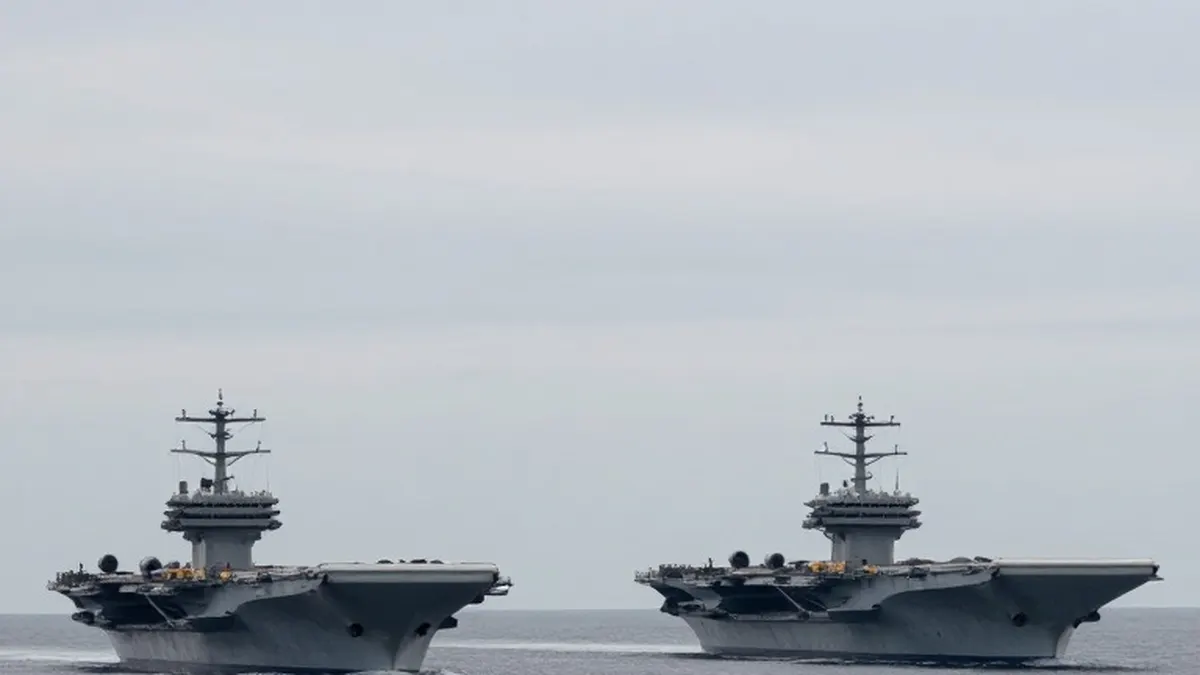
The United States military has resumed a two-aircraft-carrier deployment in the Middle East to support ongoing operations against Iran. This change in force structure occurred after the USS George Washington left the region, a move that restores the previous level of naval presence following a brief period of heightened activity.
A spokesperson for the U.S. Pacific Fleet, Cmdr. Katie Koenig, confirmed on Wednesday that the Japan-based USS George Washington is now under Pacific Fleet control. She stated that the vessel is currently conducting routine operations within the Asia-Pacific region, marking its return to its home theater after a temporary deployment to the Middle East.
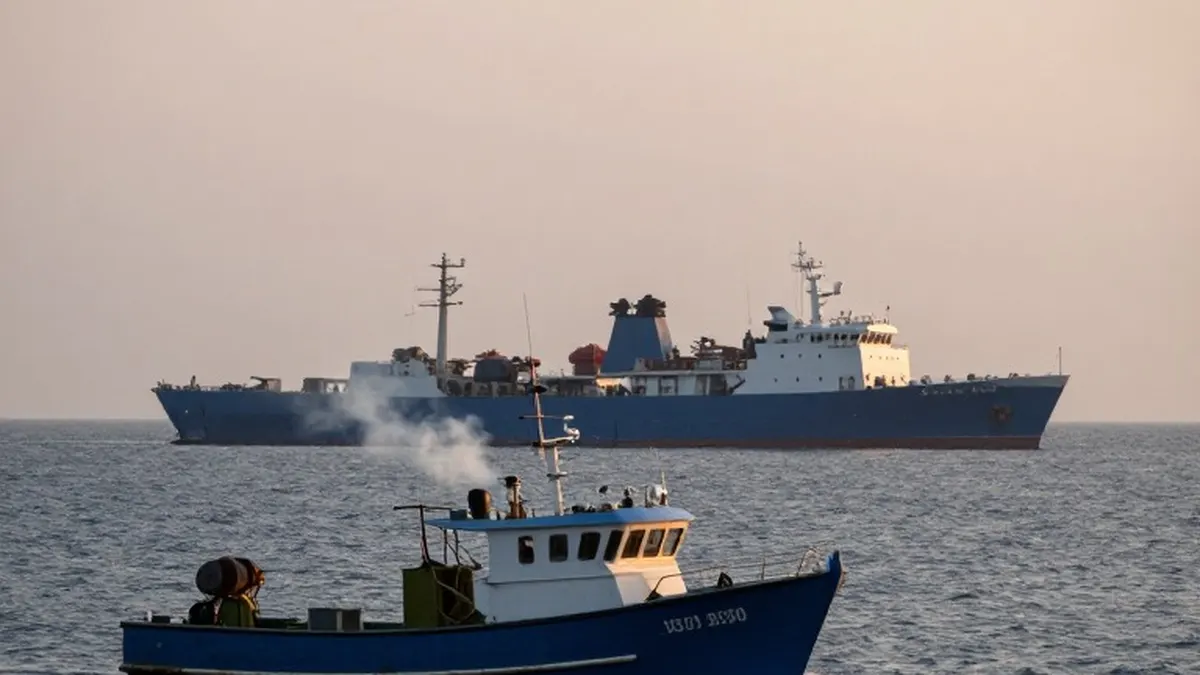
The departure of the George Washington coincided with the arrival of the USS Theodore Roosevelt, which briefly resulted in three carriers operating in the waters off Iran. This unusual concentration of naval power was part of a continuous shuffling of assets intended to maintain pressure on Tehran. The carriers serve as the central element of a U.S. flotilla tasked with blockading merchant shipping to and from the Islamic Republic.
Currently, the USS George H.W. Bush and the USS Theodore Roosevelt remain in the region. They are accompanied by more than a dozen destroyers, cruisers, and a littoral combat ship. This substantial naval presence is designed to enforce the blockade, which aims to squeeze Iran's economy by preventing its oil from reaching global markets. The strategy has been a key component of the administration's approach to the conflict since it began on Feb. 28.
In addition to the blockade, the U.S. has executed limited strikes on Iranian targets located in the Strait of Hormuz. This critical waterway sees nearly a third of the world's oil traffic pass through under normal conditions. Disruptions to shipping in the strait have contributed to a rise in global energy prices, adding to the economic strain felt by consumers and businesses alike.
The ongoing conflict has had significant domestic political repercussions. The war's unpopularity and its associated economic effects played a role in the major losses suffered by President Donald Trump's Republican Party during the midterm elections held this month. These results highlight the growing tension between the administration's foreign policy objectives and voter sentiment regarding the cost of the war.
President Trump has sent mixed signals regarding the future of the conflict. While he has warned that the U.S. military is "locked and loaded," he has also declared that the war is "militarily is effectively over." The President noted that it is highly unlikely he will order new major strikes, though he emphasized that the U.S. is closely monitoring Pickaxe Mountain, a facility linked to Iran's nuclear program, for any signs of activity.
Despite these statements, a negotiated deal to end the fighting remains distant. The U.S. continues to maintain a robust military presence to keep leverage in potential negotiations. The naval deployment reflects a strategy that balances the need for offensive capability with the desire to avoid a full-scale escalation of the war.
The USS George Washington had originally arrived in the Middle East in August. It was pulled from a patrol in the South China Sea shortly after reports emerged of mental health and supply issues aboard the USS Abraham Lincoln, another long-deployed carrier in the region. The Lincoln had set a record for uninterrupted time at sea, spending more than 240 days on station before its rotation.
The return to a two-carrier force structure indicates a stabilization of the naval deployment. With the George Washington now back in the Asia-Pacific, the U.S. Navy is continuing to manage the logistics and personnel challenges associated with long deployments while maintaining the strategic blockade against Iran.