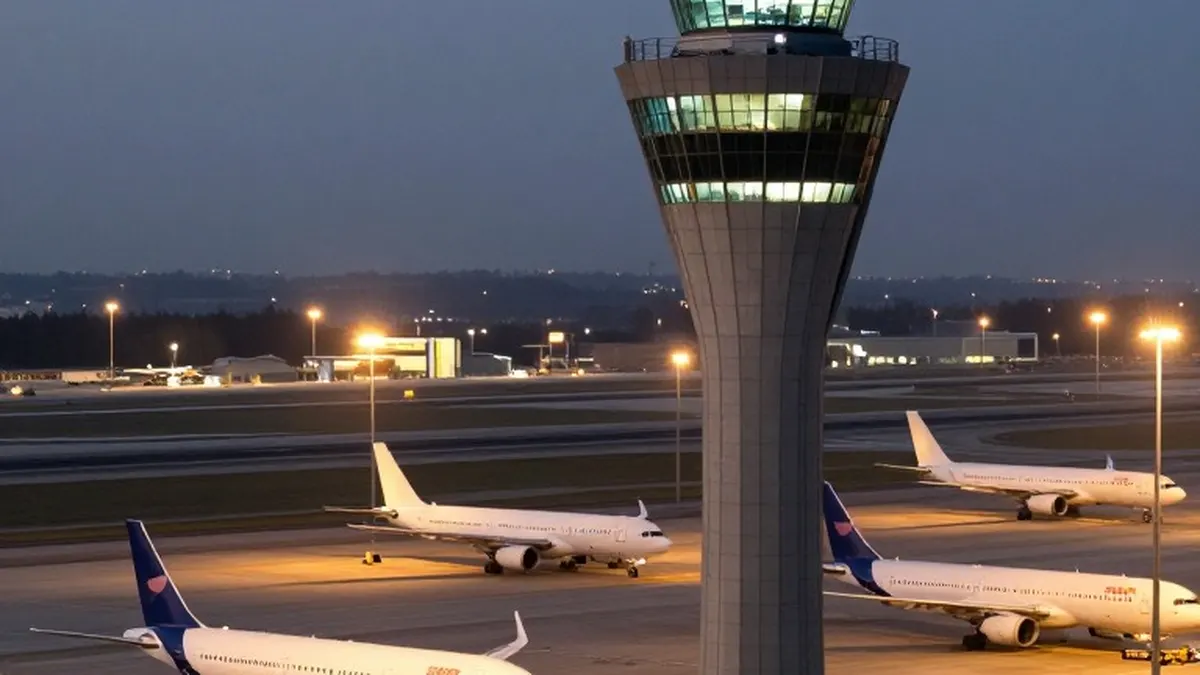
A retired Air Force officer and commercial pilot has warned that the recent nationwide ground stop by the Federal Aviation Administration will not be the final disruption unless Congress acts to modernize the agency's infrastructure. Lt. Col. Buzz Patterson, a former Delta Air Lines pilot who also served as a carrier for the nuclear football during the Clinton administration, described the current air traffic control system as archaic and broken. He stated that the outdated technology is placing both passengers and air crews in danger.
Patterson emphasized that the issue transcends political divisions and requires immediate attention from both parties in Washington. He noted that previous administrations from both sides have delayed the necessary overhaul, digging a deep hole that now requires a long and grinding effort to escape. The retired pilot argued that it is time for politicians to commit to fixing the system rather than continuing to postpone the complex and expensive updates.
The scale of the required investment has been highlighted by Transportation Secretary Sean Duffy, who identified a cost of approximately 50 billion dollars for the modernization. Patterson compared this financial commitment to buying a home that requires immediate renovation. He suggested that while the upfront cost is significant, it is essential for long-term benefits and potential savings. He lamented that some facilities are still using floppy disks and paper scripts to manage aircraft taxiing, processes that he believes should be fully automated.
The veteran pilot expressed concern that the volume of air traffic far exceeds the capacity of technology dating back to the 1970s. He recalled numerous instances during his career where air traffic control issued traffic avoidance calls that prevented potential midair collisions. Patterson stressed that these close calls demonstrate the essential nature of the current human interventions, which compensate for technological limitations.
He pointed to the recent crash of a Learjet 60 in Florida as a stark reminder of the dangers posed by outdated systems. The incident involved pilots attempting to navigate a direct route through a thunderstorm. Patterson noted that such maneuvers are generally avoided because of the severe turbulence involved, and he highlighted the need for better integration between the National Weather Service and the FAA to prevent similar tragedies in the future.
Patterson argued that upgrading communications, weather radar, and wiring from copper to fiber optic are all interconnected components of a safer aviation system. He observed that both the air traffic control system and the National Weather Service experienced outages on the same day, underscoring the fragile nature of the current infrastructure. He believes that connecting the National Weather Service directly to the cockpit is a necessary step that should be implemented as part of the broader modernization.
The pilot criticized the current political climate, describing it as tribal. He urged lawmakers to abandon partisan disputes to pass comprehensive funding measures. He noted that President Donald Trump is also facing gridlock in this effort, acknowledging that the request for 50 billion dollars may be seen as too little or too late, but it represents a start after decades of neglect by both parties.
With peak holiday travel seasons approaching, Patterson warned that further systemic meltdowns are likely to occur if the infrastructure is not addressed. He predicted that disruptions could happen on major holidays such as Thanksgiving or Christmas Eve. He concluded by praising the dedication of current air traffic controllers and flight crews but maintained that human skill cannot indefinitely compensate for technological deficiencies. He expressed a personal desire to feel safe flying his family across the country once the system is properly updated.