
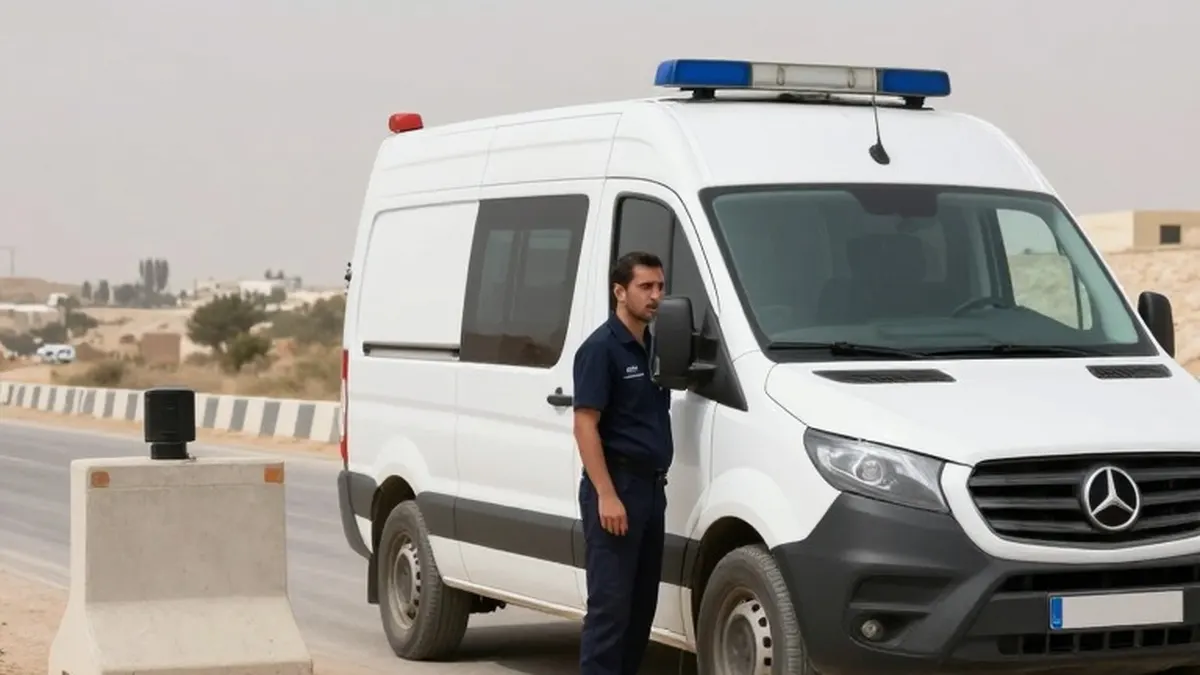
A new report indicates that violent incidents targeting health care workers in the West Bank have increased significantly over the past two years. Physicians for Human Rights Israel states that such encounters surged by 350 percent between 2022 and 2024. The number of documented violent events rose from 93 in 2022 to 422 in 2024, marking a dramatic escalation in risks faced by emergency personnel.
The organization compiled this data through extensive fieldwork, including interviews with 25 paramedics, medics, and emergency response workers. Researchers also accompanied ambulance drivers and paramedics during their shifts to observe how they navigate military checkpoints to reach patients. This firsthand observation highlighted the growing difficulty of providing timely medical care in the region.
The increase in violence is particularly notable following the Hamas-led attacks on October 7, 2023, which killed 1,200 people and led to a devastating war in Gaza. Since that date, the report notes that restrictions on medical care have often evolved into direct attacks by Israeli forces and settlers on emergency services. The report argues that these workers are specifically targeted as part of broader policies sustaining the occupation.
Movement across the West Bank has become increasingly obstructed, with the number of barriers rising from 642 in June 2023 to 925 in December 2025. The report states that reaching patients, evacuating the wounded, and transferring individuals between facilities all depend on Israeli military approval. Interviews with staff describe physical assaults, threats at gunpoint, verbal abuse, and humiliating searches.
Milena Ansari, director of the Occupied West Bank at Physicians for Human Rights Israel, stated that the situation violates international law. Citing the Fourth Geneva Convention, she emphasized that Israel has a responsibility to ensure medical services are accessible to the occupied population. This protection explicitly extends to Palestinian paramedics, ambulances, and emergency medical teams.
The Israel Defence Forces responded by denying that their security forces were stopping medical teams from doing their work. In a statement, the military condemned all acts of violence against medical teams and ambulances. The forces said they enable freedom of movement for these teams through Judea and Samaria and coordinate the movement of Palestinian ambulances with relevant authorities in advance.
However, Ansari argued that the current measures are insufficient. She called for a higher standard where all checkpoints and barriers between Palestinian communities and territories are removed. The World Health Organization recorded 233 attacks on health care workers in the West Bank in 2025. Between January and April 2026, 38 attacks were recorded, with 35 involving the obstruction of health care.
The United Nations Office for the Coordination of Humanitarian Affairs reported that 2026 has seen the highest number of violent attacks in the West Bank to date. Over 2,000 attacks against Palestinians have resulted in death or property damage. In one specific case, a paramedic recounted being stopped by soldiers from reaching an injured man who lay bleeding until he died.
The report also highlights the severe psychological toll on emergency workers. All 25 interviewees described feeling constantly on edge, fearing they might be stopped or attacked. Yousef Dihir, a paramedic since 2008, shared that a colleague was killed in April 2023 during an altercation with settlers. Despite the dangers, Dihir said he remains focused on providing humanitarian help regardless of a patient's background.
Physicians for Human Rights Israel is calling on the government to end all violence against medical workers and ensure the unhindered passage of ambulances through checkpoints and closed areas. The organization is also urging authorities to investigate settler violence and prosecute all attacks against medical staff to improve safety for those on the front lines.





