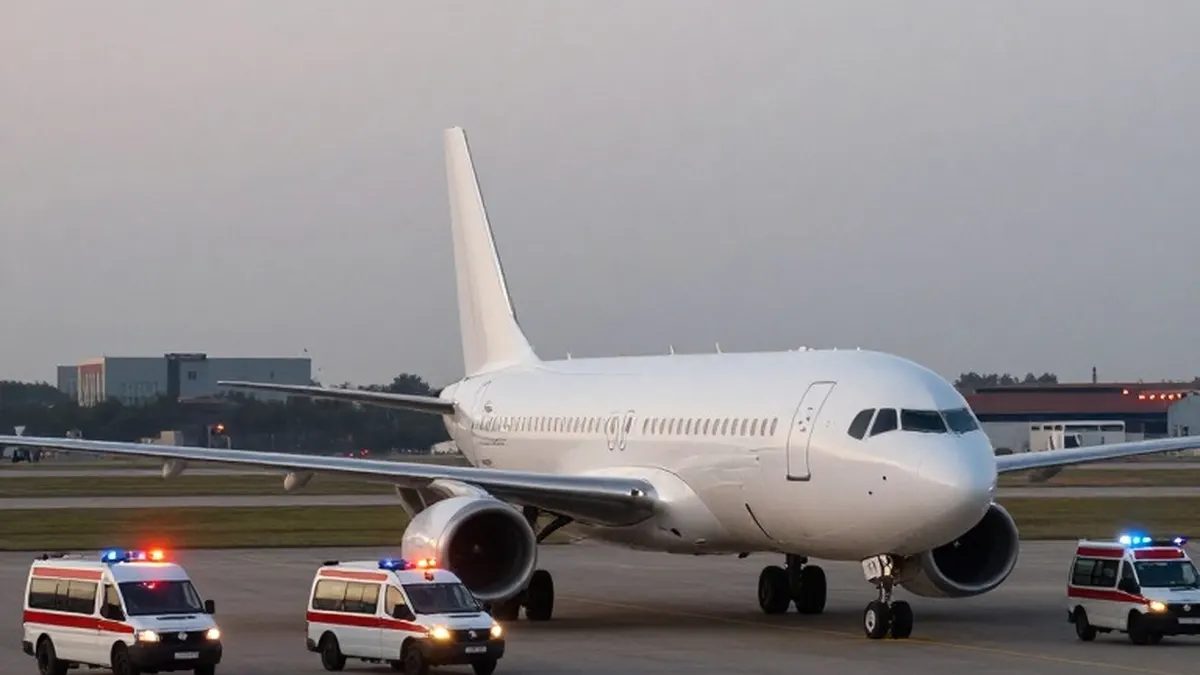
Seven passenger planes were forced to land across Europe on Thursday morning after a series of suspected bomb threats, in the second wave of such incidents to hit the continent this week.
The office of French Prime Minister Sebastien Lecornu said an Airbus A320 traveling from Dublin to Rome was diverted to France's Evreux airbase following a bomb alert. Aer Lingus, the Irish airline operating the flight, confirmed in a statement that the aircraft landed safely at Evreux airport, about 100 kilometers west of Paris.
According to flight-tracking website Flightradar24, the Aer Lingus plane changed course near Paris and circled over the Evreux area after declaring an in-flight emergency. Rome's Fiumicino Airport was reportedly closed temporarily because of the threat.
Just over an hour later, six more aircraft were diverted. Three of them were forced to land at Bulgarian airports following bomb threats, local media reported, citing government ministers. Broadcaster bTV, citing the interior minister, and NOVA TV, citing the transport minister, reported that two of the planes, flying from Copenhagen and Madrid, landed in Sofia. A third aircraft arriving from London landed in Plovdiv, the reports said.
Separately, a flight operated by Polish airline LOT traveling from Warsaw landed safely at Brussels Airport after a suspicious report, a source said, confirming Belgian media accounts. Airport spokespeople told Belgian media that no additional security measures were required. The airport did not immediately respond to a Reuters request for comment.
In Italy, a Finnair plane from Helsinki was escorted by the Italian air force to its scheduled landing in Rome, a source close to the matter said. Another Finnair flight from Helsinki, operated by Jettime, landed as normal in Vienna after receiving a bomb threat, a spokesperson for the Finnish carrier said.
The incidents follow a similar pattern earlier in the week. On Tuesday, at least seven flights and a cruise ship received bomb threats, causing disruption at airports across Europe, although no devices were discovered.
No country has attributed blame for the threats. They come as European officials have accused Russia and Iran of carrying out what they describe as hybrid attacks and acts of sabotage, allegations that both Moscow and Tehran deny.
Also this week, unidentified hackers shut down refrigerators in supermarkets in several European countries. Some experts said hoax bomb threats could fit a similar pattern of low-cost, deniable disruption efforts.