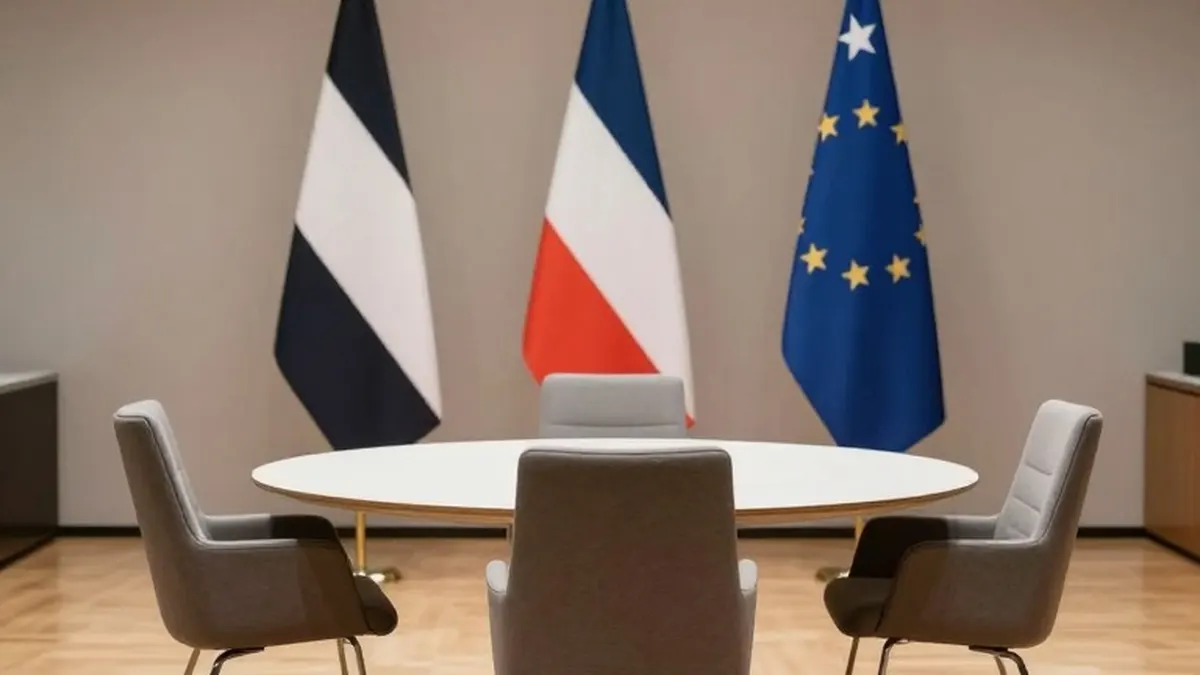
Diplomatic preparations are underway for a potential historic meeting between United States President Donald Trump, Chinese President Xi Jinping and Russian President Vladimir Putin. The three leaders are expected to convene on the sidelines of the Asia-Pacific Economic Cooperation summit in Shenzhen, China, with tentative dates set for November 18 and 19. Although the leaders have met individually in the past, this would be their first formal trilateral gathering.
Chinese Foreign Ministry spokesperson Mao Ning confirmed on Wednesday that Beijing is in communication with relevant parties regarding the event. Kremlin spokesman Dmitry Peskov added on Tuesday that coordination work is active and expressed hope that the meeting would be finalized in the coming days. President Trump has previously indicated his openness to such talks, particularly if they focus on nuclear weapons, stating that he would hold the meeting if President Xi wished to do so.
For Russia, the primary value of the summit appears to be symbolic. Alexander Bratersky, a Moscow-based political analyst, described the event as significant, noting that it allows Moscow to project strength and position itself as a key architect of the post-war European security order. He pointed out that Russian officials have compared the potential meeting to the 1945 Yalta Conference, a reference that underscores the ambition to shape the global landscape. Even without concrete outcomes, Bratersky argued that the photo opportunity alone would be a domestic success for President Putin, allowing him to appear as an equal to the other two powers.
Analysts suggest that the timing of the summit is also influenced by the recent US midterm elections. Bratersky noted that while President Trump retains control over foreign policy, his leverage may diminish if the newly elected Democrats in Congress begin increasing funding for Ukraine. He predicted that any tangible results from the Shenzhen meeting would likely become apparent within a month, with the possibility of follow-up discussions at the Group of 20 summit in Miami in December. If no progress is made before Christmas, however, the event risks being perceived as merely a photo opportunity.
President Trump’s motivations for the meeting center on optics and domestic political gains. Inderjeet Parmar, a professor of international politics at City St George’s, University of London, explained that Trump seeks a high-profile encounter that demonstrates his ability to deal directly with the world’s other major powers. By presenting himself as an indispensable dealmaker on issues such as trade, energy and arms control, the President can bolster his standing with a domestic audience that may be feeling the effects of shifting political winds. The visual of Trump seated alongside Xi and Putin serves as a powerful symbol of American influence, even if the substantive outcomes are limited.
China’s objectives differ from those of the US and Russia. Beijing is not interested in turning the summit into a negotiation over the war in Ukraine. German President Frank-Walter Steinmeier reported that when he raised the topic with President Xi in late October, the Chinese leader indicated that the trilateral meeting would not focus on Ukraine. Xi emphasized that the conflict is a European issue, suggesting that European nations must be the primary participants in resolving it. Additionally, China has previously expressed reservations about joining trilateral nuclear disarmament talks, describing such an arrangement as neither fair nor realistic at the current stage.
The prospect of a free-standing trilateral meeting signals a shift in international diplomacy. Parmar noted that this approach breaks from the post-1945 pattern where the United States coordinated closely with its European and Asian allies before engaging with Moscow or Beijing. There is a risk that this new model of personalized great-power diplomacy could treat allied nations as secondary players, with their interests potentially being managed or traded after the fact.
While fears of a formal G3 bloc are understandable, analysts argue they may be overstated. The three nations still have sharply diverging interests regarding Ukraine, Taiwan, technology and global economic rules. The more significant concern is the normalization of deals struck among major powers with little consultation from those most affected by the decisions. Historical precedent suggests that such moments rarely lead to a stable order and often leave excluded nations bearing the costs of agreements made without their input.