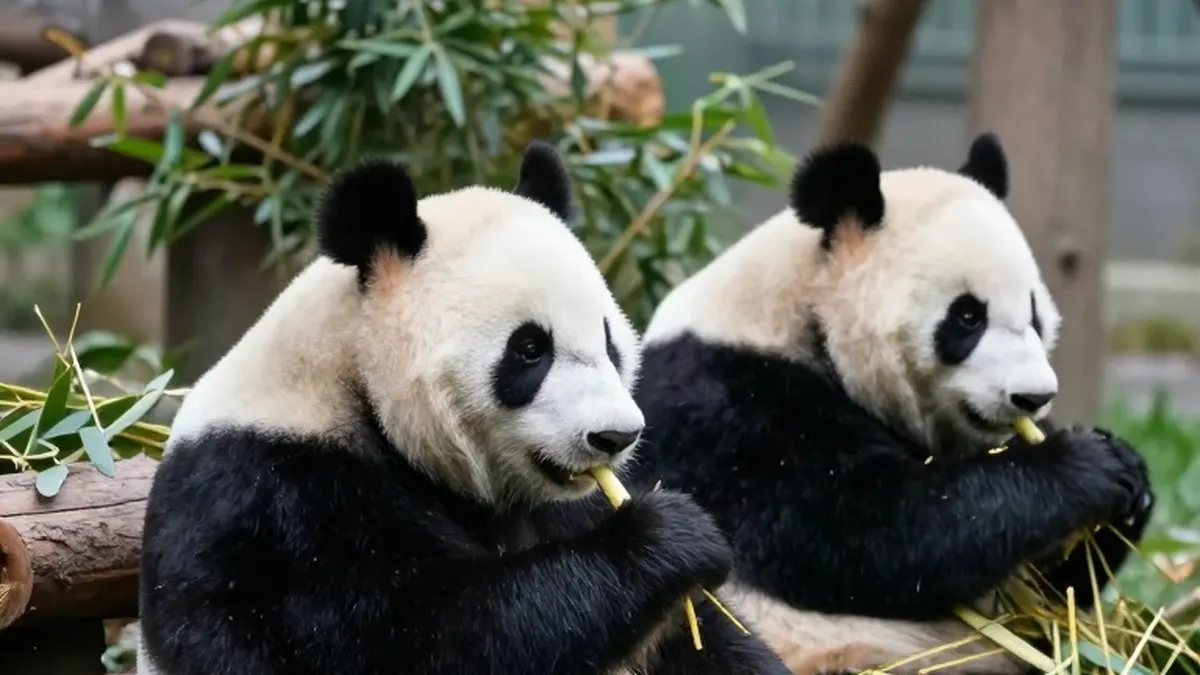
Two giant pandas on loan from China made their first public appearance at Zoo Atlanta on Friday, eating bamboo and relaxing in their new habitat as visitors gathered to see them. Their debut marked the return of pandas to the zoo, which had been without the animals since 2024.
The male, Ping Ping, and female, Fu Shuang, reached Atlanta from Chengdu in September aboard a FedEx flight nicknamed the Panda Express. They are expected to remain at the zoo for 10 years. Both were born in 2020, and there are hopes they will become suitable breeding partners. Captive pandas typically live for about 30 years.
Ahead of their arrival, the zoo refurbished its panda facilities, put together a team of animal caretakers and secured a reliable long-term bamboo supply. The bamboo is grown locally in Atlanta, where the climate closely resembles that of Chengdu. Zoo Atlanta first began hosting pandas from China in 1999, and seven cubs have been born there. All of its previous pandas are now back in Chengdu.
Zoo Atlanta CEO Raymond King told visitors that pandas have a distinctive ability to spark curiosity, bring joy and connect people worldwide. He also highlighted the partnership supporting the species. Visitor Rachel Totts described a similar appeal to AFP on Friday: "I think they inspire happiness." Atlanta resident John Perez, celebrating his 28th birthday, said the pandas had prompted his first visit to the zoo.
Although wild pandas generally do not travel far from their temperate forest habitats in East Asia, China has sent many to overseas zoos through its decades-long panda diplomacy program. The animals have become part of Beijing's efforts to strengthen international relationships. In 1972, China gave Washington a pair following US president Richard Nixon's historic trip to the country.
The Atlanta debut coincided with calls from senior US officials on Friday for China to honor the trade agreement reached during an October 2025 meeting between US President Donald Trump and Chinese President Xi Jinping. That agreement eased tensions following a succession of tariff increases and required China to purchase US soybeans and suspend rare earth export controls.
Panda exchanges have also been affected by diplomatic disputes. Earlier this year, Beijing recalled two pandas from Japan after a disagreement sparked by the Japanese prime minister's suggestion that Tokyo could intervene militarily if Taiwan came under attack.
Conservation challenges remain despite an improvement in the species' status. Pandas were classified as endangered before 2016 and are now listed as vulnerable by wildlife advocates, with an estimated 1,800 living in the wild. China has created more than 50 reserves to help protect them, but habitat loss and poaching continue to threaten wild populations.